On this page
- Quick facts
- The trains
- Main routes, journey times and stations
- Fares (from 1 February 2026)
- How to book tickets
- Tickets, passports and children
- Refunds and changes
- Luggage, pets and bicycles
- At the station
- On board
- The honest downsides
- Train, plane or car?
- International trains
- Coming soon
- Checklist before you travel
- Train travel with TravelX
- Sources
Trains are the best way to travel between Uzbekistan’s Silk Road cities. They are fast, safe, comfortable and cheap, and the high-speed Afrosiyob takes you from Tashkent to Samarkand in just over two hours. The catch is that demand is far higher than supply: popular trains sell out weeks ahead, so the single most important tip in this guide is to book early. Below is everything we tell our own clients, from A to Z, including the parts that are less glamorous.
Quick facts
- Book early: tickets go on sale 60 days before departure and the high-speed trains often sell out within days, especially from May to October and around holidays. In June 2026 the Transport Minister said at least 30% of people who want an Afrosiyob ticket cannot get one.
- Official booking site: eticket.uzrailpass.uz (the old address eticket.railway.uz now redirects there), plus the official “Uzrailways tickets” app. Foreigners pay the same fares as locals.
- Passport: every ticket is issued in the passenger’s name and passport number. Carry your original passport; it is checked at the station entrance and often at the carriage door.
- High-speed trains: Afrosiyob (Tashkent–Samarkand–Bukhara–Karshi–Shakhrisabz) and, since May 2026, the new Jaloliddin Manguberdi train from Tashkent to Khiva. Afrosiyob itself does not go to Khiva.
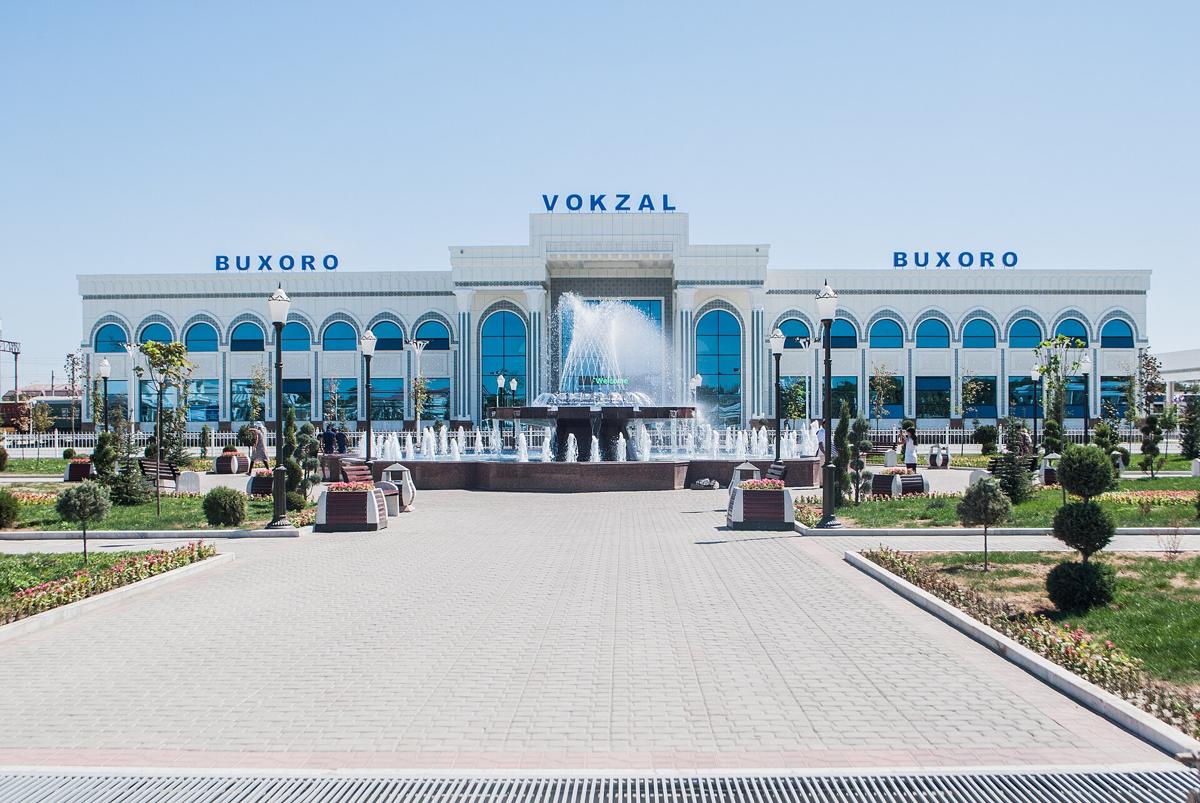
- Bukhara’s station is not in Bukhara: all passenger trains stop at Bukhara-1 in Kagan, about 12–15 km from the old town.
- Time: all timetables are in Tashkent time (UTC+5, no daylight saving).
The trains
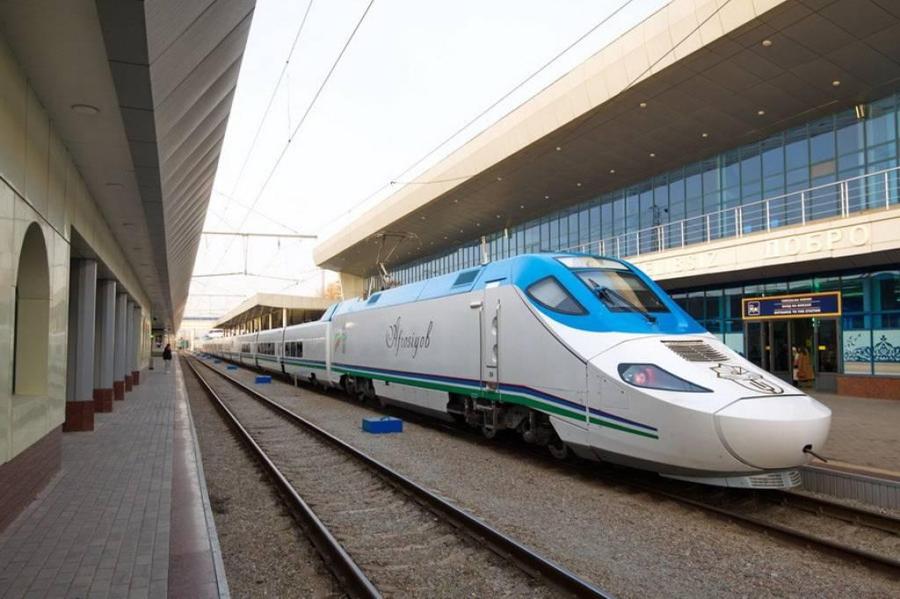
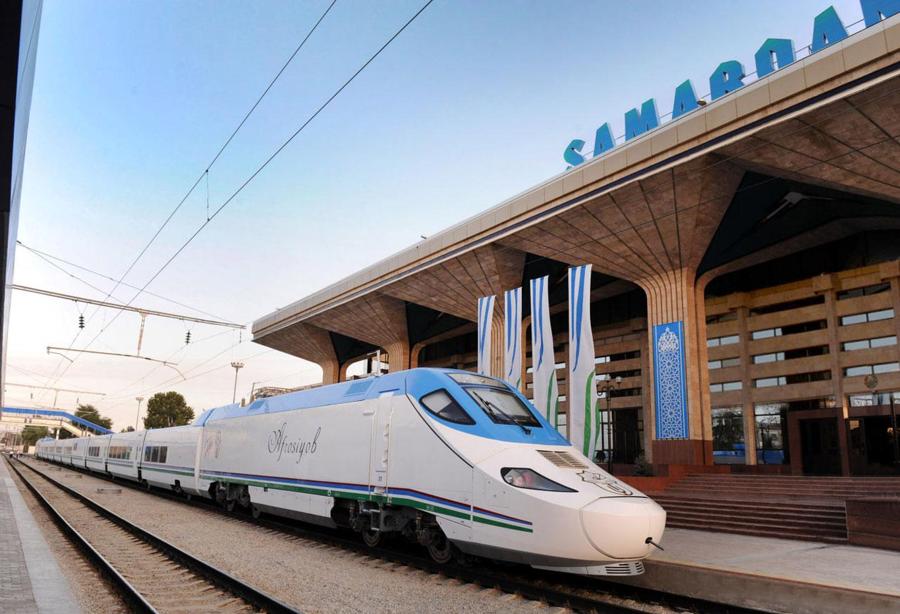
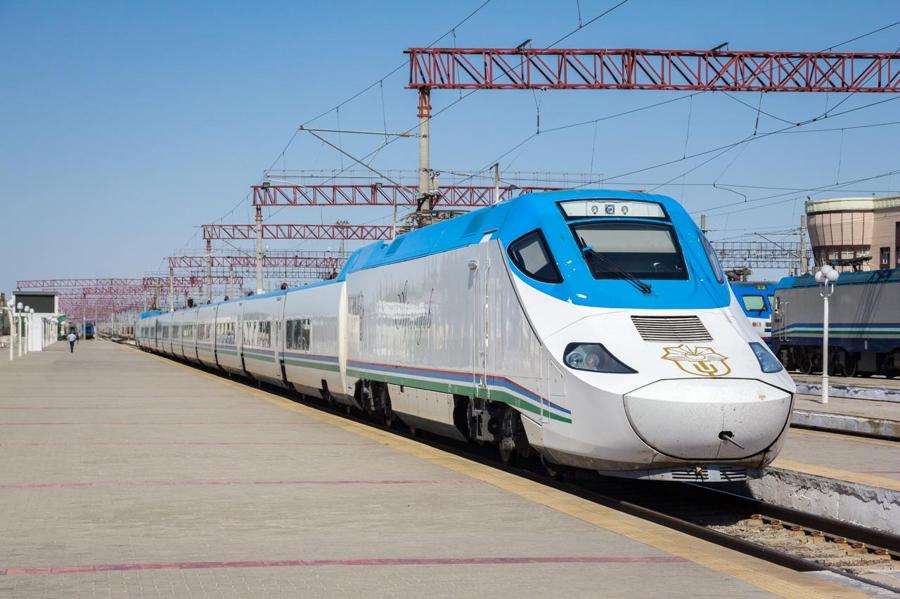
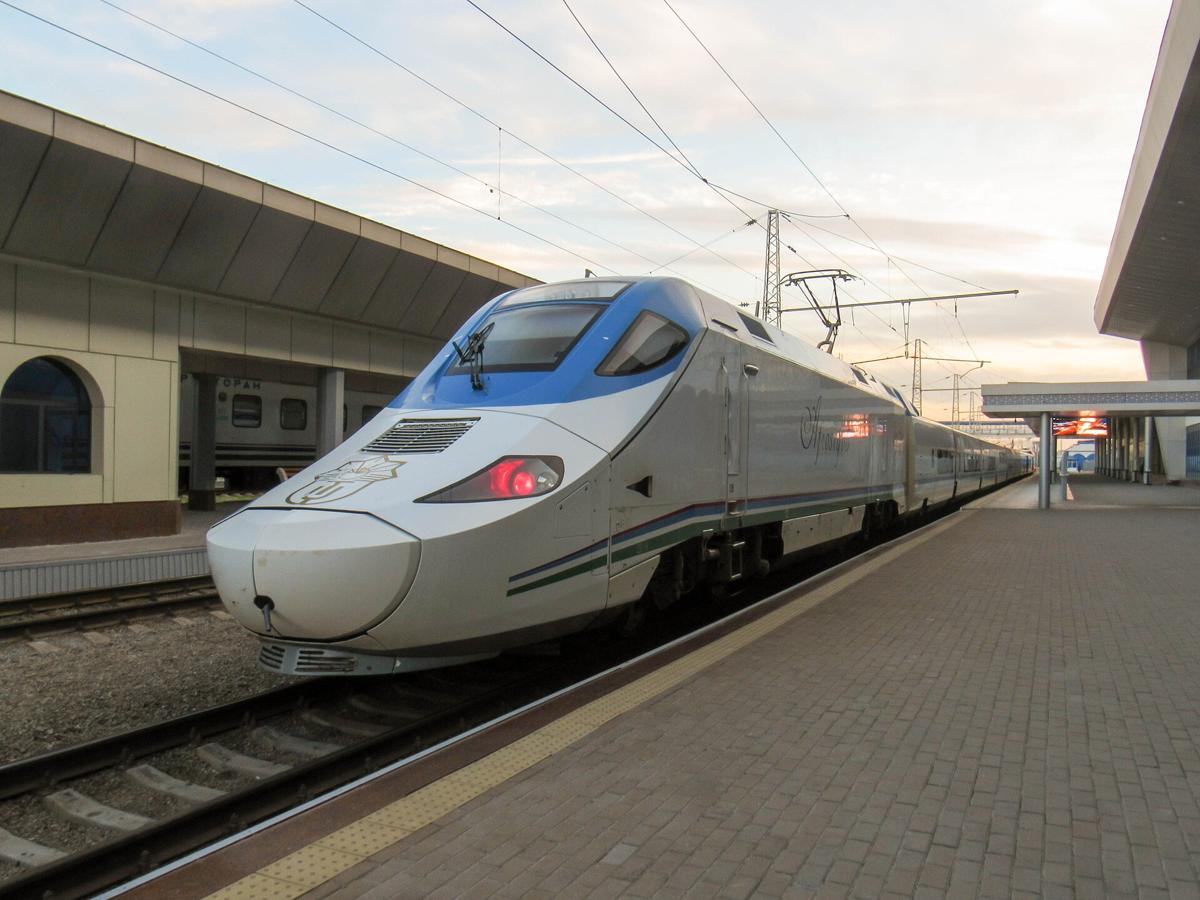
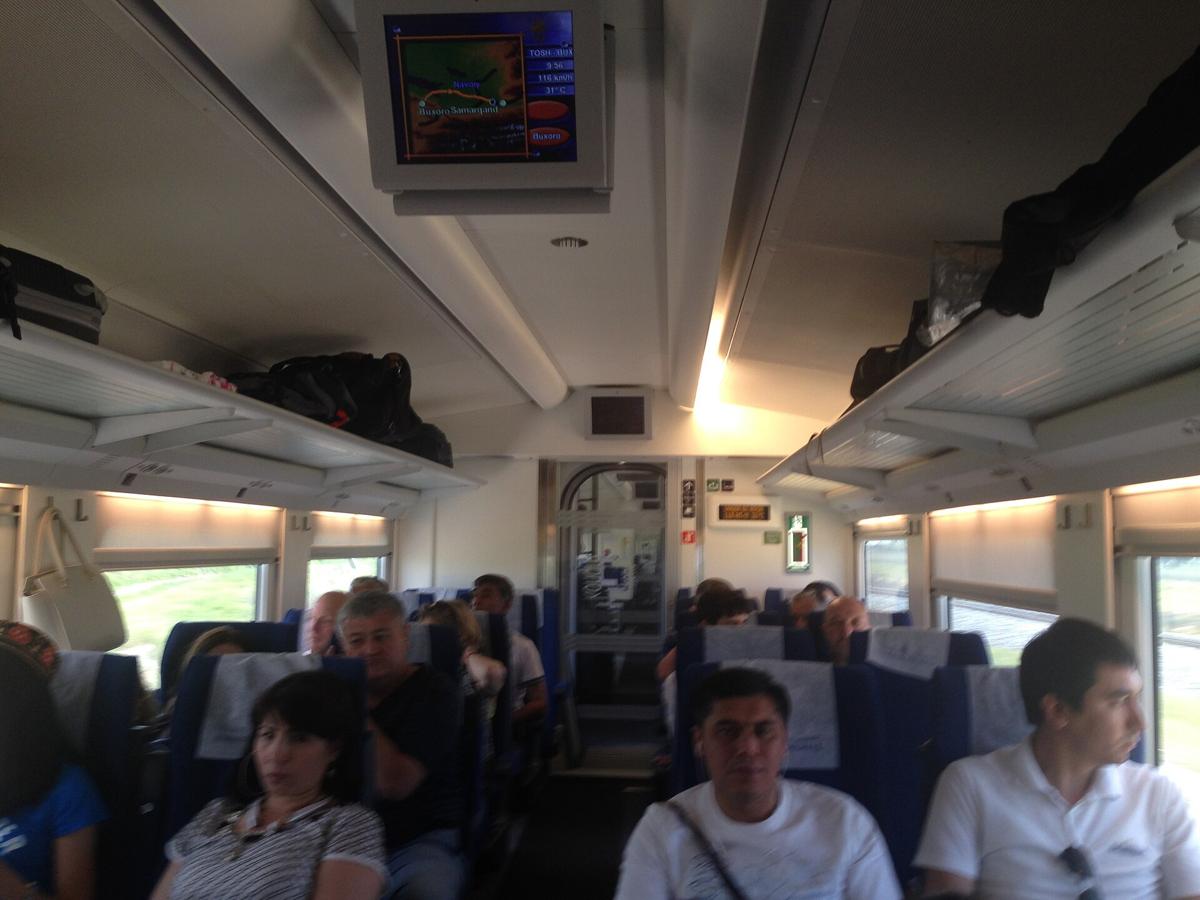
Afrosiyob (high-speed, Talgo 250, Spain). Uzbekistan’s flagship train, in service since 2011. It runs Tashkent–Samarkand–Bukhara, with branches to Karshi and, since 27 March 2026, Shakhrisabz (Fridays to Sundays, leaving Tashkent at 06:33). Three classes: Economy (2+2 seats), Business (2+1, fabric seats) and VIP (2+1, leather seats). Business and VIP include a snack and hot drinks; in Economy, what is served varies. There is a bistro car, air-conditioning, Western-style toilets, overhead racks for luggage and, since August 2025, Wi-Fi in every carriage (the first 30 minutes are free).
Jaloliddin Manguberdi (high-speed, Hyundai Rotem, Korea). New in 2026: the first high-speed service to Khiva started on 5 May 2026. It links Tashkent, Samarkand, Bukhara, Urgench and Khiva, taking about 7 h 40 min from end to end. Each train has 389 seats and facilities for passengers with reduced mobility. The first trainset has Economy and VIP; the second (in service since 22 July 2026) has Economy and Business. Check the class on your train when you book.
As of October 2026 the main service leaves Tashkent at 07:00 Monday to Saturday (Samarkand 09:13, Bukhara 10:54, Urgench 14:12, Khiva 14:42) and leaves Khiva at about 07:10 Tuesday to Sunday (Tashkent about 15:20). There is no Tashkent departure on Sunday. An extra train announced on 6 October 2026 leaves Tashkent at 11:20 on Thursdays and Saturdays and Khiva at 11:00 on Fridays and Sundays (about 8 h 30 min). You can also book shorter legs, such as Samarkand–Khiva (about 5 h 30 min). Check the exact days when you book.
New electric trains (CRRC, China). Since September 2026: a Khiva–Bukhara train (Economy only, about 4 h 40 min, six days a week: no Khiva departure on Tuesdays and no Bukhara departure on Mondays); a weekly Tashkent–Samarkand–Bukhara train (Tuesdays, returning Mondays, about 5–6 h); a Tashkent–Andijan train via Kokand and Margilan (about 4 h 20 min, daily; from 1 October 2026 it leaves Tashkent at 07:20); and a shuttle linking Urgench Airport, Urgench and Khiva (42 minutes), which runs only on certain days and times, so check before relying on it for a flight.
Sharq and other classic day trains. Sharq runs daily Tashkent–Samarkand–Bukhara at up to 140 km/h, about an hour slower than Afrosiyob but cheaper. It has 2nd class (open carriages), 1st class (compartments with seats) and a snack car. The “O’zbekiston” train serves the Fergana Valley, and Nasaf is a 2nd-class-only day train.
Night trains. Slower sleeper trains run to Khiva, Urgench, Nukus, Termez and other cities. There are three classes:
| Class | Local name | What you get |
|---|---|---|
| Lux / SV | SV (“es-ve”) | Lockable 2-berth compartment; the most private and the first to sell out |
| 2nd class | Kupe | Lockable 4-berth compartment, mixed gender |
| 3rd class | Platskart | Open carriage with 54 berths and no doors; cheapest and busiest |
Sheets, pillowcase, towel, mattress, pillow and blanket are included in the fare. Each carriage has a conductor (provodnik) and a samovar with free hot water.
Main routes, journey times and stations
Times below are typical; exact timetables change several times a year, so always check the current schedule when you book.
| Route | Fastest train | Typical time | Other options | Tashkent station |
|---|---|---|---|---|
| Tashkent – Samarkand | Afrosiyob, Jaloliddin Manguberdi | 2 h 10 – 2 h 30 | Sharq about 3 h 30; night trains | Central (North) |
| Tashkent – Bukhara | Afrosiyob, Jaloliddin Manguberdi | about 3 h 55 – 4 h 20 | Sharq about 6 h; night trains | Central (North) |
| Samarkand – Bukhara | Afrosiyob, Jaloliddin Manguberdi | about 1 h 30 – 1 h 55 | Sharq about 2 h 25 | – |
| Tashkent – Khiva | Jaloliddin Manguberdi | about 7 h 40 | Night train about 14 h (certain days only) | High-speed: Central; night trains: South |
| Bukhara – Khiva | Jaloliddin Manguberdi | about 3 h 50 | CRRC electric about 4 h 40; night train about 8 h | – |
| Tashkent – Karshi | Afrosiyob | about 3 h 40 | Night trains | Central (North) |
| Tashkent – Shakhrisabz | Afrosiyob | about 4 h 25 | Fridays to Sundays only (06:33 from Tashkent) | Central (North) |
| Tashkent – Fergana Valley (Kokand, Margilan, Andijan) | CRRC electric | about 4 h 20 to Andijan | “O’zbekiston” train about 6 h | Central (North); through night trains: South |
| Tashkent – Nukus | Night train | about 16 h | – | Check ticket |
| Tashkent – Termez | Night train | about 14 h | – | Check ticket |
Which Tashkent station? Tashkent has two stations about 7 km apart. Tashkent-Central (also called North, Shimoliy or Tashkent-Passazhirsky) handles all high-speed trains, Sharq, the Tashkent–Andijan electric and intercity trains, and international trains, and has its own metro station, Toshkent, on the blue O’zbekiston line. Tashkent-South (Janubiy) handles several night trains, including the Khiva, Kungrad and Termez trains, and long-distance trains that pass through to the Fergana Valley (for example Khiva–Andijan, Kungrad–Andijan and Termez–Andijan). It has no metro station. Trains are sometimes moved between the two during track works, so always check the station printed on your ticket.
Fares (from 1 February 2026)
Fares on Afrosiyob, Sharq, Nasaf and “O’zbekiston” trains rose by 15% on 1 February 2026. Prices are per person, one way, in Uzbek som; US dollar amounts are approximate (about 12,050 UZS = USD 1 in October 2026).
| Route | Train | Economy / 2nd / Platskart | Business / 1st / Kupe | VIP / SV |
|---|---|---|---|---|
| Tashkent – Samarkand | Afrosiyob | 311,000 (≈ USD 26) | 455,000 (≈ USD 38) | 709,000 (≈ USD 59) |
| Tashkent – Bukhara | Afrosiyob | 509,000 (≈ USD 42) | 760,000 (≈ USD 63) | 1,138,000 (≈ USD 94) |
| Tashkent – Karshi | Afrosiyob | 429,000 (≈ USD 36) | 642,000 (≈ USD 53) | 976,000 (≈ USD 81) |
| Tashkent – Samarkand | Sharq | 200,060 (≈ USD 17) | 300,560 (≈ USD 25) | – |
| Tashkent – Bukhara | Sharq | 276,820 (≈ USD 23) | 421,050 (≈ USD 35) | – |
| Tashkent – Khiva | Jaloliddin Manguberdi | 780,000 (≈ USD 65) | Business: check when booking | 1,815,000 (≈ USD 151) |
| Tashkent – Khiva | Night train | 245,140 (≈ USD 20) | 348,550 (≈ USD 29) | 640,390 (≈ USD 53) |
| Tashkent – Bukhara | Night train | 177,990 (≈ USD 15) | 243,750 (≈ USD 20) | 430,850 (≈ USD 36) |
| Bukhara – Khiva | CRRC electric | 270,800 (≈ USD 22) | – | – |
| Urgench Airport – Khiva | CRRC shuttle | 25,000 (≈ USD 2) | – | – |
The Afrosiyob fares are the official published fares. The Sharq, night-train and Jaloliddin Manguberdi fares were checked in mid-2026 and may differ slightly by train and date. Uzbekistan Railways has raised fares every year since 2024, so expect further increases.
How to book tickets
When: sales open 60 days before departure (the exact release time is not published; travellers report about 10:00 Tashkent time). For Afrosiyob and Jaloliddin Manguberdi from May to October, or any train around Navruz (21 March), the Eid holidays and long weekends, book on the day sales open if you can.
Where:
- Official website: eticket.uzrailpass.uz, available in English (some details still appear in Russian).
- Official app: “Uzrailways tickets” for iOS and Android.
- Station ticket offices: bring the original passport of every passenger. Cash in som and local cards are always accepted; foreign cards are not guaranteed.
- Resellers and tour operators: websites such as 12go and Russian booking sites resell tickets with a mark-up, and their availability is not always up to date. A local tour operator can buy tickets for you as part of your itinerary.
Booking online as a foreigner, step by step:
- Register with your email address (or Google/Apple sign-in). Usually no Uzbek phone number is needed, but the site occasionally asks for one, and SMS codes do not always reach foreign numbers.
- Search by station: for Bukhara choose “Bukhara-1” (Kagan); for Tashkent check whether your train uses Central or South.
- For each passenger, choose the document type “Foreign document” (not “Passport of Uzbekistan”) and enter the name exactly as in the passport.
- You have 15 minutes to pay before the order is cancelled. Up to 4 passengers per order.
- Paying with a foreign card: click the Visa/Mastercard logo (it may look greyed out). Payment goes through Stripe or Octobank, depending on the train and the day; Octobank opens a separate payment page. If a payment fails, try a different browser or a computer instead of the app, and check with your bank, as some banks block the first payment to Uzbekistan. Occasionally a payment shows as failed but the ticket is still issued, so check your account before paying again.
- Download the e-ticket (PDF or in the app). A QR code on your phone is accepted; printing is optional but useful as a backup.
If your train is sold out: check again over the following days, as cancelled seats come back into the system and blocks of seats held by agencies are often released closer to the date. Try other classes and other trains (Sharq, the CRRC trains or night trains), split the journey (for example Tashkent–Samarkand and Samarkand–Bukhara), or ask your tour operator. Only buy from official channels or known agencies: tickets are personal and cannot be transferred, so a ticket in someone else’s name is useless.
Tickets, passports and children
- Names: every ticket shows the passenger’s name and passport number. Names cannot be changed; if details are wrong, refund the ticket and buy a new one.
- Checks: your passport and ticket are checked at the station entrance (with a bag X-ray) and often again at the carriage door. Photocopies are not accepted.
- Children: one child under 5 travels free without a separate seat when sharing with an adult. Children aged 5 to 10 pay half fare with their own seat. Children over 10 pay the adult fare. Children under 16 may not travel unaccompanied.
- Discounts: student, pensioner and other discounts are for Uzbek citizens and residents only. There are no return-ticket discounts on domestic trains.
Refunds and changes
You can return tickets online (only for orders paid by card on the website or app, under “My orders”; the money goes back to the same card) or at any station ticket office.
| When you return the ticket | Amount kept by the railway |
|---|---|
| 24 hours or more before departure | 15,000 UZS per seat |
| 6 to 24 hours before departure | 15,000 UZS + 50% of the reserved-seat part of the fare |
| Less than 6 hours before, up to 1 hour after departure | 15,000 UZS + 100% of the reserved-seat part of the fare |
| More than 1 hour after departure | No refund |
There is no option to change the date or name of a ticket: refund it and buy a new one. If you miss your train, return the ticket within one hour of departure to get part of the fare back. Tickets bought through agents follow the agent’s own cancellation terms, which are often stricter.
Luggage, pets and bicycles
- Free luggage allowance: 36 kg per passenger (50 kg in 2-berth SV compartments). Each piece must not exceed 180 cm in total (length + width + height). In practice, bags are rarely weighed, but large suitcases must fit on the racks or under the berths.
- Afrosiyob: overhead racks plus luggage space at the end of each carriage. Doors open and close quickly and stops last only a few minutes, so be ready before your station.
- Pets: rules and fees apply and depend on the train and class; small pets travel in a carrier with a veterinary certificate. Ask in advance.
- Bicycles: the rules only cover suburban trains; on long-distance trains ask in advance.
At the station
- Check-in for high-speed trains closes 30 minutes before departure. Arrive 45–60 minutes early at Tashkent-Central and Samarkand, where queues for security can be long; at smaller stations, aim for at least 30–40 minutes.
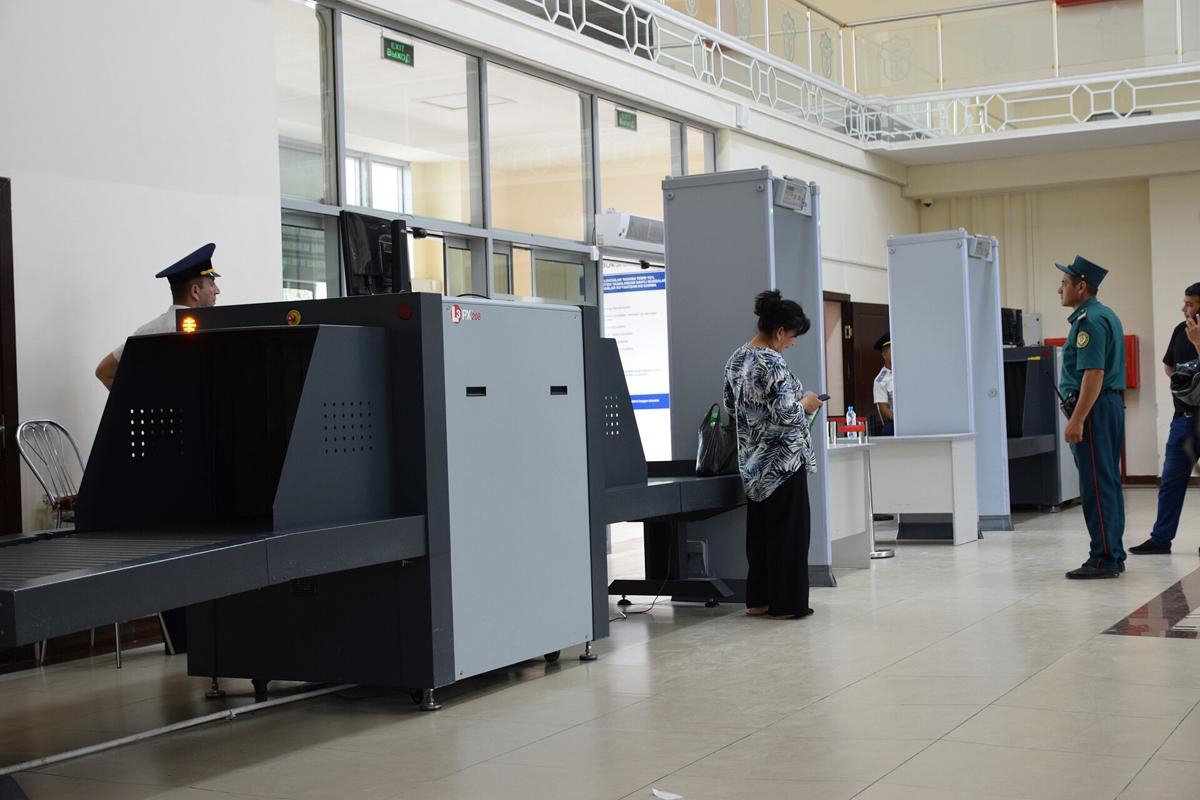
- Security: there is a ticket and passport check and a bag X-ray at the entrance. In general only passengers can enter, so say goodbye to friends outside.
- Facilities: waiting halls, cafes and toilets (quality varies). Larger stations have left-luggage rooms and paid VIP lounges. Khiva station has almost no shops, so bring water and snacks.
- Signs and announcements: station names and signs are now in Uzbek (Latin script). Announcements are mostly in Uzbek and Russian, with little English, so check your carriage number (vagon) and seat on the ticket and watch the departure boards.
Getting to and from the stations:
- Tashkent-Central: metro station Toshkent (O’zbekiston line). The metro accepts bank cards. Yandex Go taxis work everywhere in the city.
- Tashkent-South: no metro; take a taxi (about 25 minutes from Central).
- Samarkand: the station is about 6 km from the Registan, 10–15 minutes by taxi.
- Bukhara (Bukhara-1, Kagan): 12–15 km from the old town, 20–30 minutes by taxi.
- Khiva: the station is about 1.5 km from the Ichan Kala walls (a 20–30-minute walk). Yandex Go works in Khiva and Urgench.
- Taxis: use the Yandex Go app or a transfer booked in advance. Taxi touts at station exits often ask several times the normal fare; walk a little away from the entrance if the app struggles to find a car.
On board
High-speed trains: clean, air-conditioned and comfortable. Power sockets are available in most, but not all, seats. Food in the bistro car is basic, so many travellers bring their own snacks.
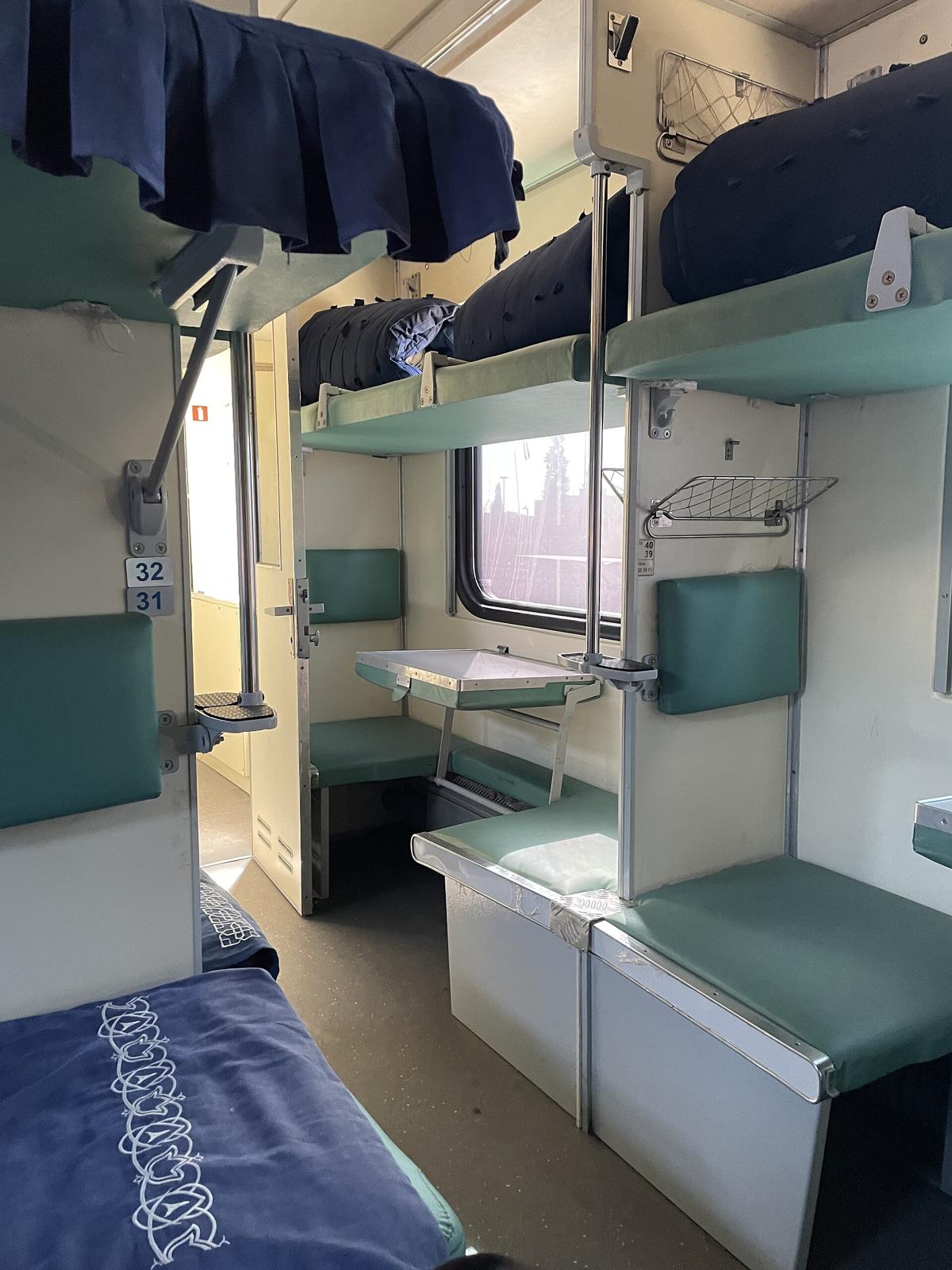
Night trains: comfortable enough for a good night’s sleep, but basic. Bring:
- toilet paper, wet wipes and hand sanitiser (toilets are basic and get worse during the journey);
- food and water (there may be no restaurant car, and if there is one it is often expensive);
- a power bank (sockets are rare on older trains);
- slippers, a light layer for air-conditioning and earplugs;
- a cup or mug and tea bags for the free hot water.
The conductor hands out sealed bedding at the start and collects it before arrival. Lights go out around 22:00–23:00 and the carriage is quiet at night. Compartments are mixed gender; solo women travellers who prefer more company often choose the open platskart carriage, or book a whole compartment.
Rules:
- Smoking is banned on trains and at stations, and fines apply.
- E-cigarettes and vapes have been illegal in Uzbekistan since 1 March 2026: they are confiscated at the border, and possession is fined. Do not bring them.
- Alcohol: drinking in public places is fined, and drunk passengers can be removed from the train.
- Drones cannot be brought into Uzbekistan without a permit.
- Photography: taking pictures of trains and from the windows is generally tolerated; avoid filming security checkpoints and staff.
The honest downsides
- Tickets are hard to get. In June 2026 the Transport Minister told parliament that 120 more carriages are needed just to fully staff existing trains, and that the Tashkent–Samarkand line is at maximum capacity. Plan train dates first and build the rest of your trip around them.
- Delays happen, especially on slower trains such as Sharq (40–60 minutes is not unusual). Do not plan tight connections to flights. Compensation is currently paid only for Afrosiyob delays; a proposal to extend it to all trains has not yet taken effect.
- Older carriages show their age: in June 2026 the Transport Minister acknowledged in parliament that outdated carriages with poor sanitary conditions are still in service. Older night trains can be hot in summer and cold in winter.
- Holiday rush: around Navruz and the Eid holidays, extra trains are added but still sell out. Avoid travelling on the holiday weekends themselves if you can.
- Accessibility is limited: the new Hyundai and CRRC trains have wheelchair spaces, but most stations and older trains have steps and few lifts. Tell us in advance if you need help.
- Language: few staff speak English. A translation app helps.
Train, plane or car?
- Train: best for Tashkent–Samarkand–Bukhara: fast, comfortable and city centre to city centre (except Bukhara, where the station is in Kagan).
- Plane: worth considering for Tashkent–Urgench/Khiva (about 1 h 30 min) and Tashkent–Nukus or Termez. Flights also sell out and cost more, but save a long day.
- Private car: the most flexible option, and the only way to see places between cities, such as the Khorezm desert fortresses between Bukhara and Khiva or Shakhrisabz on the way from Samarkand. For a group of 3–4 people it often costs only somewhat more than economy train tickets, and less than Business or VIP.
International trains
- Tashkent – Almaty (Kazakhstan): daily Talgo train, about 18 hours, with border formalities on board. Both countries are on UTC+5, so there is no time change.
- Tashkent – Moscow (Russia): a direct train runs once or twice a week and takes about 3 days.
- Tashkent – Dushanbe (Tajikistan): one train a week (from Tashkent on Tuesdays, from Dushanbe on Mondays), about 17–18.5 hours, via Samarkand, Karshi and Denau, crossing at Sariosiyo. Check visa rules before booking.
Timetables for international trains change often; check them close to your travel date.
Coming soon
- A dedicated high-speed line between Tashkent and Samarkand (about 1 h 30 min) is planned, but construction has not yet started and the line is not expected before the early 2030s. Feasibility studies are still being revised; Uzbekistan Railways says they will be ready by the end of 2026.
- More Hyundai high-speed trains are due to arrive, with plans to extend high-speed service to Termez and Andijan.
Checklist before you travel
- Book as soon as sales open (60 days ahead), especially for high-speed trains in May–October.
- Check the departure station on your ticket, especially in Tashkent and Bukhara.
- Carry your original passport; the ticket must match it exactly.
- Arrive 45–60 minutes early at big stations; high-speed check-in closes 30 minutes before departure.
- Download the e-ticket and keep a screenshot in case you have no internet.
- Pack snacks, water, toilet paper and a power bank for long or night trains.
- Leave vapes and drones at home.
- Never buy tickets from strangers at the station.
Train travel with TravelX
TravelX can book train tickets as part of our tours and transfer packages, so you do not have to worry about sell-outs, payments or which station to use. We combine trains with private transfers to and from the stations, guides in each city and private cars for routes the trains do not cover well, such as Bukhara – Khorezm fortresses – Khiva.
- Website: travelx.uz
- WhatsApp / phone: +998 97 652 25 25
- Email: info@travelx.uz
- Instagram: @travelx_uz
Sources
- Afisha.uz – Afrosiyob fares from 1 February 2026
- Gazeta.uz – Train fare increase 2026
- Gazeta.uz – Minister on train ticket shortage (Jun 2026)
- Zamon.uz – Uzbekistan Railways: sales open 60 days ahead (Apr 2026)
- Kun.uz – Jaloliddin Manguberdi high-speed train to Khiva (May 2026)
- Spot.uz – Khiva–Bukhara electric train (Sep 2026)
- Spot.uz – Tashkent–Andijan electric train (Sep 2026)
- Trend – Urgench Airport–Khiva train (Sep 2026)
- Kun.uz – Wi-Fi on Afrosiyob trains (Aug 2025)
- Uzrailpass – How to return tickets
- Uzbekistan Railways – FAQ
- Lex.uz – Rules for carrying passengers by rail
- Spot.uz – Train delays and compensation proposal (Apr 2026)
- Gazeta.uz – E-cigarette ban (Dec 2025)
- Spot.uz – Tashkent–Samarkand high-speed line plans (May 2026)
- Gazeta.uz – Second Hyundai train classes (May 2026)
- Podrobno.uz – Extra Jaloliddin Manguberdi train (Oct 2026)
- Podrobno.uz – New Fergana Valley timetable from October 2026
- Gov.uz – New electric train services (Sep 2026)
- Tajik Railways – Timetable
- Seat61 – Train travel in Uzbekistan
- Informburo – Almaty–Tashkent daily Talgo train (Nov 2025)