The fire at Darvaza, the "Gates of Hell", is weaker than it used to be, but it still burns. How it began, how to get there, when to arrive, where to sleep and what to pack.
On this page
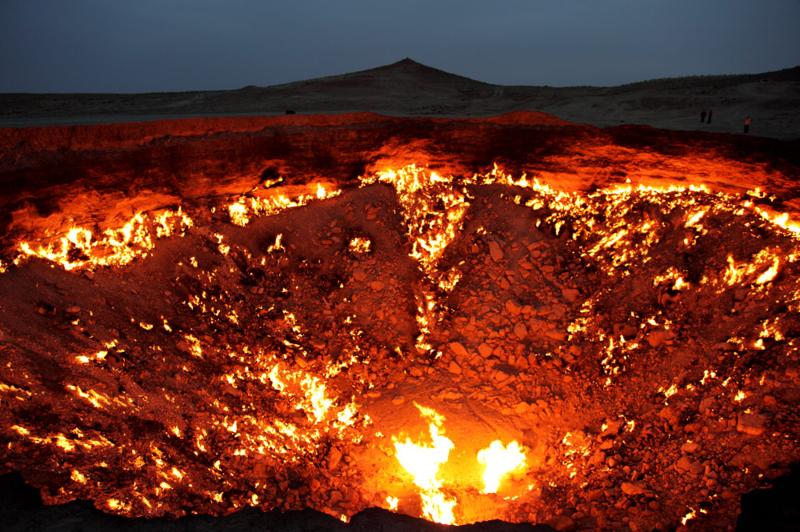
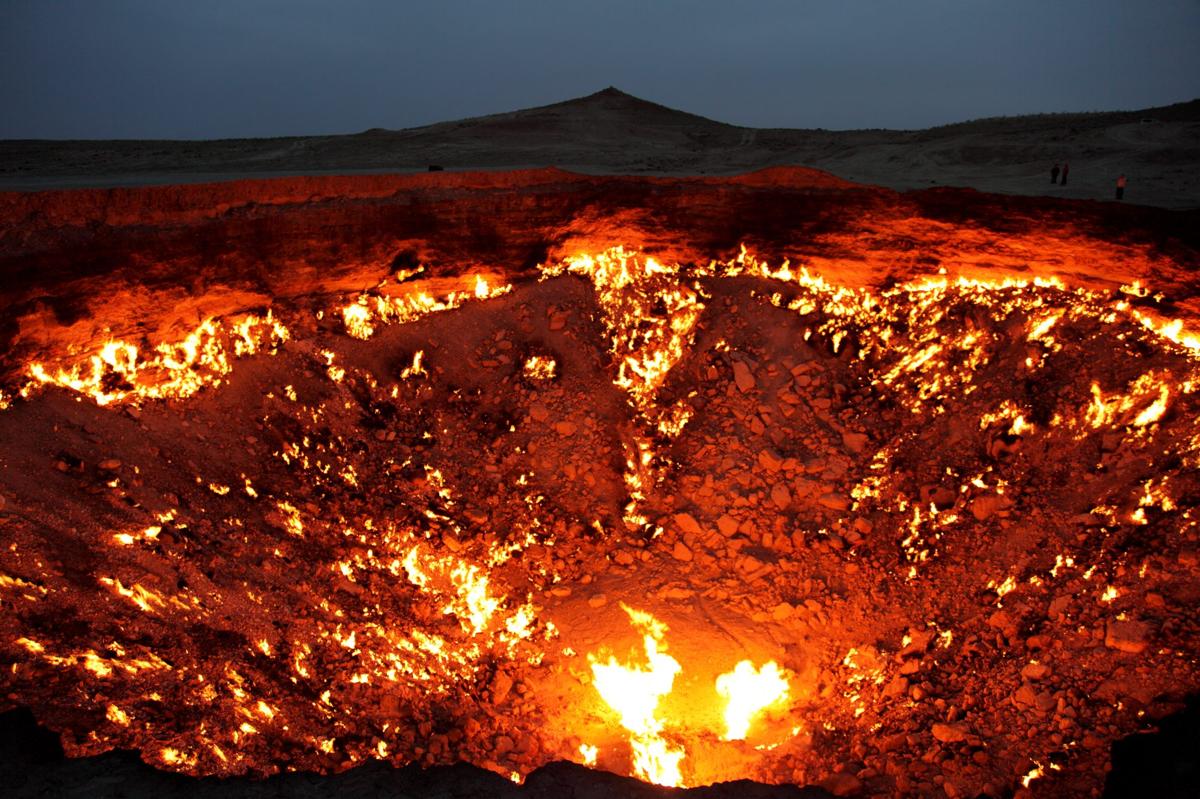
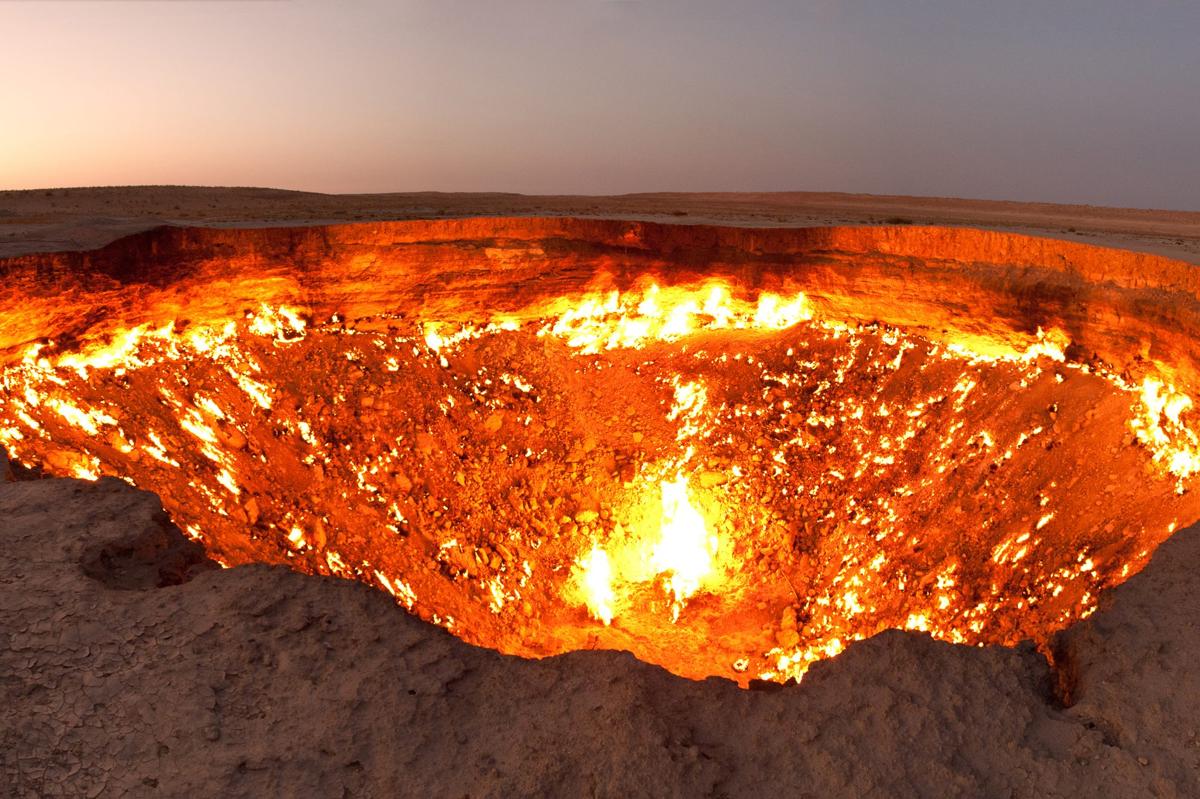
In the middle of Turkmenistan's Karakum desert, a crater about 70 m wide has been on fire for more than fifty years. Seen from its rim at night, with the flames roaring and the desert silent around you, the Darvaza gas crater is one of the most extraordinary sights in Central Asia.
It is also changing. Turkmenistan has been trying to put the fire out, and in 2025 the state gas company said it had become much weaker. Here is what we know in 2026, and how to plan your visit.
Is it still burning?
Yes. In January 2022 the then-president of Turkmenistan, Gurbanguly Berdimuhamedov, told officials on state television to find a way to extinguish the fire, which wastes valuable gas and harms the health of people nearby. In June 2025 a manager of Turkmengaz, the state gas company, said the burning had fallen nearly threefold after nearby wells were opened to draw off some of the gas. In December 2025 the company announced a new well meant to stop the leak completely, without giving a date.
In 2026 the crater still burns, but less fiercely than in the photos you may have seen. If Darvaza is on your list, it is worth going sooner rather than later.
How it began
Nobody knows for sure. The usual story is that in 1971 a Soviet drilling rig broke through into a gas-filled cavern, the ground collapsed, and geologists set the escaping gas alight, expecting it to burn out in a few weeks. Turkmen geologists have told another version, in which the collapse came in the 1960s and the fire was lit in the 1980s. No Soviet records have been published to settle it.
In 2013 the Canadian explorer George Kourounis became the first person to climb down into the crater, to collect soil samples. His team measured it at 69 m across and about 30 m deep. In 2018 the crater was officially named the "Shining of Karakum".
Getting there
Darvaza lies about 260 km north of Ashgabat, roughly four hours by road on the highway to Dashoguz. The last 8 km leave the asphalt and cross the sand, so you need a 4x4. From the north, coming from Kunya-Urgench and the Uzbek border near Khiva, the drive is about 280 km.
No public transport goes to the crater itself, and Turkmenistan's rules make it hard to travel there independently. On all our Turkmenistan tours the 4x4, the driver and the camp are arranged for you.
When to go
The best months are April–May and September–October. In summer the desert passes 45 °C by day; in winter the nights fall below freezing, although a clear, cold night by the fire has its own magic.
Time your arrival for the late afternoon:
- Walk to the rim before sunset, when you can see the shape of the crater.
- Go back after dark, when the glow is at its most dramatic.
- If you sleep at the camp, take one last look at dawn, when the desert is cool and empty.
Where to sleep
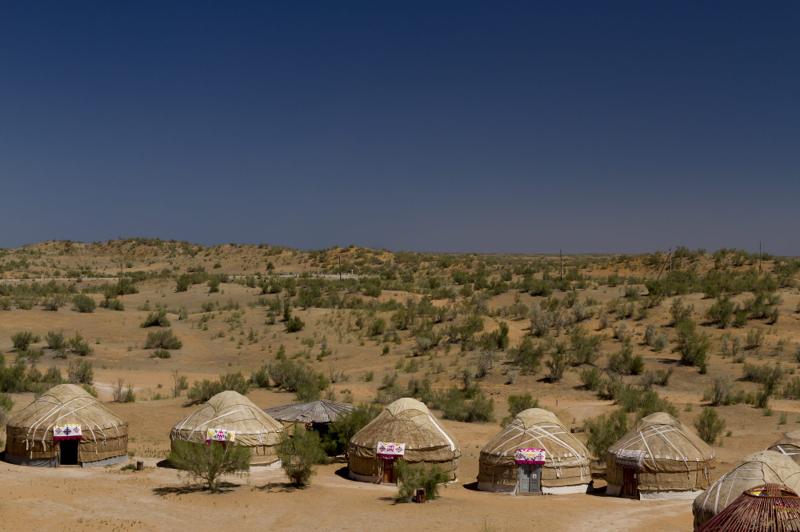
A few simple camps of yurts and tents stand five to ten minutes' walk from the rim. Expect mattresses and warm blankets, dinner cooked over a fire, and shared outdoor toilets with limited or no showers. It is basic, but nobody forgets falling asleep with the crater glowing on the horizon.
Important notes
- Keep your distance: parts of the rim are unstable and there is little or no railing. Never throw anything into the crater.
- Stand upwind: the heat and the smell of gas follow the wind.
- Darkness: use a headlamp on the walk back; the ground is uneven.
- No drones: they are banned in Turkmenistan.
- No signal: expect little or no mobile coverage, and many apps are blocked anyway.
- Cash: bring US dollars; there is nothing to buy at the crater, but you will need cash in Turkmenistan.
What to bring
- A warm jacket, hat and gloves: even in spring and autumn, nights in the desert are cold.
- Closed shoes for walking on sand.
- A headlamp and a power bank.
- Water, wet wipes and snacks.
- A small tripod for night photos.
- Sunglasses and a scarf against wind-blown sand.
Plan it with TravelX
Darvaza is on every Turkmenistan trip we run, with a night in a yurt camp by the crater:
- Khiva to Bukhara through Turkmenistan, 4 days
- Bukhara to Khiva through Turkmenistan, 4 days
- Turkmenistan highlights from Ashgabat, 5 days
Before you book, read how Turkmenistan's new e-visa works.