On this page
Khiva teaches you to look closely: at a tiled surface, a carved door, the proportions of a courtyard. The desert fortresses of ancient Khorezm ask you to change scale. Here, an earthen wall matters partly because of the land around it. A hill becomes a lookout; a line on the horizon becomes a question about where people once lived and what they needed to protect.
For travellers spending time in Khiva, a day built around Toprak Kala and Ayaz Kala offers a striking change of perspective. The point is not to collect as many ruined fortresses as possible. It is to understand two places well enough to see an inhabited landscape behind what now appears to be empty ground.
This is a trip to arrange around weather, daylight and a knowledgeable local driver. Give it a full day, keep the number of stops modest, and expect the walking to require more attention than a paved old-city street.
First, understand what “Khorezm” means here
Ancient Khorezm is a historical region, rather than a synonym for today’s Khorezm administrative region. The group called the Desert Castles of Ancient Khorezm in Uzbekistan’s UNESCO submission is located in the Republic of Karakalpakstan. That distinction helps explain why a trip starting in Khiva takes you into a different modern administrative area while remaining within the story of the wider oasis.
The UNESCO status also needs care. These desert castles appear on Uzbekistan’s Tentative List, submitted in 2008. They are not an inscribed World Heritage property under that entry. Their importance does not require an inflated label: the surviving settlements, fortifications and palaces are compelling on their own terms.
“Castle” is a convenient travel word, but it can also be misleading. The listed sites had different functions and histories. Ask your guide whether you are looking at a fortified settlement, a defensive position, a palace complex or several phases of occupation. That single question makes the day more precise.
Toprak Kala: start with the idea of a city
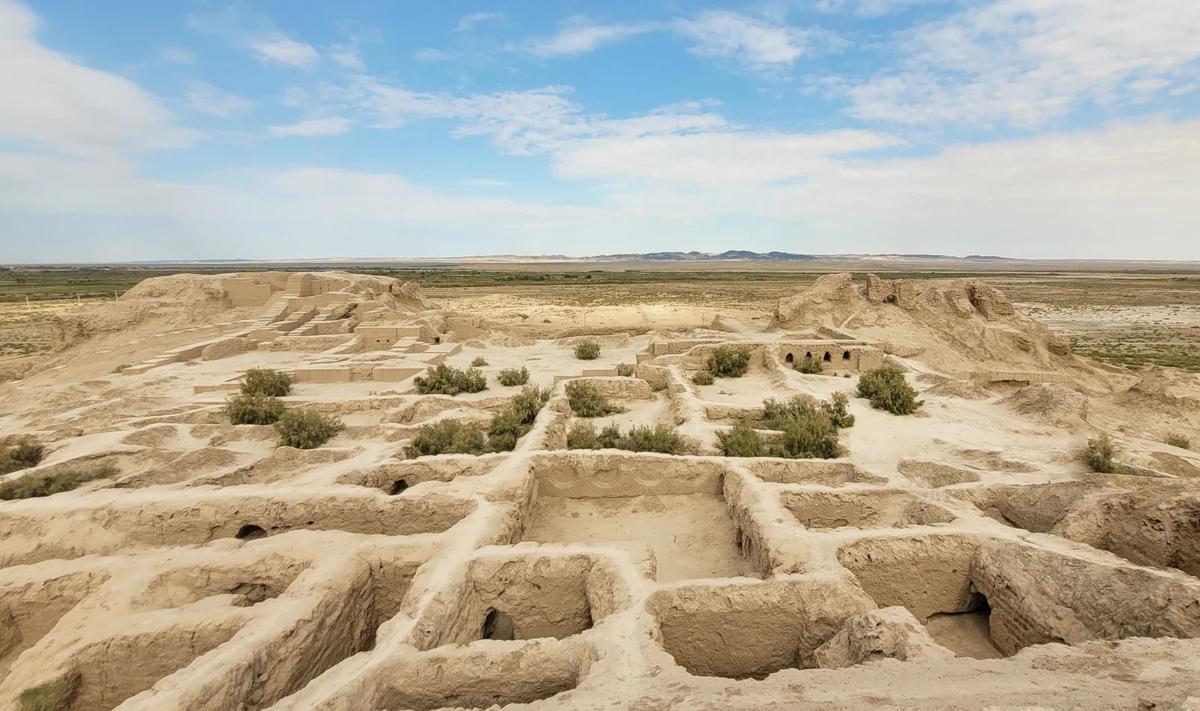
Toprak Kala is a good place to begin because its layout helps you move beyond the idea of a lonely desert outpost. Uzbekistan’s UNESCO submission describes a rectangular settlement with fortifications and a main street leading towards a palace complex. Think about movement through that plan: entering, passing along a street, approaching authority.
Before setting off across the site, ask to see a plan or reconstruction drawing if one is available. Establish where the entrance, enclosure and palace were located. A few minutes of orientation can be more valuable than immediately walking towards the highest visible remains.
Then look for relationships rather than isolated features. How would a substantial enclosure organise the space inside it? Which parts of a building have survived, and which are known through excavation? Where does the guide’s explanation rely on physical evidence, and where is a reconstruction helping you imagine the missing structure?
The distinction is useful when taking photographs, too. Include enough landscape to show the setting, then make a second image that records texture or scale. Avoid captions that identify every surviving wall as a throne room or temple. Archaeological interpretation is interesting enough without assigning a dramatic function to each corner.
Ayaz Kala: read the hill as well as the walls
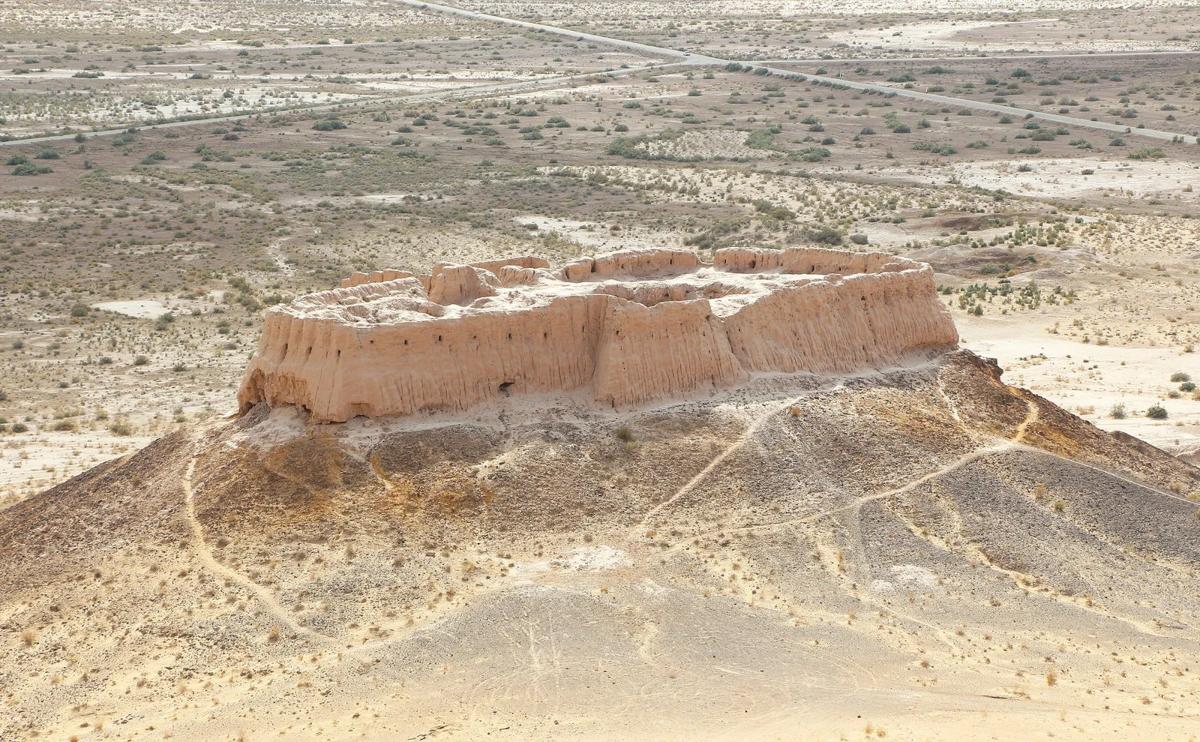
At Ayaz Kala, the setting becomes central to the experience. The national tourism portal describes a complex of three fortress settlements. They should not be treated as a single building constructed at one moment, and a visit to the area does not automatically mean walking through every part.
Ask your guide to point out the separate structures before you start climbing. From a suitable permitted viewpoint, notice their positions relative to the slopes and open land. Why use this height? What can be seen from here? How does the approach affect the impression of the fortification?
This is also a place to be selective. If heat, wind, footing or your mobility makes a climb uncomfortable, choose a lower viewpoint and spend more time understanding the layout. A photograph from the highest point is not a necessary condition of having visited properly.
Do not climb fragile walls or take shortcuts through archaeological remains. Earthen architecture is part of the experience because its material is visible; that same material needs protection. Follow marked or locally indicated routes and give other visitors room on narrow approaches.
Why fewer fortresses make a better day
The wider group includes more sites than most travellers can absorb in one outing. Adding names to an itinerary is easy. Giving each place context, walking time and a useful explanation is harder.
For a first visit, Toprak Kala and Ayaz Kala make a coherent pair: one encourages you to think about an organised settlement and palace, the other about elevation and fortification. A third stop can work if conditions are comfortable and the guide can explain what it adds. It should be an informed choice rather than a test of endurance.
World Monuments Fund has highlighted the desert castles’ conservation needs. That is a reason to pay attention to access instructions, not an invitation to seek out unstable sections for a more adventurous photograph. The most memorable view should also be one you can reach without damaging the place.
How to structure a day from Khiva
Start by telling your organiser what matters most: archaeology, landscape photography, gentle walking or a broader introduction. The same two sites can produce quite different days depending on those priorities.
A sensible suggested sequence is an early departure, a substantial first site visit, a planned lunch or rest break, then the second main site. Let local conditions decide the order. If you want late light for photography, agree which site gets that time and what it means for the return journey.
Confirm the pickup and drop-off points, vehicle, driver’s waiting time, guide service, meals and entrance arrangements in the quote. Ask whether a driver is also providing historical interpretation; the two roles should not be assumed to be interchangeable. Request the expected driving time for your actual route rather than relying on a straight-line distance from Khiva.
Avoid attaching a tightly timed evening departure to the end of the excursion. Your trip will be more comfortable if a longer stop or a slower return does not threaten an onward connection. If you are choosing between a rushed fortress day and a second night in Khiva, consider what the extra margin would let you enjoy.
What to take, and what to confirm
Bring drinking water, sun protection, secure footwear and an extra layer appropriate to the forecast. Ask where you can refill water, find a toilet and stop for food; do not build the day around facilities that have not been confirmed. Keep your camera or phone protected when conditions are dusty.
An overnight near the fortresses can be appealing if accommodation is operating for your dates. Before booking, ask about the exact location, sleeping arrangements, toilets, washing facilities, meals, power and heating or cooling. The word “yurt” describes a type of accommodation, not a complete specification of comfort.
For seasonal planning, consult TravelX’s month-by-month Uzbekistan guide, then have the local organiser check the forecast and site access closer to departure. A general seasonal recommendation cannot settle the conditions on a particular day.
Questions travellers often ask
Are the Khorezm desert fortresses a UNESCO World Heritage Site?
The Desert Castles of Ancient Khorezm entry is on Uzbekistan’s UNESCO Tentative List. It should be described that way, rather than as an inscribed World Heritage Site.
Is a day trip from Khiva enough?
A full day is a reasonable plan for two main sites with transport and a rest break. Exact timing depends on your route, walking pace and conditions. An overnight makes sense when you want additional time in the landscape and suitable accommodation has been confirmed.
How far are the fortresses from Khiva?
Plan on roughly 1–1.5 hours by road from Khiva to the Ayaz Kala area, depending on the route and the last section of track. Toprak Kala is in the same part of Karakalpakstan, so the two sites fit into one day with time to walk and rest.
When is the best time to visit?
April–May and September–October are the most comfortable. Summer afternoons in the desert are extremely hot, so in July and August start early and be back by midday. Winter days are short, cold and often windy.
Do I need a permit for Karakalpakstan?
No. Karakalpakstan is part of Uzbekistan, and your normal entry to Uzbekistan, visa-free or e-visa, covers it. Carry your passport, as you would anywhere in the country.
How hard is the walking?
Toprak Kala is mostly level, on uneven ground. At Ayaz Kala, reaching the upper fortress means a steep, sandy climb that most people take slowly. If that is not for you, lower viewpoints still show how the fortresses sit in the landscape.
Can I sleep in a yurt near the fortresses?
Yes. A yurt camp below Ayaz Kala welcomes guests in the warmer months, usually with shared washing facilities and dinner around a fire. Confirm that it is open on your dates and what is included before you plan the overnight.
Can I see the fortresses on the way between Bukhara and Khiva?
Some travellers do, by car, but it makes a very long day. It works best with an early start, a short list of sites and no evening plans in Khiva. If you have the time, a separate day from Khiva is more relaxed.
What should I ask TravelX for?
Ask for a Khiva-based fortress day with Toprak Kala and Ayaz Kala, clear walking expectations and historical interpretation. Mention any mobility needs and whether photography is a priority. A well-planned visit leaves you with more than pictures of ruins: it helps you recognise the shape of a society in the ground beneath them.
In Khiva itself, start with our Ichan Kala walking tour, or explore all TravelX tours.