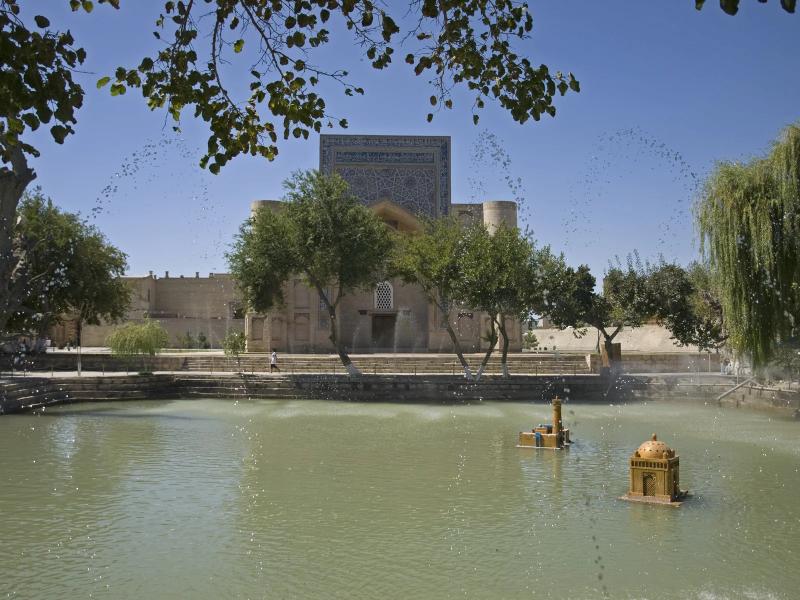
On this page
- Sarazm comes first, by thousands of years
- How to look at a site without monumental façades
- Ancient Panjakent: the scale changes from settlement to town
- Why the paintings matter to the walk
- Plan the day around two distinct questions
- Coming from Samarkand: give the border its own margin
- Questions travellers often ask
Two archaeological sites near Panjakent can change the way you understand a Silk Road journey. One asks how an early settlement grew through farming, herding, craft and exchange. The other opens a window onto a Sogdian town whose houses contained extraordinary painted stories.
Sarazm and ancient Panjakent are often placed together in travel itineraries, but their most interesting connection is also the easiest to overlook: they belong to very different periods. Visiting both is not a matter of seeing two versions of the same ruin. It is a chance to travel across a substantial stretch of Central Asian history within one small part of the Zarafshan Valley.
For a trip from Samarkand, devote a day to the archaeology itself and allow additional time for the international border and transfers. An overnight in or around Panjakent makes the plan more forgiving, particularly if you want to continue to the Seven Lakes. Keep the historical visit and the mountain excursion on separate days whenever your itinerary allows.
Sarazm comes first, by thousands of years
UNESCO dates the development represented at Sarazm from the fourth millennium BCE to the end of the third millennium BCE. Its World Heritage inscription followed in 2010. This is an early settlement story that substantially predates the medieval monuments most travellers associate with Samarkand and Bukhara.
The setting helps explain why the site matters. UNESCO places Sarazm between mountain country suited to pastoralism and a valley suited to agriculture and irrigation. Its significance includes the relationship between those activities, followed by metalworking and craft production, alongside evidence of exchange across a wide area.
The broad lesson is powerful: long-distance connections in Central Asia did not begin with the familiar caravan-city image of the Silk Road. Sarazm offers evidence of much earlier interaction. It is better described on its own terms than squeezed into a medieval story because that is the one visitors already know.
How to look at a site without monumental façades
Sarazm rewards a different kind of attention from a tiled mausoleum. Ask for an introduction to the excavated areas before moving between them. Find out what is visible, what was discovered there and which features are protected or inaccessible.
Start with a simple question: what evidence supports the interpretation? If a space is described as domestic, industrial or ceremonial, ask what led researchers towards that understanding. The answer might involve a combination of layout, objects or traces of activity. You do not need to become an archaeologist to appreciate the difference between a surviving wall and the evidence used to explain it.
Then widen your view. A settlement is more than a collection of rooms. Ask how the landscape, resources and movement of people fit the site’s story. A good guide should help you hold both scales together: the detail in front of you and the wider network to which it belonged.
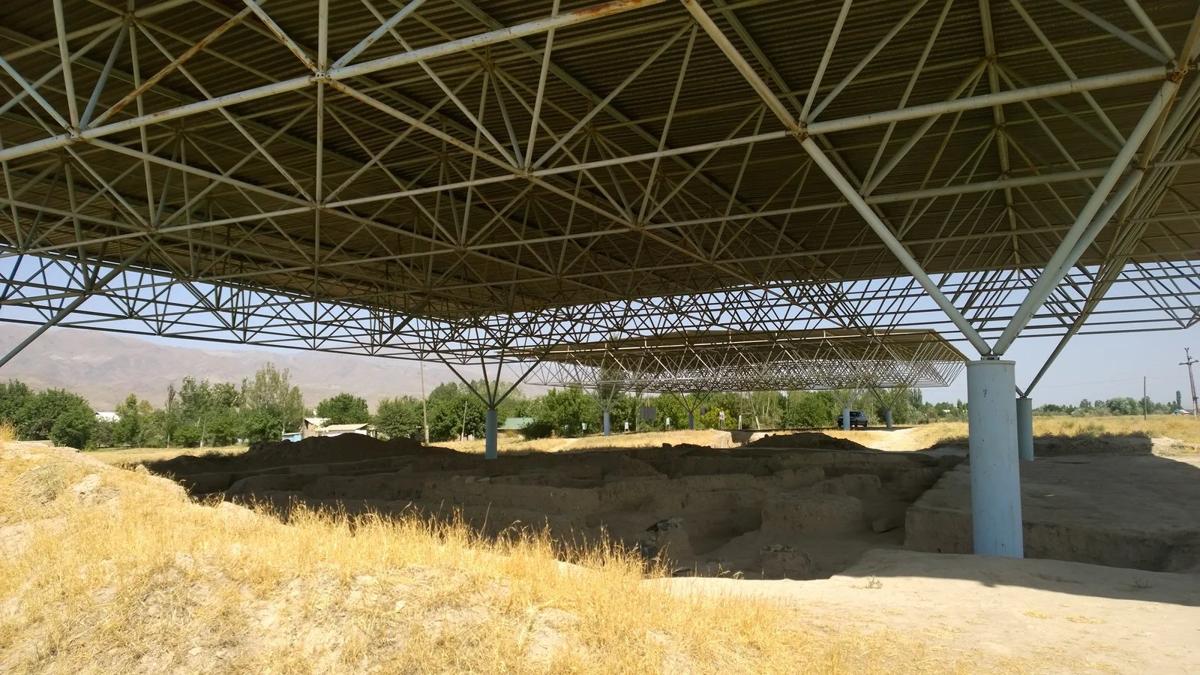
Stay on the permitted routes and do not step into excavated spaces for a photograph. Protective structures and barriers may affect the view, but they also tell you something important about the effort required to preserve fragile remains. An image with a shelter in it is a truthful record of a conserved archaeological site.
Ancient Panjakent: the scale changes from settlement to town
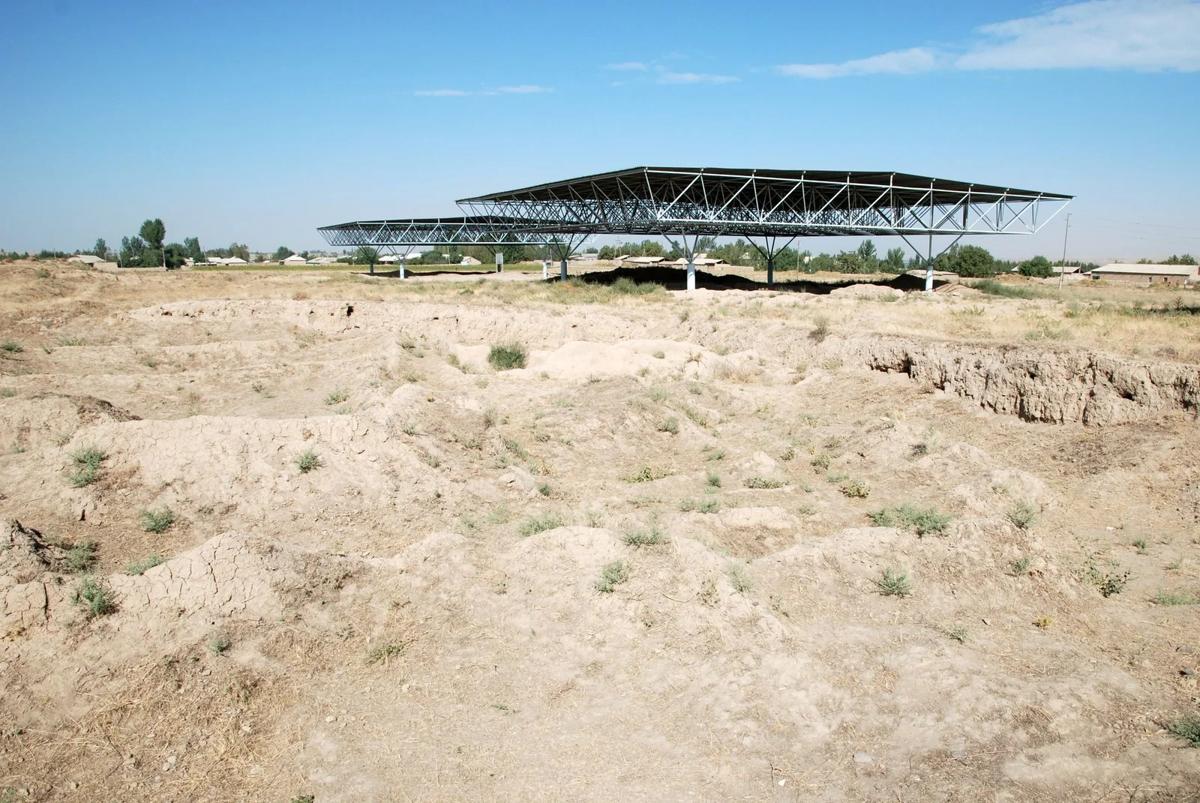
Ancient Panjakent, also written Penjikent or Panjikent, belongs to the Sogdian world of the early Middle Ages. Archaeologist Boris Marshak described it as a town of the fifth to eighth centuries in his account of the excavation work published by the National Gallery of Art. Do not confuse the ancient site with the whole of the modern city.
Here, the useful starting point is urban life. Ask your guide to explain the relationship between houses, streets, public buildings and the citadel. Rather than moving from one indistinct patch of earth to another, follow an explanation of how a neighbourhood or building would have been used.
The site’s paintings make that exercise particularly compelling. Panjakent is known for murals recovered through excavation. One celebrated example, the Rustam narrative cycle held by the State Hermitage Museum, is dated by the museum to the first half of the eighth century.
That detail changes expectations in an important way. The open-air remains and the paintings now held in museum collections are parts of the same historical story, but they are not all in the same place. Do not arrive expecting intact painted halls standing around the excavation site. Ask what is currently visible locally and where the objects or paintings being discussed are held.
Why the paintings matter to the walk
Even if your visit focuses on the ruins, learning about the paintings beforehand gives the spaces a different meaning. A house can become easier to imagine when you know that its interiors once carried visual narratives. Architecture stops being only a plan on the ground and becomes a setting for stories, display and social life.
Ask to compare a reconstruction or published image with the explanation of a building, where appropriate material is available. Make sure you know whether you are seeing an original, a reproduction or an interpretive drawing. Each can be useful, but they answer different questions.
This is a good reason to choose a guide with an interest in archaeology rather than requesting only transport between pins on a map. The value of the visit lies in connecting evidence that is scattered between the ground, site interpretation and museum collections.
Ancient Penjikent is also a component of the Silk Roads: Zarafshan-Karakum Corridor, inscribed on UNESCO’s World Heritage List in 2023. Its designation is separate from Sarazm’s. The two sites should have separate entries in your understanding of the region as well as in your itinerary.
Plan the day around two distinct questions
At Sarazm, ask: how did an early community connect resources, skills and exchange? At ancient Panjakent, ask: what can a Sogdian town reveal about urban life and storytelling? Keeping those questions separate makes it easier to remember what belongs to which period.
A suggested plan is to visit Sarazm with a substantial explanation, pause for lunch or a rest, then explore ancient Panjakent. Reverse the order if opening arrangements, heat or your travel route make that more sensible. A local museum stop can add value when its access and relevant displays have been confirmed.
Avoid combining both sites with an ambitious Seven Lakes excursion simply because all three appear under “Panjakent” in a travel search. Archaeological interpretation requires time, and a mountain journey adds its own driving and walking decisions. A quieter day makes room for questions that would otherwise be abandoned at the next departure time.
Coming from Samarkand: give the border its own margin
This route crosses an international border if you start in Uzbekistan. Check your eligibility to enter Tajikistan and to return to Uzbekistan before arranging transport. Use TravelX’s Tajikistan land-border guide as a planning companion, then reconfirm current crossing arrangements for your date and nationality.
Agree who handles each transfer, where any vehicle change occurs, what waiting time is included and how the return is organised. A quoted site-to-site driving time is not a promise about the total cross-border day. Keep tickets and other fixed commitments away from a return that depends on border processing.
Take water, suitable shoes and protection from the weather. Tell your organiser about mobility needs before booking: an open archaeological landscape can demand different footing from a museum gallery. Ask for a route that fits your comfort rather than assuming every excavation area is equally accessible.
Questions travellers often ask
Are Sarazm and ancient Panjakent the same site?
No. Sarazm represents an early settlement of the fourth and third millennia BCE. Ancient Panjakent is associated with the Sogdian town of the fifth to eighth centuries CE. They are distinct places and historical experiences.
Can I see Panjakent’s famous murals at the ruins?
Do not expect the major excavated paintings to remain in intact rooms outdoors. Important works are held in museum collections, including the Hermitage. Confirm the local displays available during your visit.
How far are the sites from Samarkand and Panjakent?
Sarazm lies about 15 km west of Panjakent, close to the Jartepa–Sarazm border crossing, which is about 45 km from Samarkand. Ancient Panjakent is about 1.5 km from the centre of the modern town.
Where can I see the finds and the wall paintings?
Start at the Rudaki Museum in Panjakent. It shows finds from Sarazm, including jewellery and ceramics from a richly furnished burial, and wall paintings from ancient Panjakent, some of them as copies. Many of the most famous murals are in the State Hermitage Museum in St Petersburg.
Do I need a visa for Tajikistan?
It depends on your passport. Many nationalities can enter Tajikistan visa-free; others need an e-visa. If you came to Uzbekistan on a single-entry e-visa, you will need a new entry to return. See our Tajikistan visa guide before you book.
How much time should I allow?
As a guide, plan about an hour or more at Sarazm, one to two hours at ancient Panjakent and an hour at the museum. With the border crossing, that makes a full day from Samarkand, or a relaxed day if you stay in Panjakent.
When is the best time to visit?
Spring and autumn are the most comfortable. The excavations are open to the sun, with little shade, so in summer visit early or late in the day and take water and a hat.
Can I combine the sites with the Seven Lakes?
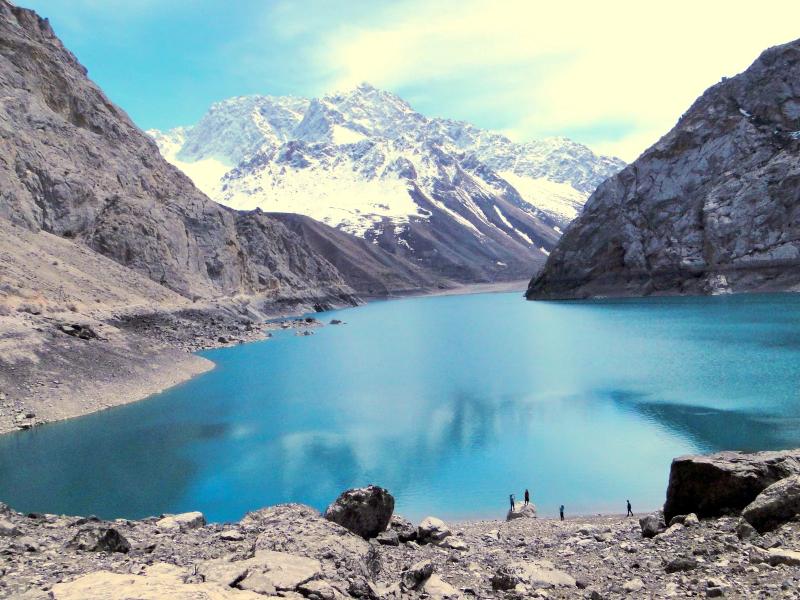
Yes, but on separate days. Stay a night in Panjakent, see the archaeology on one day and the mountains on the next. Read our guide to the Seven Lakes.
What should I ask TravelX to arrange?
Request an archaeology-focused Sarazm and Panjakent visit, with a guide, confirmed access and a realistic border plan if starting in Samarkand. Ask for enough time to understand why the sites differ. The reward is a wider view of the region: early exchange, Sogdian urban life and the later Silk Road cities become related chapters rather than one blurred ancient past.
Our Seven Lakes day trip crosses the same Jartepa–Sarazm border, or explore all TravelX tours.