On this page
Seven is an inviting number for an itinerary. It suggests a route with a natural finish: follow the valley, reach the last lake, complete the set. At Tajikistan’s Seven Lakes, that way of thinking can also make a beautiful mountain journey feel unnecessarily hurried.
The lakes, known as Haftkul or Haft Kul, lie near Panjakent in western Tajikistan. A short visit can introduce the landscape, but an overnight gives you more freedom to decide how to experience it. You can pause when the light is interesting, take a walk that suits your ability and leave room for a meal without treating it as lost driving time.
The most useful planning question is therefore not “Can we reach all seven?” It is “What kind of day do we want in this valley?” Once you answer that, the choice between a day trip and an overnight becomes much easier.
First, put names to the sequence
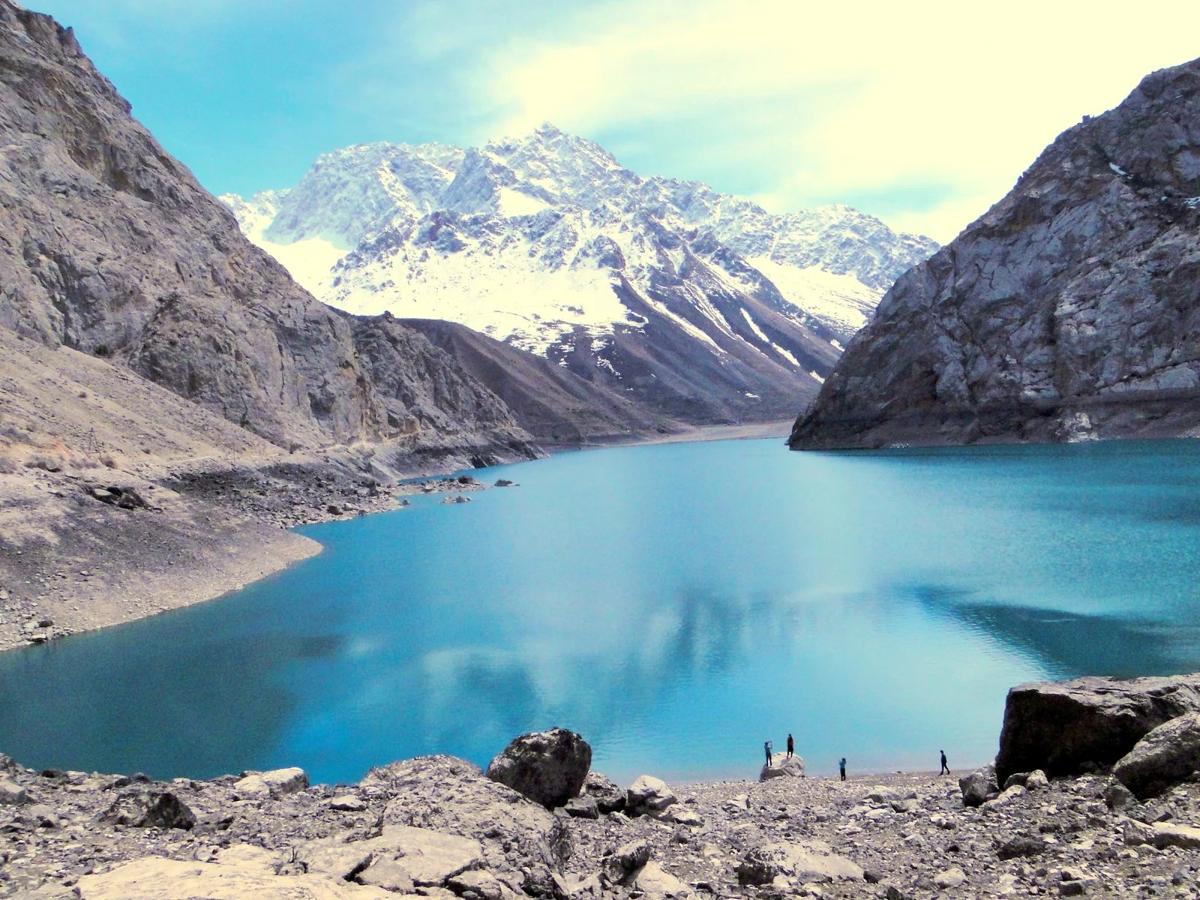
The Tajik Ministry of Foreign Affairs describes the lakes, from the lowest upwards, as Nezhigon, Soya, Gushor, Nofin, Khurdak, Marguzor and Khazorchashma. English transliterations vary, so you may see Nejigon or Mijgon, Hushyor, and Hazorchashma in other material. Ask your driver or guide to use both the lake number and the name when discussing the route.
The ministry identifies Marguzor, the sixth lake, as the largest. The group is consequently also called the Marguzor Lakes. That can create confusion when a trip description uses “Marguzor” to mean either one lake or the whole area; establish which meaning is intended before booking accommodation or transport.
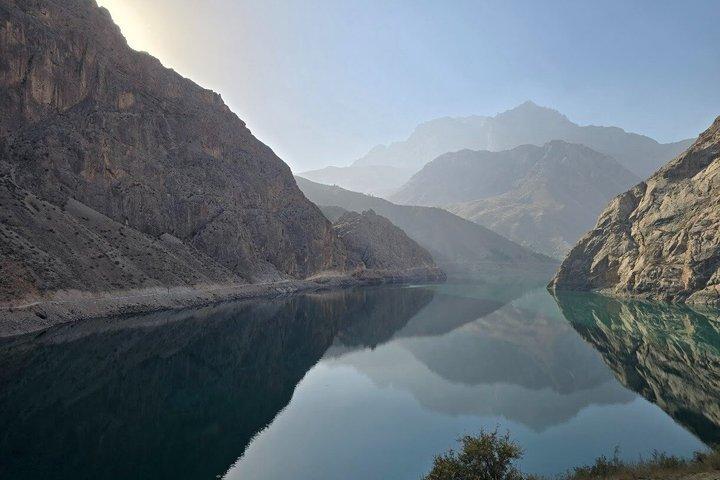
The government’s tourism material and its World Bank-hosted destination guide both highlight the lakes’ changing colours. Let that be an invitation to observe rather than a guarantee that every stop will look like the same heavily saturated photograph. Weather, light and your viewpoint are part of the experience.
What an overnight actually buys you
The main benefit is flexibility. A cross-border day from Samarkand has several moving parts before you reach the valley: departure, border formalities, transfers and the onward drive. A delay early in the day can reduce the time left for walking or stopping later.
With an overnight arranged, you can separate arrival from the most ambitious part of the visit. If the first day runs late, the whole experience does not have to become a sequence of hurried photo stops. You may also be able to return to a viewpoint in different light, subject to local access and conditions.
An overnight should not be sold as a promise of solitude. This is a place where people live and work, and the accommodation you choose is a real business or household with its own routines. The advantage is time to participate respectfully in the visit you have arranged, rather than assuming the valley will become a private backdrop once day visitors leave.
A suggested two-day plan from Panjakent
Day one: arrive, stop selectively, settle in. Leave Panjakent with a locally confirmed route and a clear agreement about where you will sleep. Choose several stops where parking and access are appropriate, rather than asking the driver to halt at every tempting bend. Leave time to arrive at the guesthouse or homestay, discuss the next morning and enjoy a meal.
Day two: choose a walk, then return with margin. Decide the walk with someone who knows the current route. An upper-lake excursion may suit your group, but a shorter outing can be the better choice when weather, footing or fitness changes the plan. Agree a return time and keep enough margin for the drive back to Panjakent.
This is a suggested structure, not a promise that a particular vehicle can reach a particular lake. Ask where the drivable section is currently ending and what walking is involved beyond it. A road shown on a map does not settle its suitability for your vehicle or the conditions on your date.
If you begin in Samarkand, consider spending the first night in Panjakent before entering the valley, or arranging the mountain overnight as part of a longer Tajikistan stay. Either approach reduces the pressure to combine an international crossing, a mountain excursion and a fixed return into one day.
The seventh lake is a choice, not an exam
Reaching Khazorchashma can be a satisfying aim. It should remain a decision made with current local advice rather than a requirement imposed by the destination’s name. Before setting out, ask about the route surface, climbing, likely walking duration for your group and a sensible turnaround time.
Do not borrow another traveller’s walking time without considering where they started, how they travelled and the conditions they encountered. A route description can be accurate for one person and still be unsuitable as your timetable. Ask your guide to explain the day in terms of the actual plan, not simply “easy” or “a short hike”.
The same principle applies to families and mixed-ability groups. Tell the organiser who will be travelling and what kind of walking everyone enjoys. A visit that leaves the whole group comfortable is more successful than one designed around the fastest walker’s ambition.
Choose accommodation by the details
If a listing offers a homestay or guesthouse, ask what that means in practice. Confirm the exact village or lake, whether the room is private or shared, the sleeping arrangements, toilets, washing facilities, electricity and any heating. Ask which meals are included and discuss dietary needs in advance.
These questions do not make the experience less adventurous. They help you arrive with appropriate expectations and give the host a clear brief. A simple room can be entirely comfortable for the trip you want, provided you know what is being offered.
Agree the total price, payment method and cancellation arrangements. Ask whether your driver and guide are staying nearby, who can help if plans change, and how you will communicate if mobile service is unavailable. Keep your arrival information available offline rather than relying on a message thread that needs a connection.
If you are invited into a private space or offered something beyond the booking, ask before photographing and avoid assuming that every gesture is part of a paid cultural performance. Let your host set the terms of the interaction. A respectful visit does not require a staged portrait to prove that it happened.
Leave room in the budget for the valley
An overnight can direct part of the trip’s spending towards accommodation and meals in the area. To make that intention meaningful, ask who provides those services and what is included. Paying a local host fairly is a more concrete contribution than describing a trip as sustainable without examining how it operates.
Carry out your litter, keep washing products out of the lakes and avoid shortcuts through fields or private land. Use an established place for a break when one is offered. These are small decisions, but they are decisions you can actually control.
Photography deserves the same care. Ask the driver where it is safe to stop and use a permitted viewpoint instead of stepping into the road or onto unstable ground. If people are central to an image, seek permission. The valley should remain a place people can use normally while you are visiting it.
When a day trip is the right answer
A day trip can be a sensible choice when time is limited, conditions are suitable and you are comfortable with a selective visit. Its success depends on a realistic brief. Tell the organiser whether you prefer scenic stops, a walk or a more relaxed meal; do not assume all three fit comfortably around the border from Samarkand.
For a cross-border plan, check entry and re-entry eligibility and read TravelX’s Tajikistan land-border guide. Confirm arrangements close to departure. If you also want Sarazm and ancient Panjakent, give those sites a separate day where possible; they deserve interpretation, not a few rushed minutes on the way to the mountains.
Mountain conditions require a current check rather than a blanket promise about the best month. The UK Foreign, Commonwealth & Development Office notes that winter weather can disrupt mountain travel and that rescue provision in Tajikistan is limited. Discuss the weather, road and walking plan with your organiser and check that your insurance covers your planned activities.
Questions travellers often ask
Do I have to visit all seven lakes?
No. Choose a route that fits the conditions and your interests. Spending more time at fewer stops can be a better experience than completing the sequence in a hurry.
Is an overnight necessary?
It is an editorial recommendation for a slower visit, not a requirement. A well-planned day trip remains an option. An overnight gives more room for walking, meals and changes to the plan.
How far are the lakes from Panjakent?
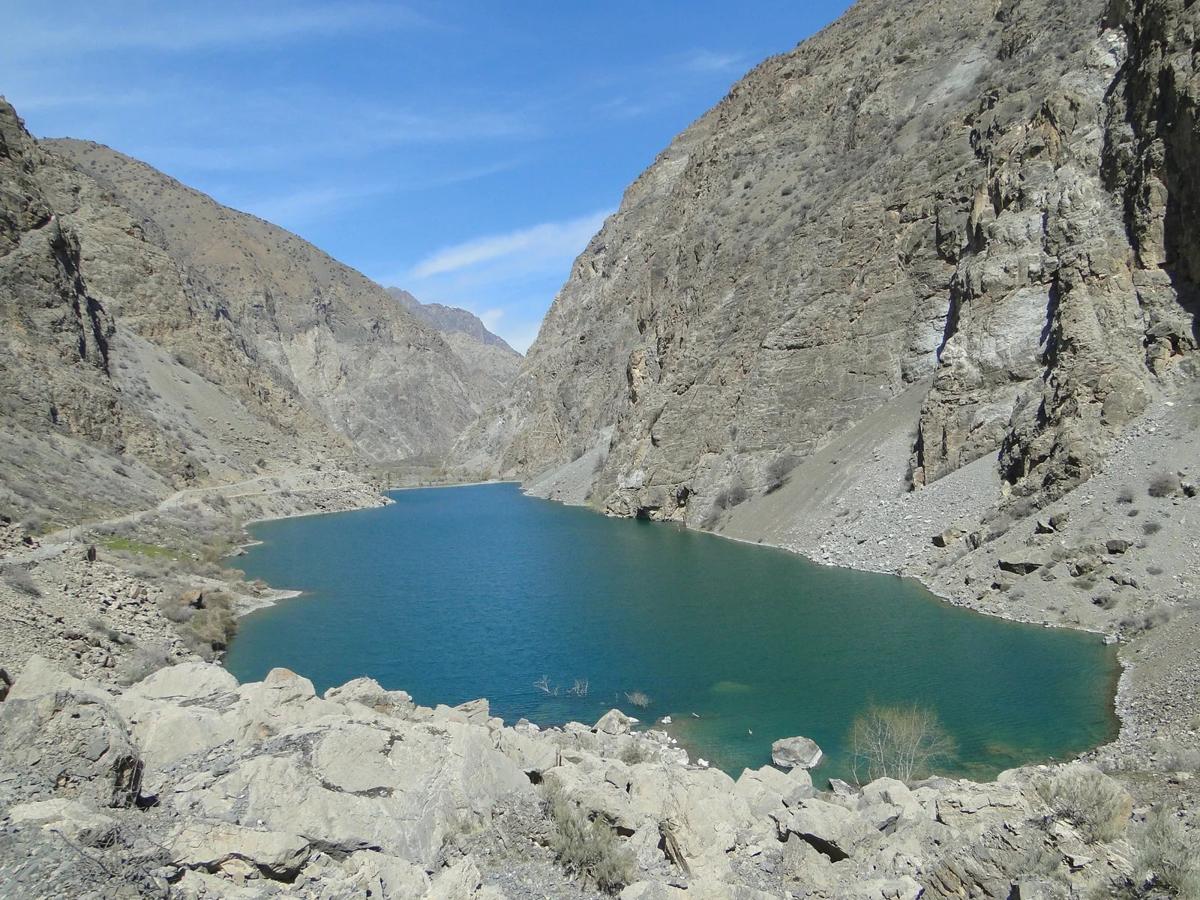
Roughly 50–60 km. The first part of the road is paved; after that it becomes a rough mountain road along the Shing valley. Most cars reach Marguzor, the sixth lake; the seventh, Hazorchashma, is about 6.5 km further on a steeper, rougher track.
How high are the lakes?
From about 1,640 m at the first lake to almost 2,400 m at the seventh. That is high enough to feel cooler air and a steeper walk, but most visitors are not affected by the altitude itself.
When is the best time to go?
Late spring to early autumn. In summer the valley is green and the days are warm, while nights stay cool. In winter the upper road can be blocked by snow for months and the lakes freeze, so check conditions outside the main season.
Do I need a special permit?
No. You only need to be able to enter Tajikistan: visa-free or with an e-visa, depending on your passport. The GBAO permit is only for the Pamirs, not for the Seven Lakes. See our Tajikistan visa guide.
Will my phone work, and can I pay by card?
Mobile coverage in the valley is patchy, so download offline maps before you go. Take enough Tajik somoni in cash for meals, accommodation and small purchases; do not count on paying by card.
Can I continue from the lakes to Iskanderkul?
Not by car directly. Hiking trails lead from the upper lakes over the mountains towards Iskanderkul, but that is a multi-day trek for experienced walkers with a guide. By road, you go back through Panjakent; our 2-day Iskanderkul tour starts in Samarkand.
What should I ask TravelX to arrange?
Request a Seven Lakes itinerary with a confirmed overnight option, clear walking expectations and a route checked locally for your dates. Say whether you are starting in Panjakent or Samarkand. Then let the plan serve the landscape: enough time to notice it, enough flexibility to enjoy it, and no obligation to turn seven beautiful lakes into seven deadlines.
See our Seven Lakes day trip and our 6-day Silk Road tour with the Seven Lakes, or explore all TravelX tours.