On this page
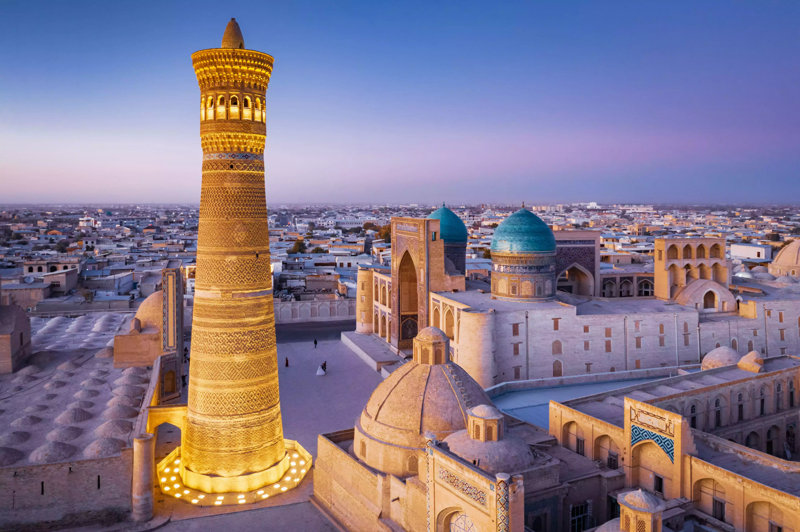
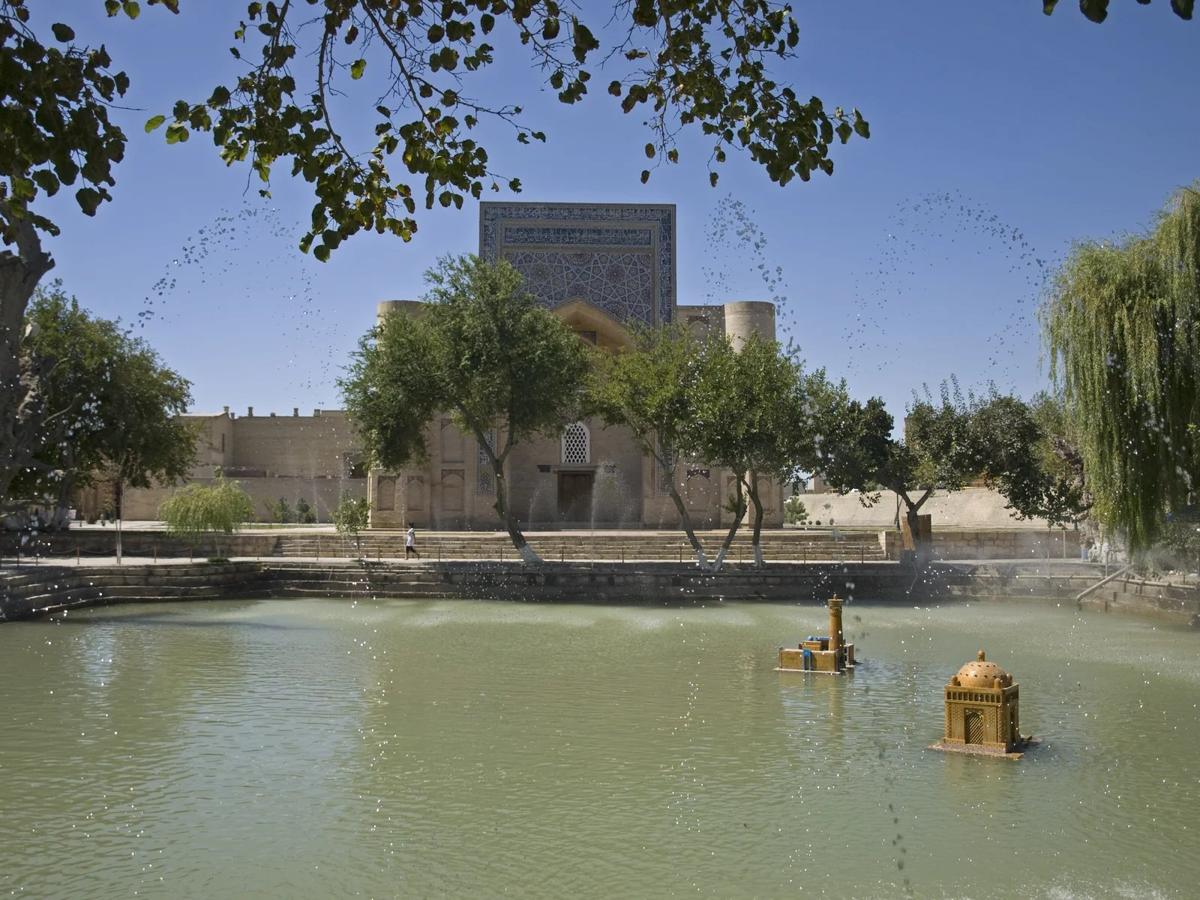
The easiest way to miss something important in Bukhara is to look only upwards. Domes, minarets and monumental gateways keep pulling the eye towards the skyline. At Lyabi-Hauz, try the opposite: look down towards the pond, then notice how the buildings and public space gather around it.
Water gives a familiar city a different plot. Instead of moving from one famous monument to the next, you can follow three questions: where did people gather, how was water carried and stored, and how did a spring become a place of memory?
This Bukhara walk connects Lyabi-Hauz, Bolo-Hauz and the water-supply museum at Chashma-Ayub. It is a thematic route rather than a complete city tour. Allow a relaxed half-day as a planning estimate, with a break and the option of a short taxi transfer. If you have already spent a day admiring the principal monuments, this is a way to look at the city again with a more specific purpose.
Start at Lyabi-Hauz: a square organised around a pond
Uzbekistan’s national tourism portal translates Lyabi-Hauz as “by the pond”. It identifies the surrounding ensemble with the Kukeldash madrassah, the Nadir Divan Begi madrassah and the khanqah of the same name. The water is not incidental to the name or the composition of the place.
Walk around the pond before concentrating on any one façade. From each side, ask what changes: the relationship between the water and a doorway, the amount of shade, the view across the square. A building that dominates one position may become part of a wider arrangement from another.
This is an especially useful exercise for photographers. Take a view that includes the basin and its edges, rather than cropping the water into a narrow strip beneath a monumental façade. The resulting image tells the reader more about how the ensemble fits together.
Then put the camera away for a few minutes. If a shaded seat is available, use it. You are not conducting a historical experiment, but you are giving yourself time to notice something a rapid monument checklist often misses: a public place can be experienced through pauses, sightlines and the way people share its edges.
A word to carry through the walk: hauz
You will see the name written as hauz, hovuz or haouz in English-language material. For this route, the useful association is a pool or basin. Learning the word helps you connect the watery centre of Lyabi-Hauz with the next main stop, Bolo-Hauz.
Do not assume the appearance of a present-day basin tells you exactly how it operated in every earlier period. Restoration, management and modern use all influence what you see. Ask your guide to distinguish documented historical functions from the current arrangement, and from stories told about the site.
That habit also makes the wider city more interesting. UNESCO describes Bukhara’s historic centre as a particularly complete example of a medieval Central Asian city. A thematic walk lets you consider how a city worked as well as how its monuments looked. It is an invitation to ask about ordinary needs alongside royal commissions and religious buildings.
Between the main stops, follow the question
From Lyabi-Hauz, continue through the historic centre towards the Ark area and Bolo-Hauz. Have your hotel or guide mark a suitable route on your map; pedestrian access and construction can affect the most comfortable way through.
You do not need to visit every attraction you pass. Choose one pause along the way and use it to ask a practical historical question. How might water have reached a household? What containers were used? Who carried it? Which of those questions can the guide answer from local evidence, and which would be better addressed in the museum?
This approach gives the walk continuity without requiring you to invent an ancient canal beneath every street. It also leaves room to enjoy the architecture. Looking at the city through water does not make its tilework or brickwork less beautiful; it supplies another reason for stopping.
If heat or fatigue is reducing your attention, shorten the walking section. A taxi between the eastern and western parts of the route can preserve time for the places that matter most. The purpose is a good visit, not completing an arbitrary distance on foot.
Bolo-Hauz: look at the relationship between mosque and basin
Bolo-Hauz stands opposite the Ark area. The Uzbek tourism listing dates the winter mosque and basin to 1712 and describes the tall wooden columns supporting the summer prayer space’s porch. Water, timber and the building’s mass offer a very different composition from Lyabi-Hauz.
Start with an exterior view that keeps the mosque and basin in the same frame. Then move closer to look at the columns and the underside of the porch where access permits. Rather than trying to make the whole place fit into one photograph, make two images with different jobs: one explains the setting, the other records a detail.
Treat the mosque as a religious place. Ask whether entry is appropriate at the time, follow local instructions about dress and shoes, and keep clear of anyone praying. An exterior visit can still be rewarding when the interior is unavailable.
The useful comparison is not which of the two hauz settings is more impressive. It is how each makes a different relationship between a basin, surrounding architecture and the space used by people. Keeping that question in mind turns two attractive stops into a connected experience.
Chashma-Ayub: where the theme becomes tangible
Finish at Chashma-Ayub, which the national tourism board includes alongside the Museum of the History of Water Supply in its Bukhara itinerary. The museum is the stop that can turn your earlier questions into a more concrete understanding of handling and storing water.
The museum listing describes water carriers, storage vessels and clay pipes among its displays. Look for the practical problem behind each object. A container has to hold water, but it may also need to be lifted, balanced, carried, poured from and cleaned. Thinking about those actions makes an apparently ordinary object worth a longer look.
Chashma-Ayub is also associated with the story of the prophet Job, or Ayyub, and a spring brought forth to relieve thirst. Treat this explicitly as a local religious legend, not a verified account of how the water originated. The story belongs in the visit because it expresses the significance attached to water; it does not need to become an archaeological claim.
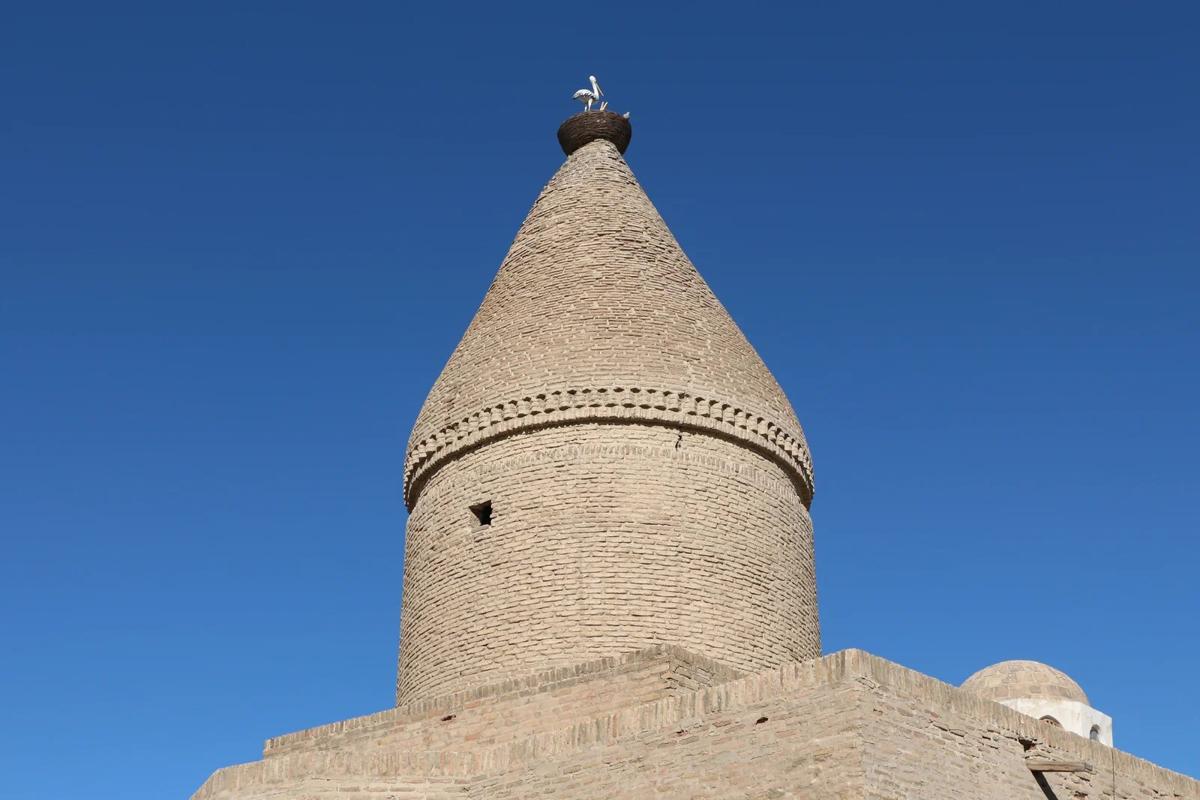
Outside, notice the distinctive pointed form of the roof over part of the complex. The building provides a final change of scale after the open spaces of the two hauz stops: the route that began with an ensemble can end with a spring, a vessel and a human need.
Make the route comfortable
Before setting out, check the museum’s current opening arrangements and agree a realistic walking route. Published listings can help identify a place without guaranteeing that every room will be accessible on your visit. Carry drinking water and plan a proper break, especially if the forecast is hot.
For current monument costs elsewhere in the city, use TravelX’s Uzbekistan entrance-fee guide. This walk is deliberately organised around a theme rather than a new ticket table. Confirm the charges for the particular interiors you intend to enter.
Avoid entering private courtyards to continue the story. A view through a doorway is not an invitation, and a residential lane should not become a staged scene for a travel photograph. The publicly accessible landmarks provide more than enough material for a thoughtful visit.
Questions travellers often ask
How long does this Bukhara walk take?
Allow a relaxed half-day as a suggested allocation, rather than a measured walking time. Museum interest, breaks, access and any taxi transfer will determine the actual duration.
Is it suitable for a first visit?
Yes, if you like a focused story, though it does not replace a broad introduction to Bukhara’s main monuments. It also works particularly well on a second day, when familiar surroundings can be examined more closely.
How far is the walk?
From Lyabi-Hauz to Bolo-Hauz and on to Chashma-Ayub is roughly 2 km on foot through the old town, mostly on level streets.
What is the best time of day?
In warm months, start early in the morning or in the late afternoon, when the light is softer and there is more shade. Lyabi-Hauz is liveliest in the evening, so you can also finish the day back there.
Do I need tickets?
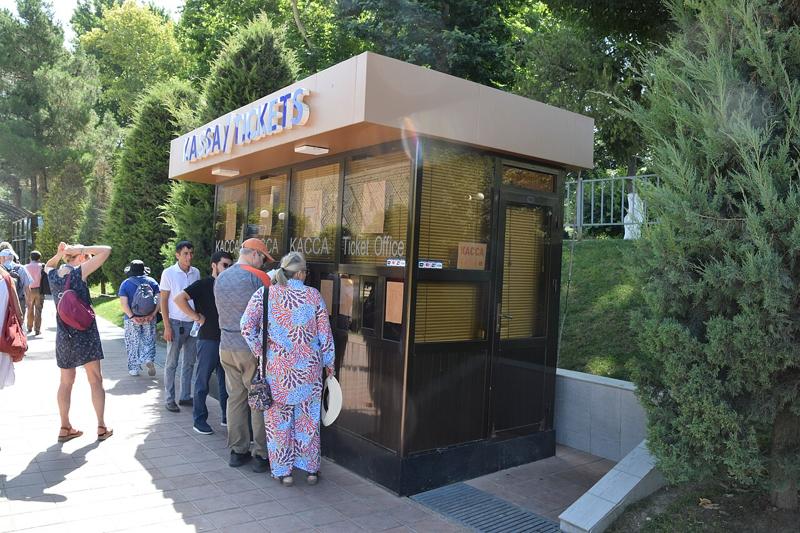
The squares and the outside of the monuments are free to see. The water-supply museum at Chashma-Ayub and some interiors charge a small entrance fee; see our entrance-fee guide for current prices.
Can I go inside the Bolo-Hauz mosque?
It is an active mosque. Visitors are usually welcome outside prayer times. Dress modestly, with shoulders and knees covered, take off your shoes where others do, and women should carry a scarf. If a prayer is under way, enjoy the porch and the basin from outside.
Can I combine the walk with the Ark?
Yes. Bolo-Hauz stands opposite the Ark fortress, so it is easy to add. Allow about an extra hour or more for the Ark itself.
Is the route suitable for children or limited mobility?
Most of the old town is flat, but paving can be uneven and some monuments have steps and high thresholds. A short taxi ride between the main stops keeps the walk easy, and there are plenty of places to sit in the shade.
Can TravelX arrange it with a guide?
Ask for a Bukhara walk centred on water, with Lyabi-Hauz, Bolo-Hauz and Chashma-Ayub as the main stops. Request a guide who can separate documented history from legend and leave time for the museum. You may finish with fewer monument names on a list, but a clearer sense of the everyday problem that made a city possible.
Walk Bukhara with a guide on our Bukhara walking tour, or explore all TravelX tours.