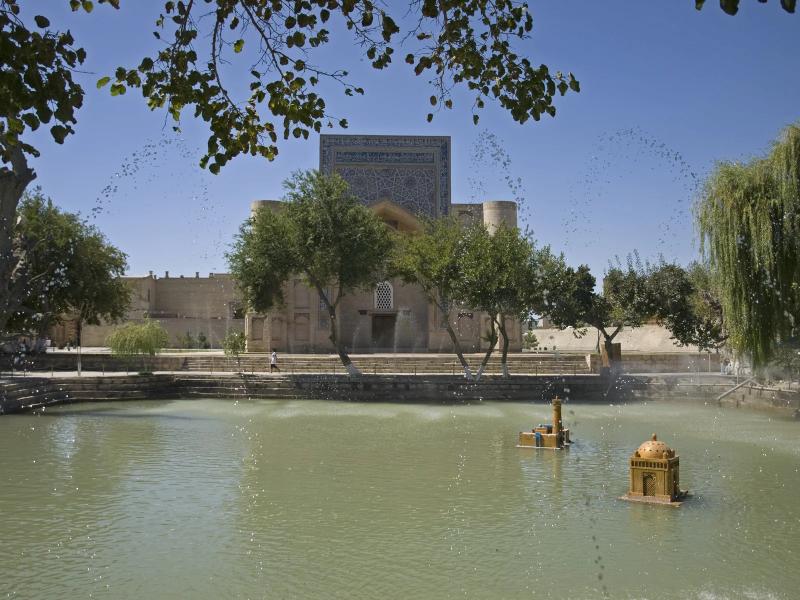
Between Samarkand and Bukhara lies a part of Uzbekistan most visitors never see: a lake in the Kyzylkum desert, yurt camps under the stars and stone villages in the Nuratau mountains. What to expect, and what to bring.
On this page
Between Samarkand and Bukhara lies a part of Uzbekistan most visitors never see. To the north of the main road, the Nuratau mountains hide stone villages, walnut groves and clear streams, and beyond them a huge lake shimmers in the Kyzylkum desert. A night in a yurt by the dunes and a night with a village family make one of the most rewarding detours in the country.
Why combine them
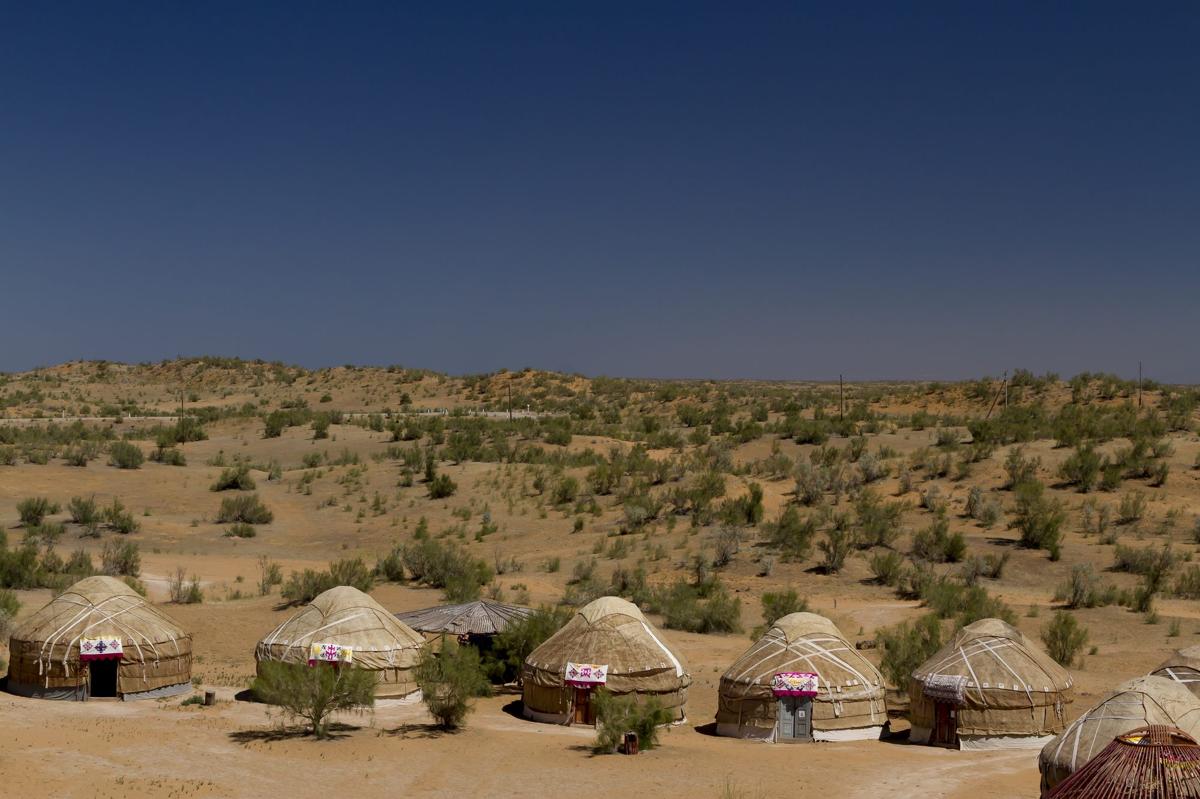
The two are neighbours. A typical route leaves Samarkand in the morning, stops at the holy spring in Nurata, spends a night in a family guesthouse in the Nuratau mountains, crosses to a yurt camp near Aydarkul for the second night and continues to Bukhara. Samarkand and Bukhara are each about four hours from the camps, so the detour fits neatly between the two cities.
Aydarkul: a lake that did not exist before 1969
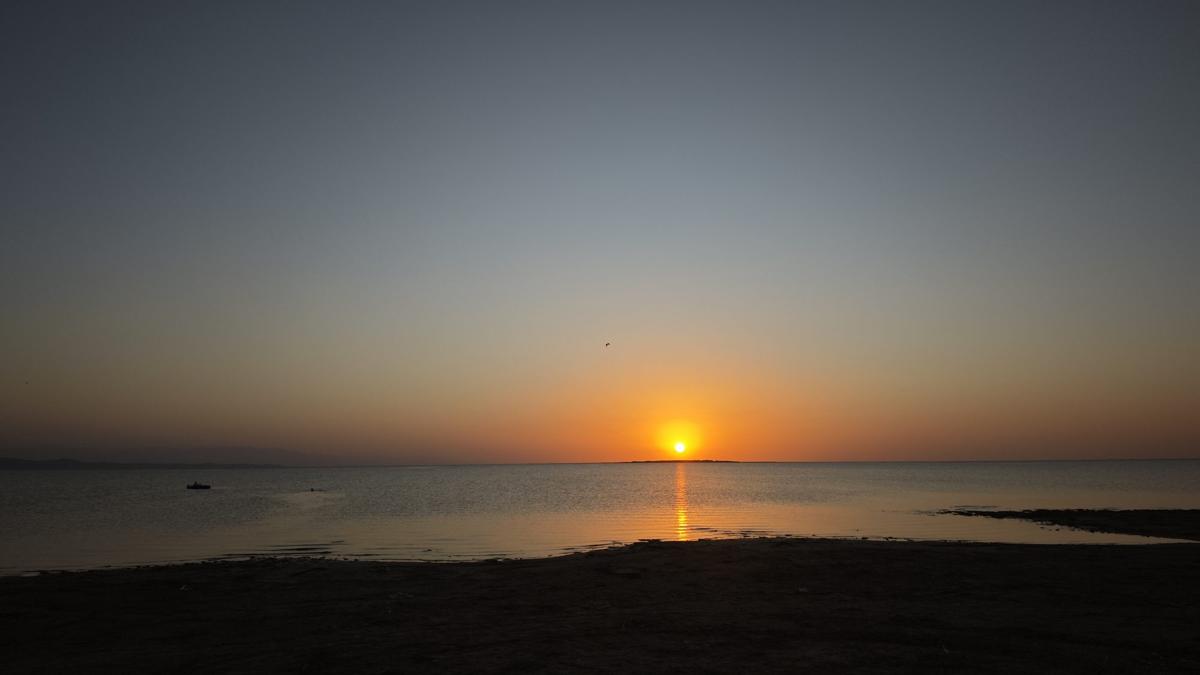
Aydarkul is an accident. In 1969 heavy floods on the Syr Darya forced an emergency release of about 20 km³ of water from the Chardara reservoir, and it poured into the Arnasay depression in the desert. A new lake was born, and more water has been added in many years since.
Today the Aydar-Arnasay lakes cover more than 3,000 km², stretching up to 160 km. Since 2008 they have been a Ramsar wetland of international importance, where more than 100 species of water birds have been recorded, including Dalmatian pelicans. Twenty-eight kinds of fish live in the water, which is slightly salty.
A night in a yurt camp
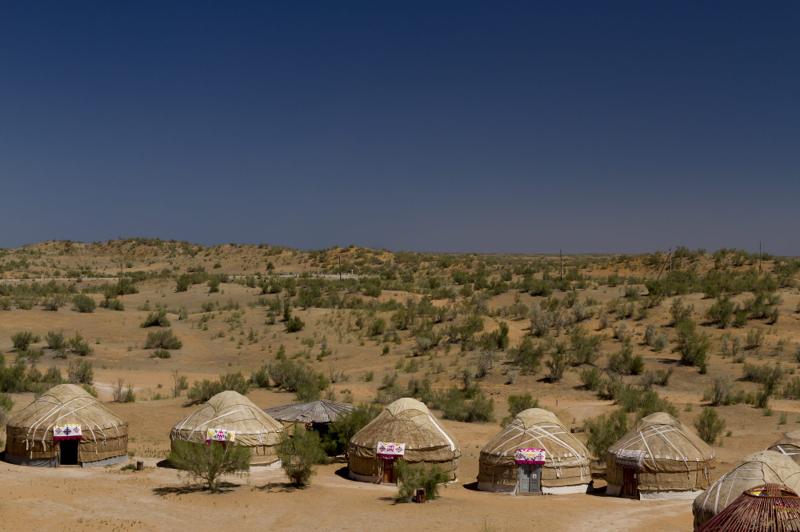
The camps stand among the dunes a few kilometres from the shore. Each yurt sleeps two to four on mattresses with thick blankets, and there is a shared block with toilets and showers. In the late afternoon you ride a two-humped Bactrian camel over the sand, then watch the sunset from the lake. After dinner the camp lights a fire, and often a musician plays the two-stringed dombra and sings Kazakh songs. Far from any town, the stars are spectacular.
Nuratau: villages, walnuts and wild sheep
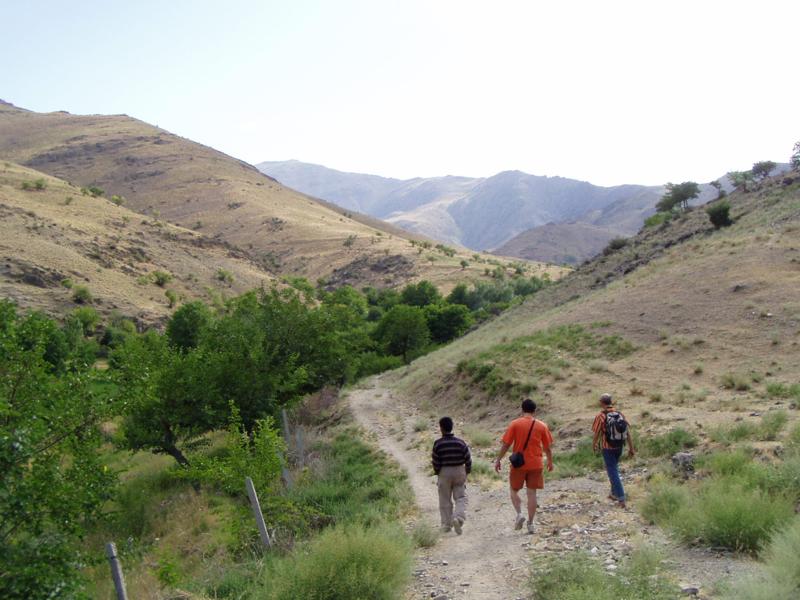
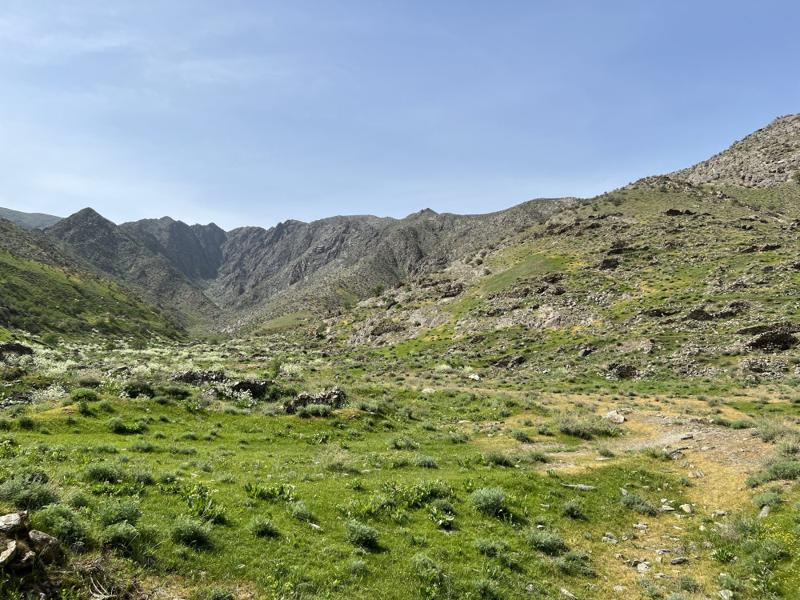
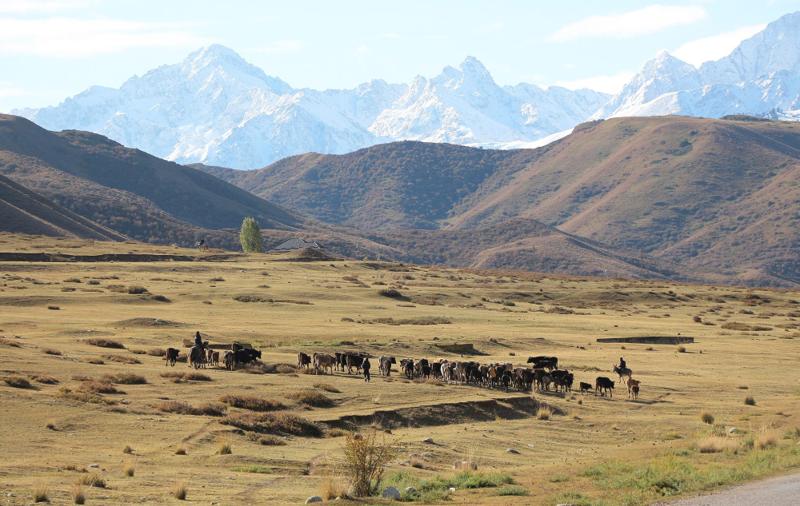
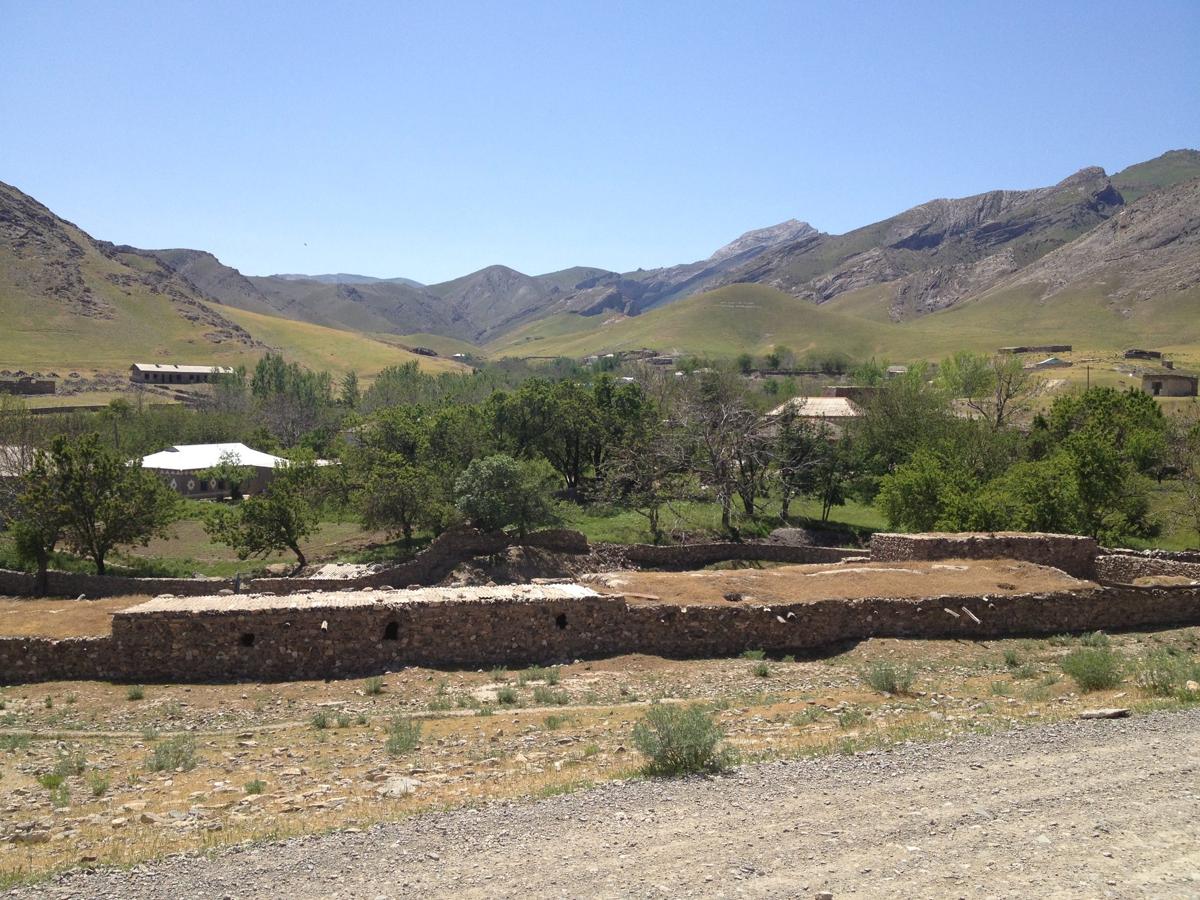
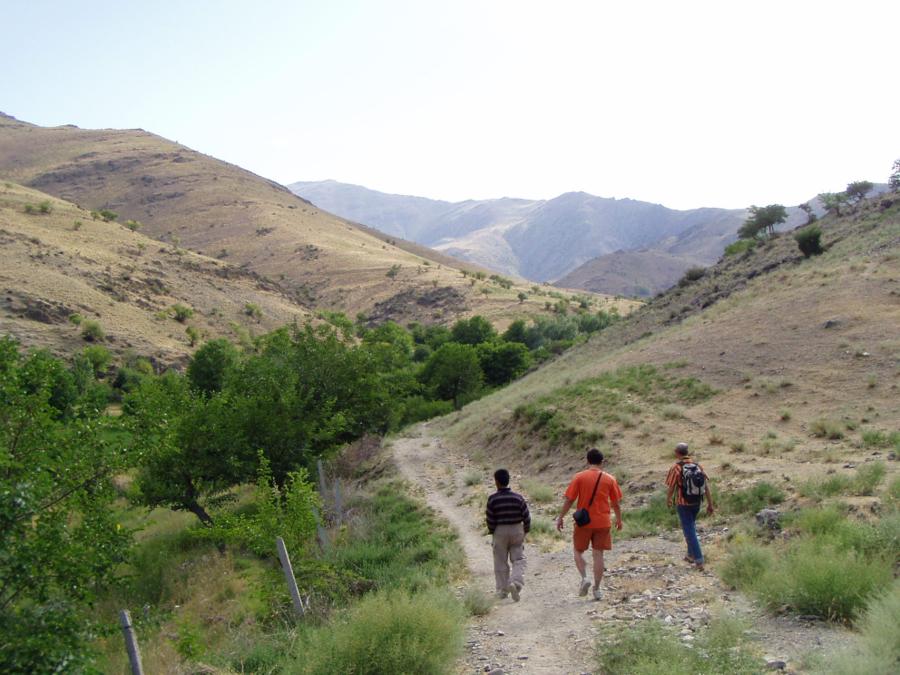
The Nuratau range runs for more than 170 km, rising to 2,169 m. Its northern valleys shelter villages such as Sentob, Hayat, Majrum and Ukhum, linked by old paths through gorges and walnut groves. Since 2008, a community tourism project has helped families open their homes to visitors: by 2022 there were some 14 guesthouses in six villages, and most of the money stays with the families.
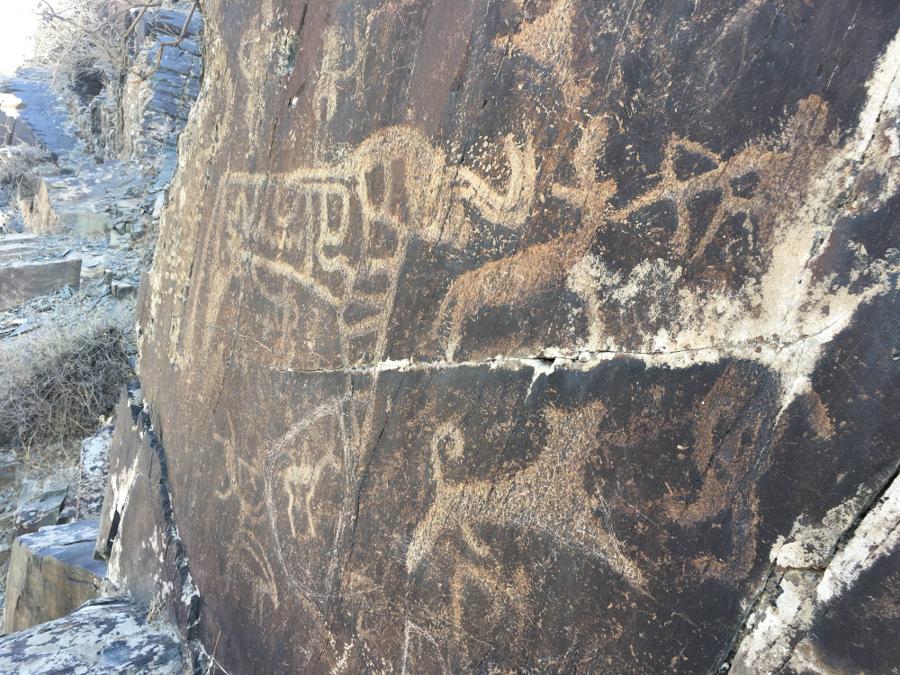
The Nurata State Reserve, created in 1975, protects the mountains' wildlife, including about 2,000 Severtsov's sheep, a rare wild sheep, and more than 200 kinds of birds. In the gorges near Ukhum, rock carvings from the Bronze Age to the Middle Ages show hunters and wild goats.
Nurata: the holy spring and Alexander's fortress
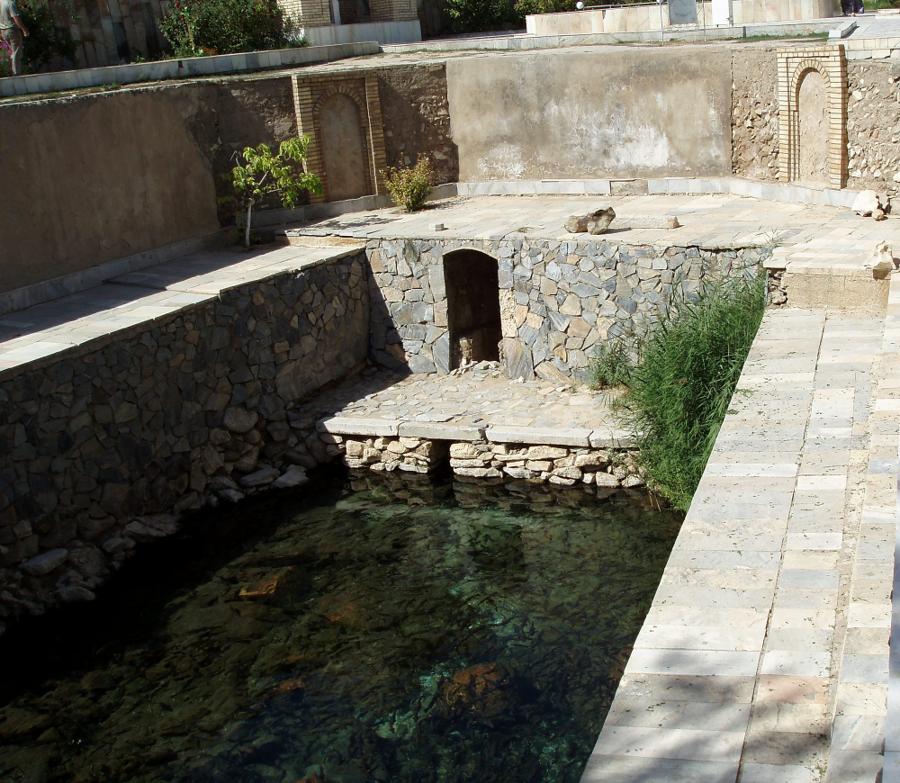
The small town of Nurata grew up around Chashma, a spring that stays at about 20 °C all year. It is full of fish that no one may catch, and pilgrims come to feed them and pray at the Friday mosque beside it, whose roof rests on 40 wooden columns. On the hill above are the ruins of a fortress that tradition says Alexander the Great founded in the 4th century BC. Nearby, ancient underground water channels called karez still bring water from the mountains.
Interesting facts
- The protected Ramsar area around the lakes covers more than 5,000 km² of water, reed beds and desert.
- The Nuratau community tourism project won an international TO DO Award for responsible tourism in 2023.
- Severtsov's sheep is found almost nowhere else: about 2,000 survive in the Nuratau and a few neighbouring ranges.
- The fish in Nurata's holy spring are a kind of marinka, and local belief holds them sacred.
Important notes
- Season: the yurt camps open from about April to October. The best months are April–May and September–October; July and August are hot in the desert.
- Village homestays are simple: mattresses on the floor, shared bathrooms, home cooking. Hot water and Wi-Fi are not guaranteed.
- Customs: dress modestly in the villages, take your shoes off indoors and ask before photographing people.
- Cash: there are no ATMs in the desert or the villages; bring so'm.
- Insects and wildlife: bring repellent for summer evenings by the lake, and shake out your shoes in the morning.
What to bring
- Comfortable walking shoes and a light daypack.
- A sun hat, sunglasses and sunscreen.
- A warm layer for evenings, which are cool in the mountains and the desert.
- A scarf or buff against wind and sand.
- Swimwear in summer.
- A headlamp and a power bank.
- Long trousers if you plan to ride horses or camels.
Plan it with TravelX
Photos: Man77, CC BY-SA 3.0 · Sigismund von Dobschütz, CC BY-SA 3.0 · Arina Pan, CC BY-SA 4.0 · Stephanieadams99, CC BY-SA 4.0