Winter is Uzbekistan's quiet season: cold, clear days, no queues at the Registan, lower prices and, on New Year's Eve, the biggest party of the year. How cold it gets, what is open and what to bring.
On this page
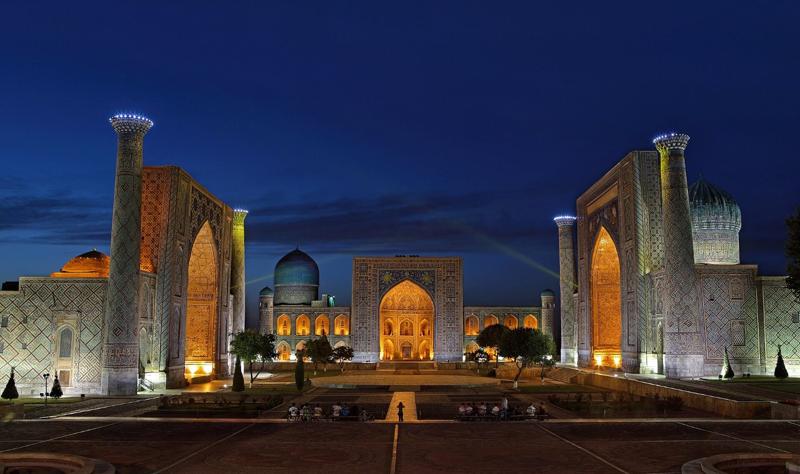
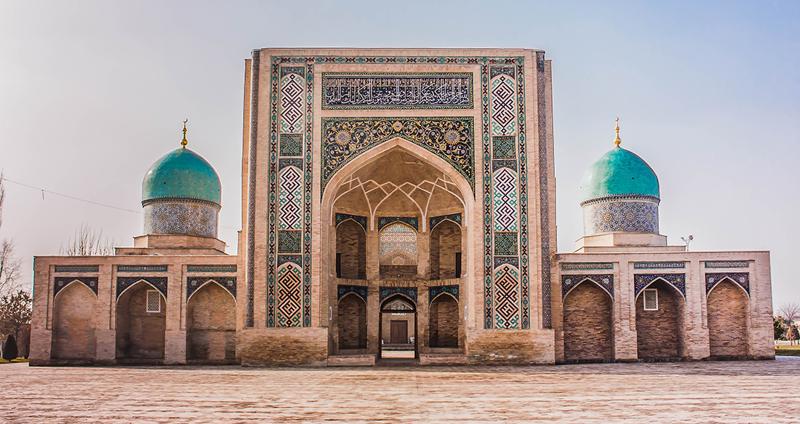
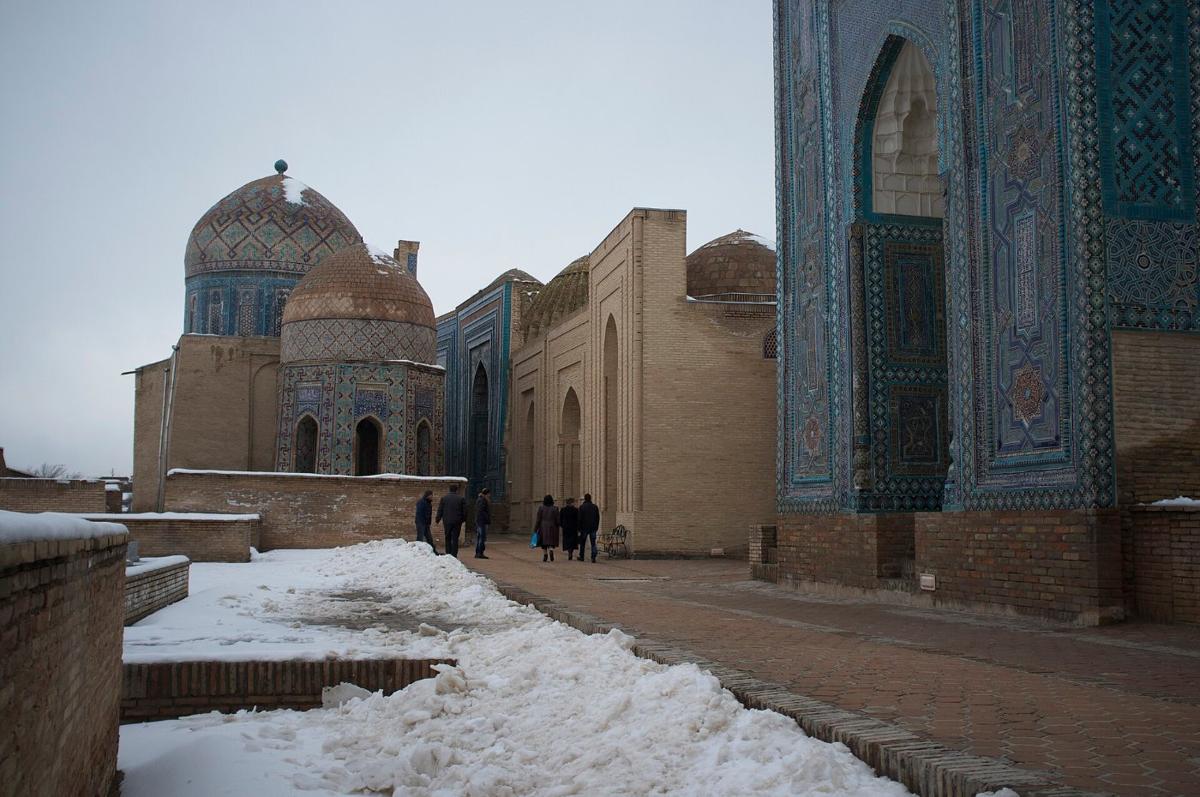
Winter is Uzbekistan's quiet season. Between December and February the crowds disappear, the light is clear and low, and a light snow sometimes settles on the blue domes of Samarkand and Bukhara. It is cold, especially at night, but the days are often sunny, prices are lower, and on New Year's Eve the whole country celebrates.
Here is what to expect, and how to enjoy it.
How cold does it get?
Average daytime highs and night-time lows, in °C:
| City | December | January | February |
|---|---|---|---|
| Tashkent | 9 / 0 | 7 / −1 | 10 / 0 |
| Samarkand | 9 / 0 | 7 / −1 | 10 / 0 |
| Bukhara | 8 / −1 | 7 / −2 | 10 / 0 |
| Khiva (Urgench) | 4 / −4 | 3 / −6 | 6 / −4 |
These are long-term averages; cold snaps down to −10 °C or below are not unusual, especially in Khiva. Uzbeks call the coldest 40 days, from about mid-December to the end of January, chilla. Days are short: in late December the sun sets in Samarkand at about 17:15. Snow falls on only a few days each month, and it rarely lasts long in the cities.
Why come in winter?
- No crowds: you may have the Registan or Bukhara's old town almost to yourself.
- Better prices: many hotels lower their rates outside the New Year holidays, and some tours, like our 8-day Uzbekistan group tour, cost less in winter.
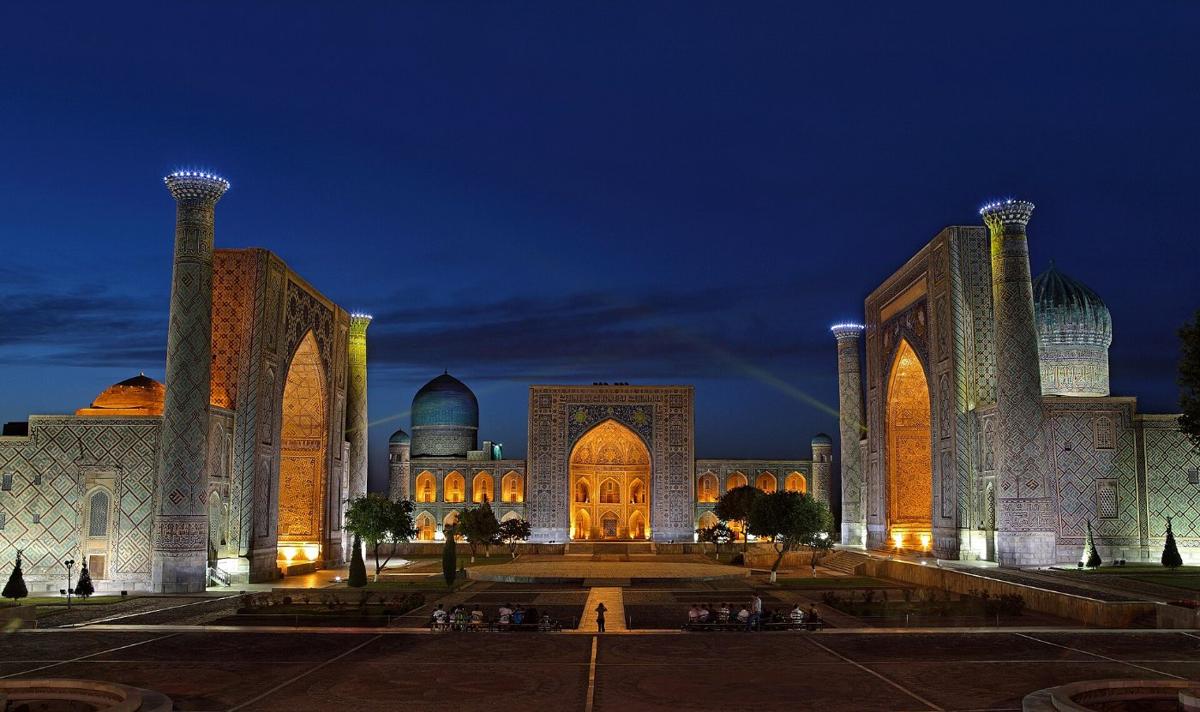
- Winter light: the low sun makes the tilework glow, and snow on the domes is unforgettable.
- Winter food: hearty plov, soups such as shurpa, fresh bread from the tandoor and endless pots of green tea.
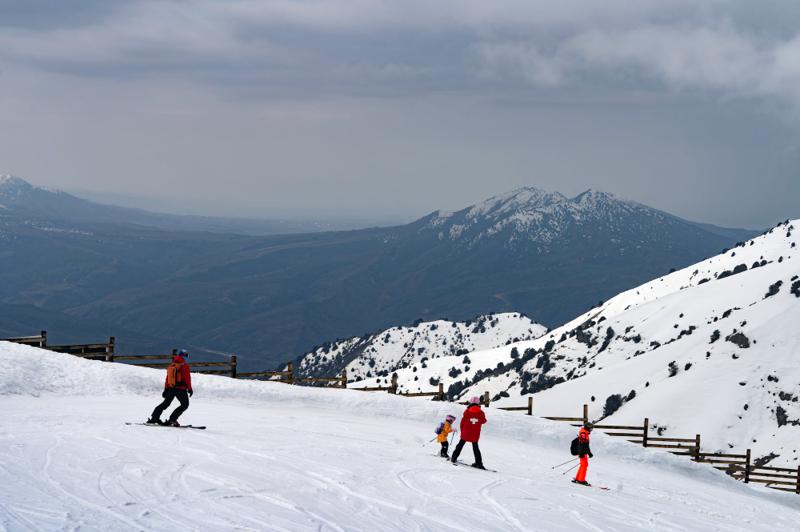
- Skiing: Amirsoy, an hour and a half from Tashkent, opens in late December. See skiing in Central Asia.
New Year in Uzbekistan
New Year is the biggest holiday of the winter, celebrated by families of every background. 1 January is a public holiday, and in recent years the government has added extra days off by decree, usually announced around 24 December: for New Year 2026, offices closed from 31 December to 4 January.
Cities put up decorated fir trees, called archa, and lights from mid-December. Children wait for Qorbobo, the Uzbek Grandfather Frost, and his granddaughter Qorqiz, the Snow Maiden. On the night of 31 December families gather around a long table with plov, salads, fruit and sweets, then go out at midnight for fireworks, which are loudest in central Tashkent. Hotels in Samarkand, Bukhara and Tashkent hold gala dinners with music.
Two things to plan for: trains, flights and hotels fill up between Christmas and mid-January, so book early; and on 1 January many shops and restaurants open late or close. Christmas is not a public holiday, although the Orthodox community celebrates it on 7 January.
What is open in winter
- Monuments and museums stay open all year, sometimes with shorter hours.
- Trains, including the Afrosiyob high-speed service between Tashkent, Samarkand and Bukhara, run all winter.
- Yurt camps at Aydarkul lake close from about November to March.
- Mountain roads can close for a few hours after heavy snow, including the Takhtakaracha pass between Samarkand and Shakhrisabz.
- Hotels are heated, but old buildings can be cool; ask for an extra blanket.
Interesting facts
- Uzbekistan celebrates New Year twice: on 1 January, and at Navruz, the Persian new year, on 21 March, the first day of spring.
- The Afrosiyob train covers the 344 km from Tashkent to Samarkand in about two hours, so winter days lost to short daylight are easily made up.
- Khiva, in the north-west between the Karakum and Kyzylkum deserts, is the coldest of the Silk Road cities in winter.
Important notes
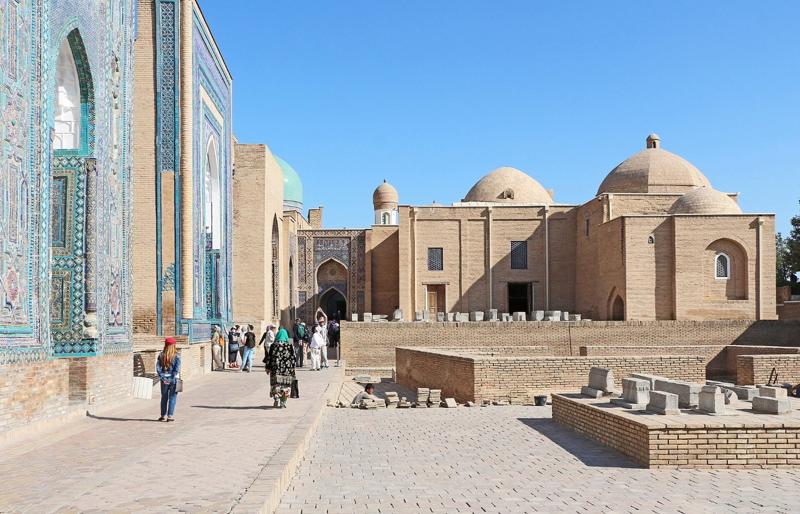
- Mosques and mausoleums: you take your shoes off in some of them, and stone floors are icy. Bring warm socks.
- Ice: polished stone paving in old towns is slippery after frost; wear shoes with a good grip.
- Short days: start sightseeing early and plan indoor visits, such as museums and workshops, for late afternoon.
- Holiday bookings: for 28 December to 10 January, book trains and hotels as early as you can.
What to pack
- A warm, windproof coat, a hat, a scarf and gloves.
- Thermal underwear for cold nights and early starts.
- Waterproof shoes with a good grip, and warm socks.
- Lip balm and moisturiser: the winter air is dry.
- Sunglasses for bright, snowy days.
- Something smart for a New Year gala dinner.
For more on clothes, read what to wear in Uzbekistan and Tajikistan.