Khiva to Bukhara through Turkmenistan: 4 Days with Darvaza, Ashgabat and Merv
Leave Khiva for Turkmenistan and rejoin the Silk Road at Bukhara: medieval Kunya-Urgench, a night in a yurt by the Darvaza gas crater, a day in…

Destinations · Turkmenistan
For two thousand years one city after another rose on the same oasis in the Karakum desert. Ancient Merv, near today's Mary, was a Persian, Greek, Arab and Seljuk capital, and in the 12th century perhaps the largest city in the world. Its walls, castles and mausoleums still stand in the sand.
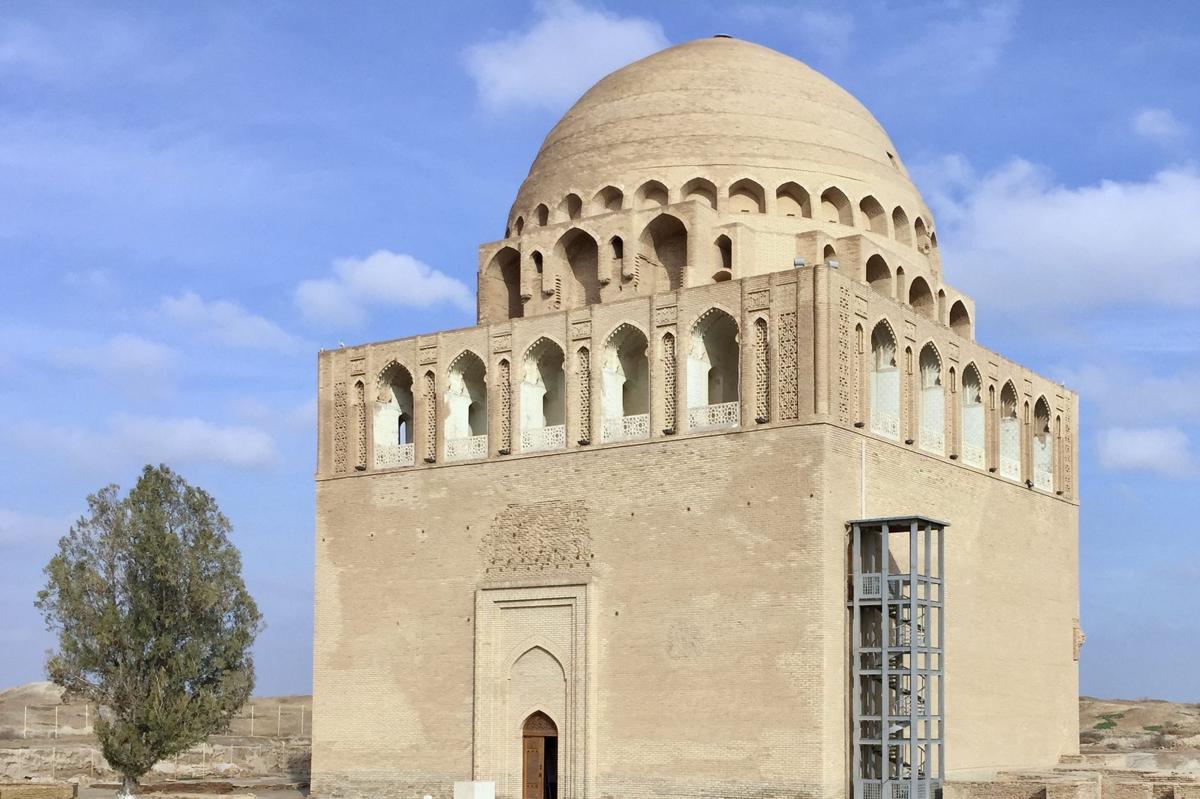
Begin at the mausoleum of Sultan Sanjar, the last great Seljuk ruler, a massive brick cube whose dome survived the Mongols and centuries of earthquakes. Then drive between the long earth walls of Sultan Kala and Gyaur Kala to the citadel of Erk Kala, from whose rim you can see the whole site.
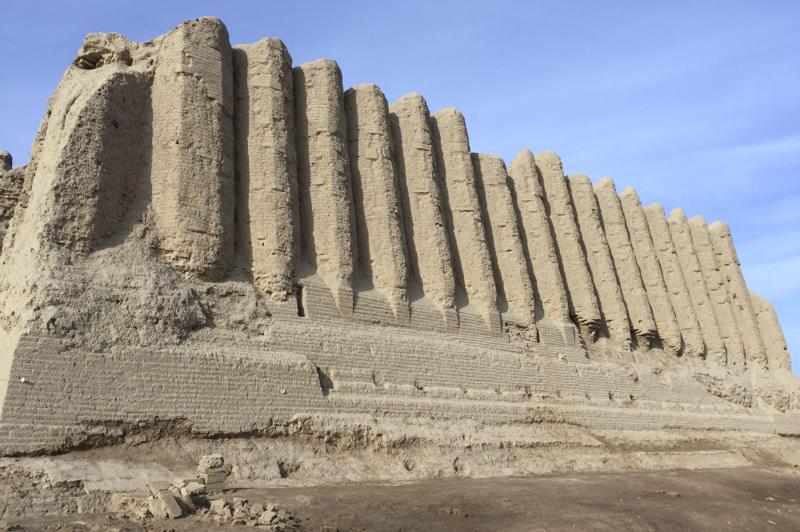
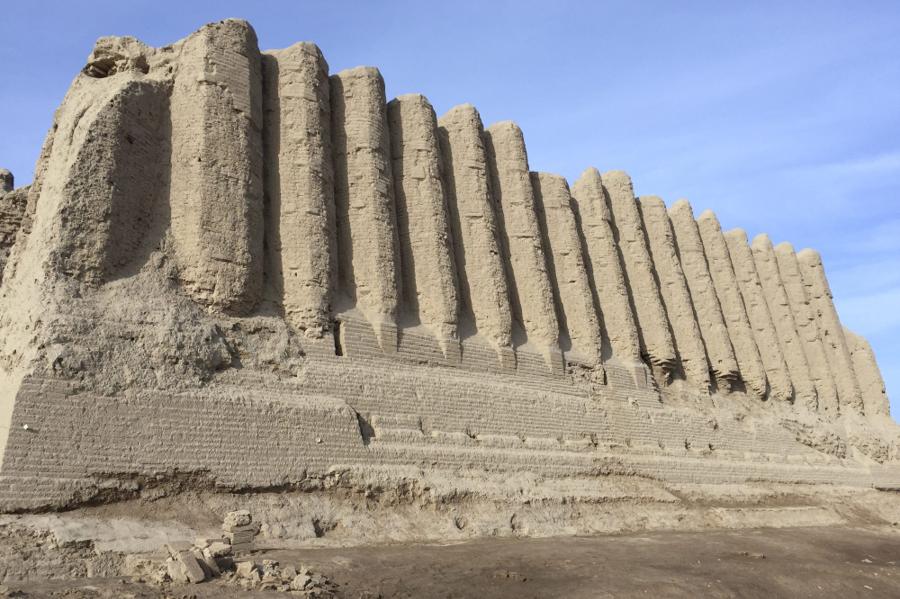
Most striking of all are the two Kyz Kalas, the Great and the Small "maiden's castles": early medieval fortified palaces whose mud-brick walls are folded into deep vertical ribs. Finish at the mausoleum of Muhammad ibn Zeyd, still a place of pilgrimage. With more time, Gonur Depe, about 60 km north of Mary, is a Bronze Age city from around 2400–1600 BC.
Merv is on our 4-day crossings between Khiva and Bukhara and the 5-day tour from Ashgabat.
Photos: Dr. Alexey Yakovlev, CC BY-SA 2.0 · Dr. Alexey Yakovlev, CC BY-SA 2.0
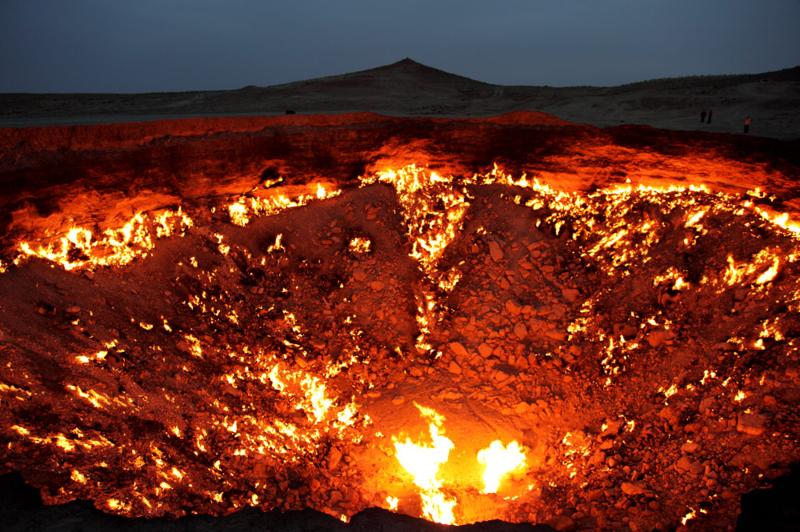
Leave Khiva for Turkmenistan and rejoin the Silk Road at Bukhara: medieval Kunya-Urgench, a night in a yurt by the Darvaza gas crater, a day in…
Cross from Bukhara into Turkmenistan and out again near Khiva: ancient Merv, white-marble Ashgabat with Nisa and the Akhal-Teke horses, a night in a yurt…
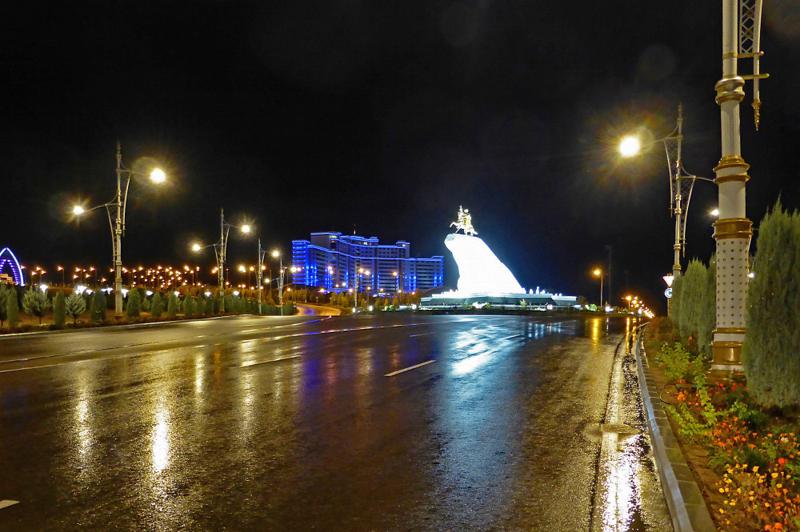
A round trip from Ashgabat airport covering Turkmenistan's essentials: the white-marble capital, Parthian Nisa, a night at the Darvaza gas crater, the…
A grand traverse of Turkmenistan for groups of 15 to 40, from the dinosaur tracks of Koytendag to the Caspian shore at Avaza: ancient Merv and Nisa, the…