The Akhal-Teke is one of the oldest horse breeds in the world and the national symbol of Turkmenistan. What makes it special, where you can meet the horses near Ashgabat, and how to ride one across the desert.
On this page
At the centre of Turkmenistan's national emblem stands a horse. The Akhal-Teke is the pride of the country: tall, lean, and with a coat that shines like metal in the sun. For many travellers, the moment a breeder leads one out of its stable is what they remember best from Ashgabat. This guide explains what the breed is, and how you can see one or ride one.
What is an Akhal-Teke?
The name has two parts. Akhal is the line of oases along the foot of the Kopetdag mountains, where Ashgabat stands today. The Teke are the Turkmen tribe that bred the horses there. The breed is thought to be about 3,000 years old, one of the oldest in the world.
- Build: tall and lean, usually 147 to 163 cm at the withers, with a long neck and fine legs. People often compare it to a greyhound.
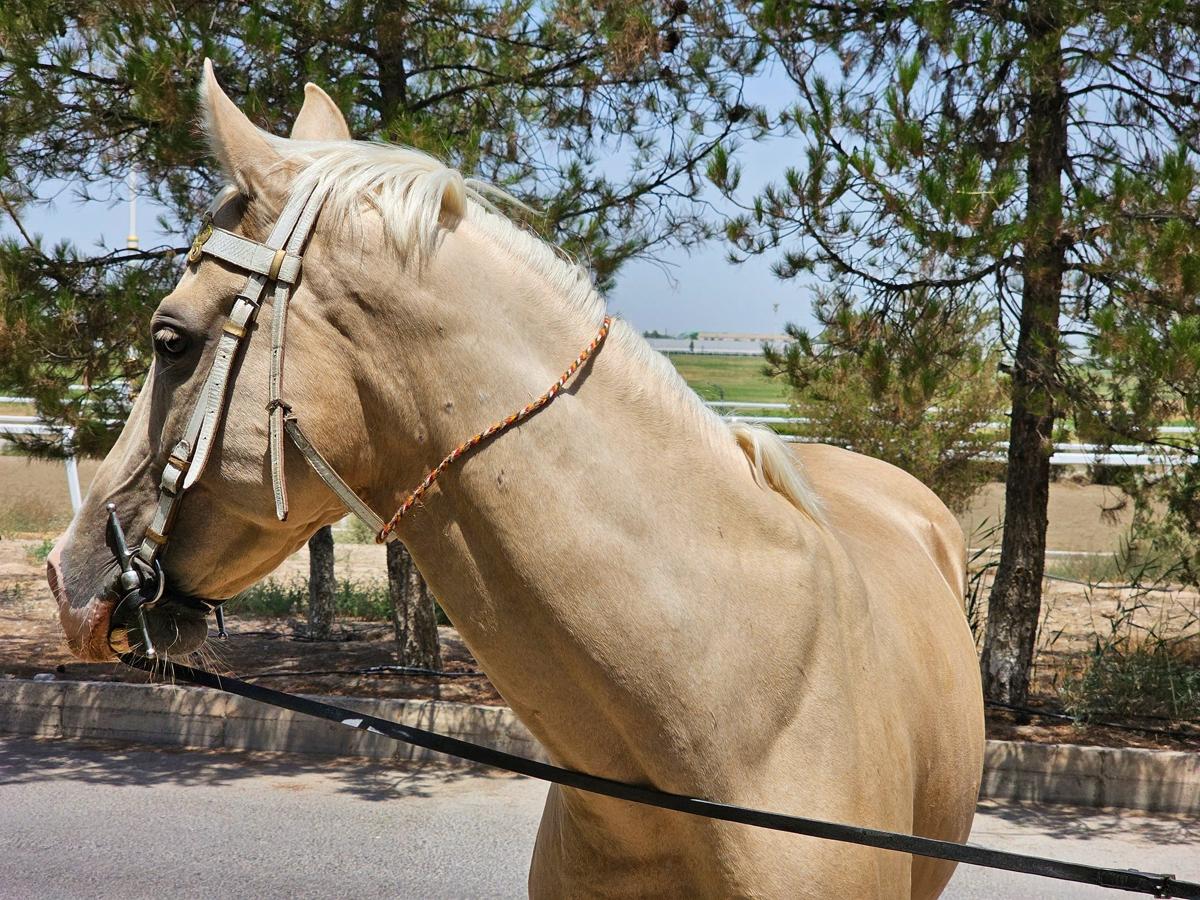
- Coat: the famous metallic sheen. The structure of the hair reflects light, and it shows most on the golden colours. Bay, black, chestnut and grey horses are common too.
- Character: an Akhal-Teke was raised beside one family and is known for attaching itself to one rider.
- Numbers: it is a rare breed. Only several thousand exist, most of them in Turkmenistan and Russia.
Bred for the desert
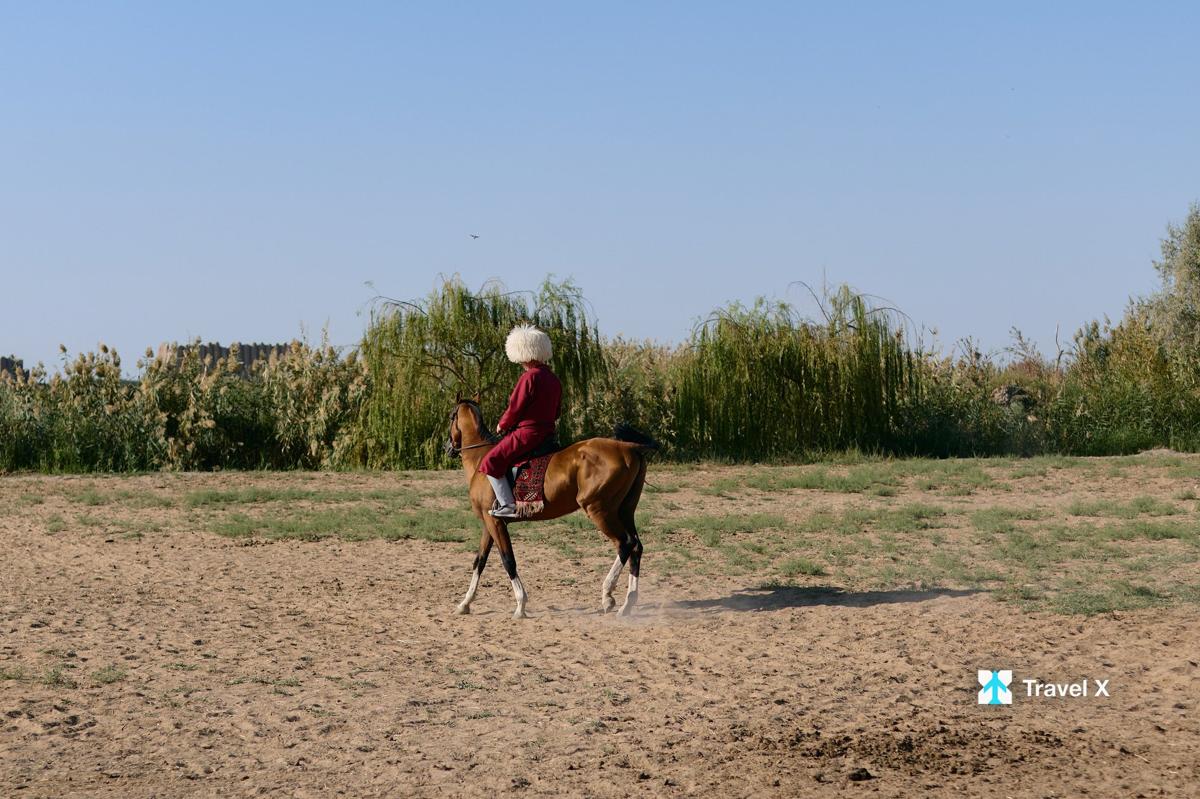
Turkmen tribes raised these horses for long journeys across the Karakum desert. The horses lived close to the family tent, were covered with felt blankets and fed by hand, and they learned to travel far on little water.
The best-known proof came in 1935, when a group of Turkmen riders rode from Ashgabat to Moscow: more than 4,000 km in 84 days, including three days across the desert without water. In 1960 an Akhal-Teke stallion named Absent won the Olympic gold medal in dressage in Rome.
A national symbol
- The emblem: an Akhal-Teke stands at the centre of the state emblem of Turkmenistan.
- Horse Day: the last Sunday of April is Turkmen Horse Day, with races at the hippodromes and, in the days before, a beauty contest for Akhal-Tekes.
- UNESCO: in December 2023 the art of Akhal-Teke horse breeding and the traditions of decorating the horses were added to UNESCO's Representative List of the Intangible Cultural Heritage of Humanity.
Where to see Akhal-Teke horses
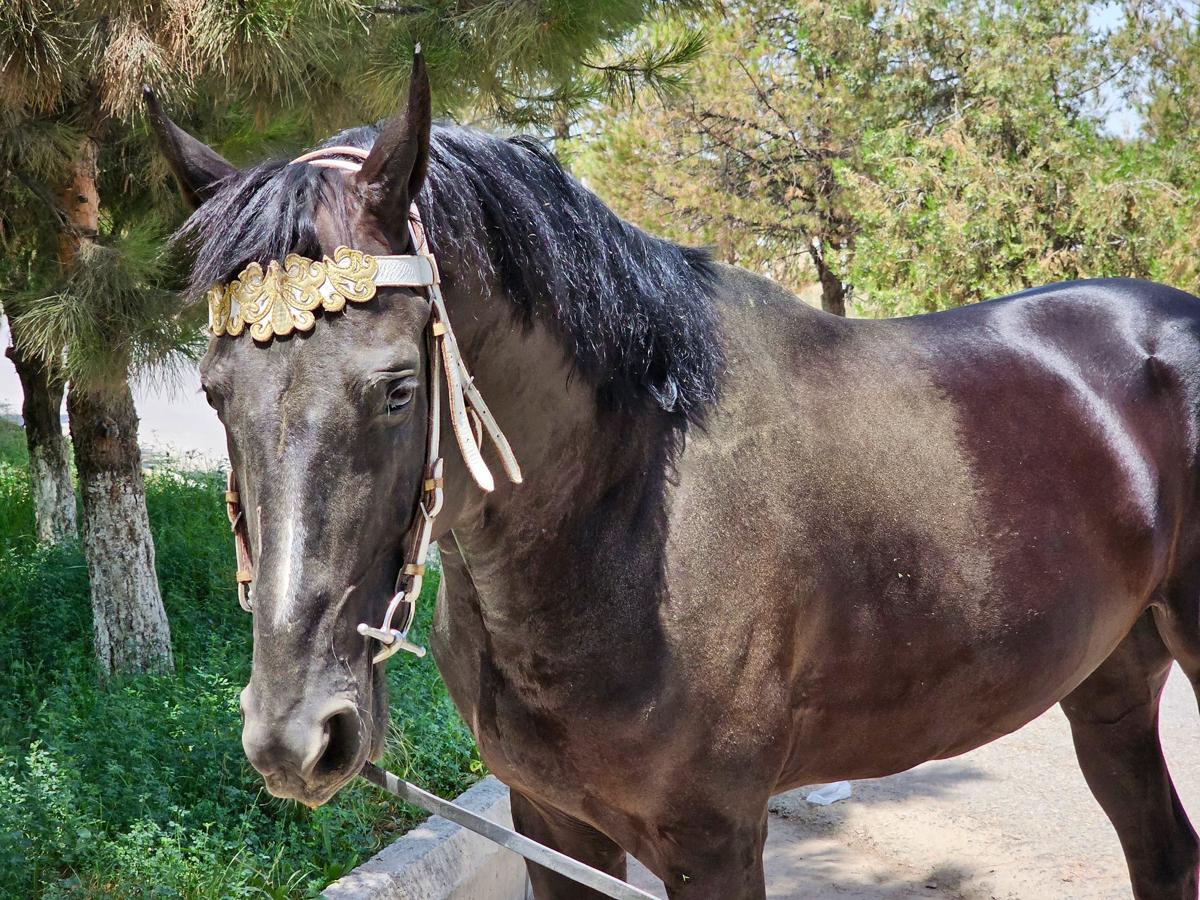
At a horse farm near Ashgabat. This is the simplest way, and it is part of our Turkmenistan tours. On the Ashgabat day you visit an Akhal-Teke farm: tea with the hosts, a short show, and a walk round the stables, where you see the horses up close.
At the hippodrome. Ashgabat has a large hippodrome where Akhal-Tekes race. Race days are in spring and autumn and the dates change every year, so tell us when you are travelling and we will check.
On Horse Day. If you can choose your dates, come in the last week of April, and book early for that week.
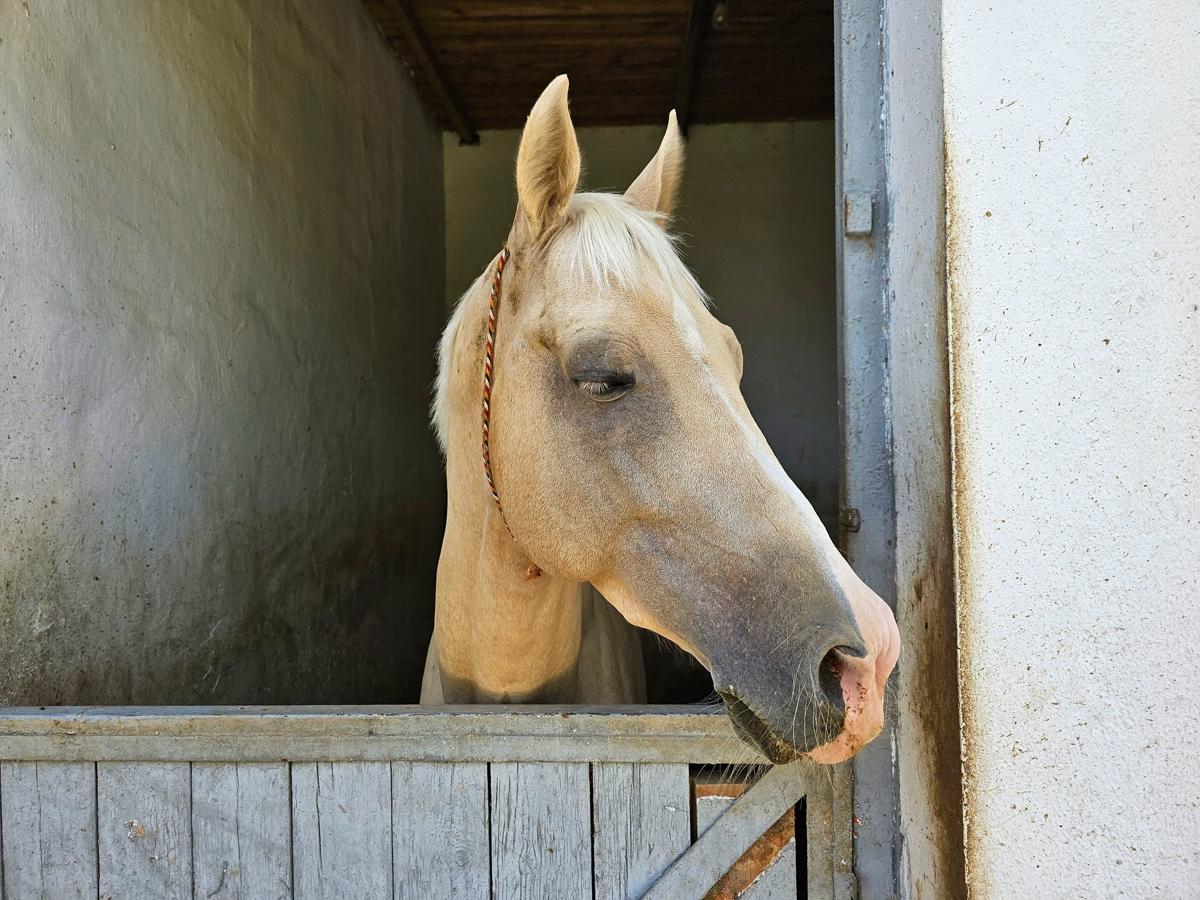
Three short trips that include the horse farm:
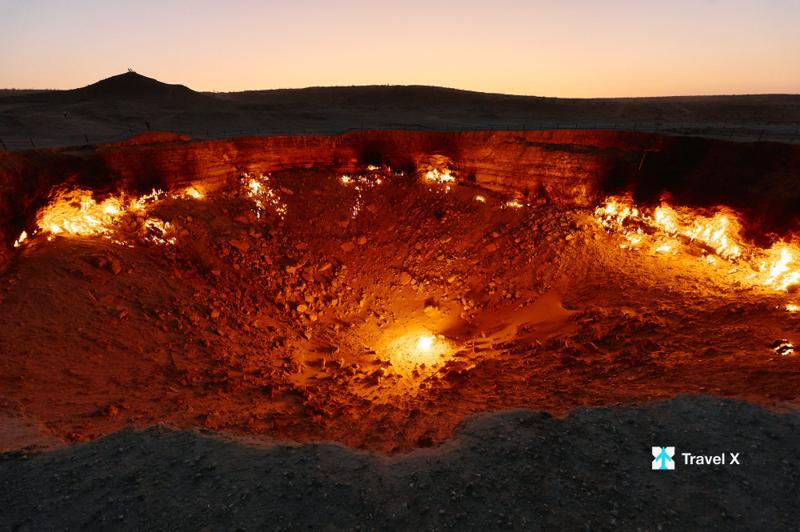
- 3 days: Ashgabat, the Darvaza gas crater, Kunya-Urgench, then on to Khiva
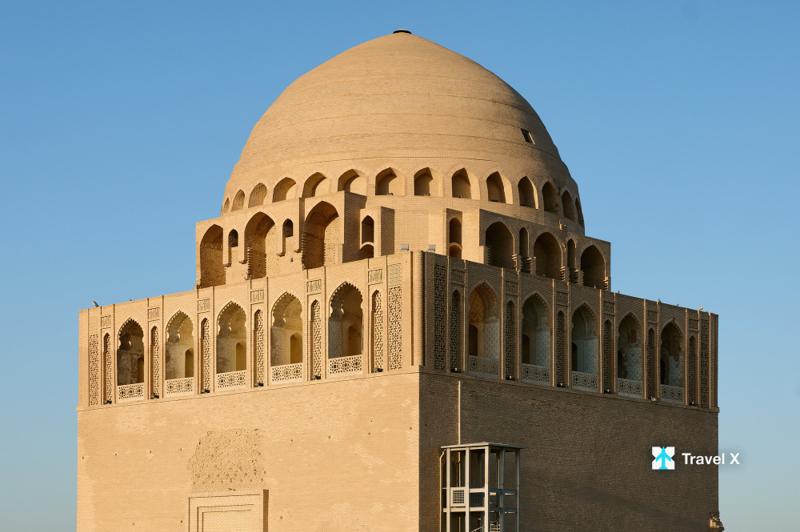
- 4 days: Ashgabat, Darvaza and Merv
- 5 days: Ashgabat, Darvaza, Merv, Nisa and the Kow-Ata underground lake
Riding one: the Akhal-Teke Expedition
If you ride, you can do more than look. The Akhal-Teke Expedition is a 9-day private journey for groups of 5 to 20 riders. Every rider has an Akhal-Teke of their own.
- Day 2: a horse show at the hippodrome, then you meet your horse and have a lesson with the instructors.
- Days 3 to 7: five days in the saddle from Anau to Mary, about 300 km in all and about 60 km a day, in two stages with a long rest at midday.
- The camp: nomad yurts that move ahead of you, with chefs, a doctor and two support vehicles.
- Day 8: ancient Merv, once one of the great cities of the Silk Road.
Tell us how much your group has ridden before, and we plan the ride around it.
Practical notes
- Visa: every visitor to Turkmenistan needs one. Our Turkmenistan e-visa guide explains how it works.
- When to go: April to May and September to October. In July the afternoons in Ashgabat average 38 °C.
- At the farm: ask before you touch or feed a horse, and do not use a flash.
- Photos: the coat shines most in low sun, early in the morning or late in the afternoon.
Want to see the horses on your own dates? Message us on WhatsApp and we will plan it.
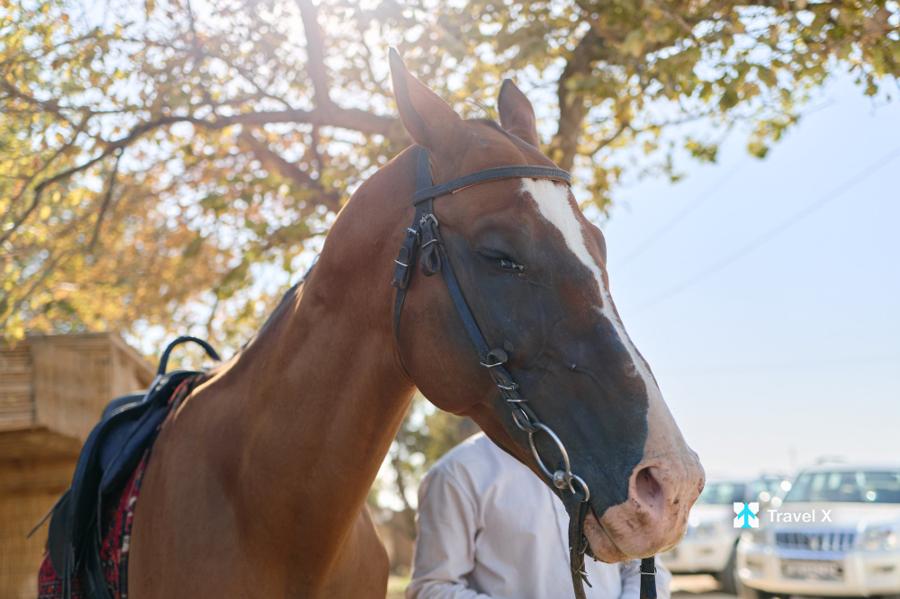
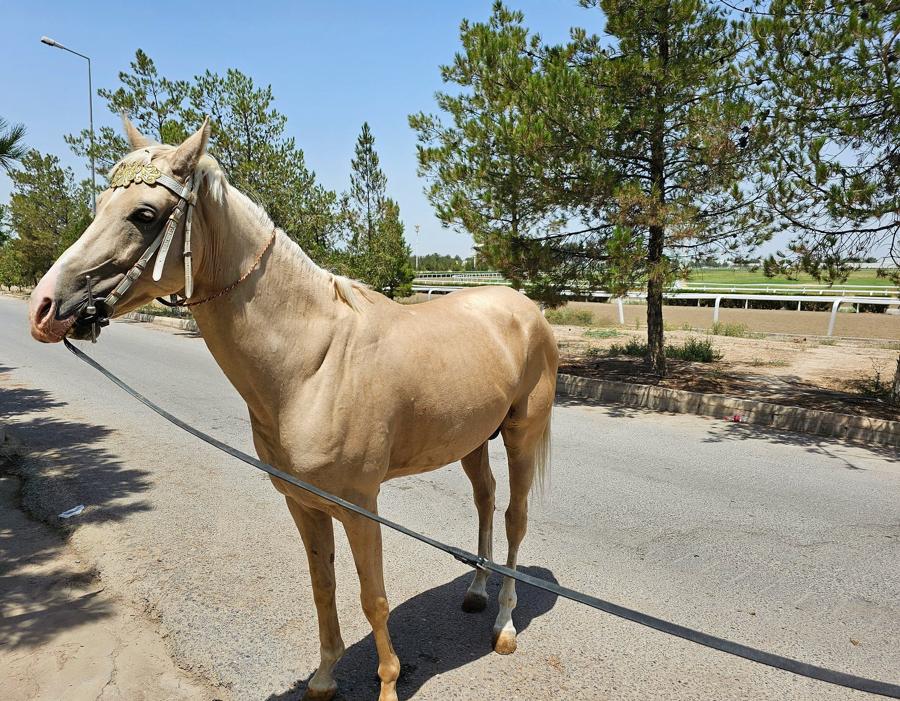
Photos: Richard Mortel, CC BY 2.0 · Richard Mortel, CC BY 2.0