Pamir Highway & Wakhan Valley: Osh to Dushanbe, 7 Days (Group)
Seven days from Osh to Dushanbe over the roof of the world: Karakul crater lake, the 4,655 m Ak-Baital Pass and the Wakhan Valley. Shared 4×4, departures…

Destinations · Tajikistan
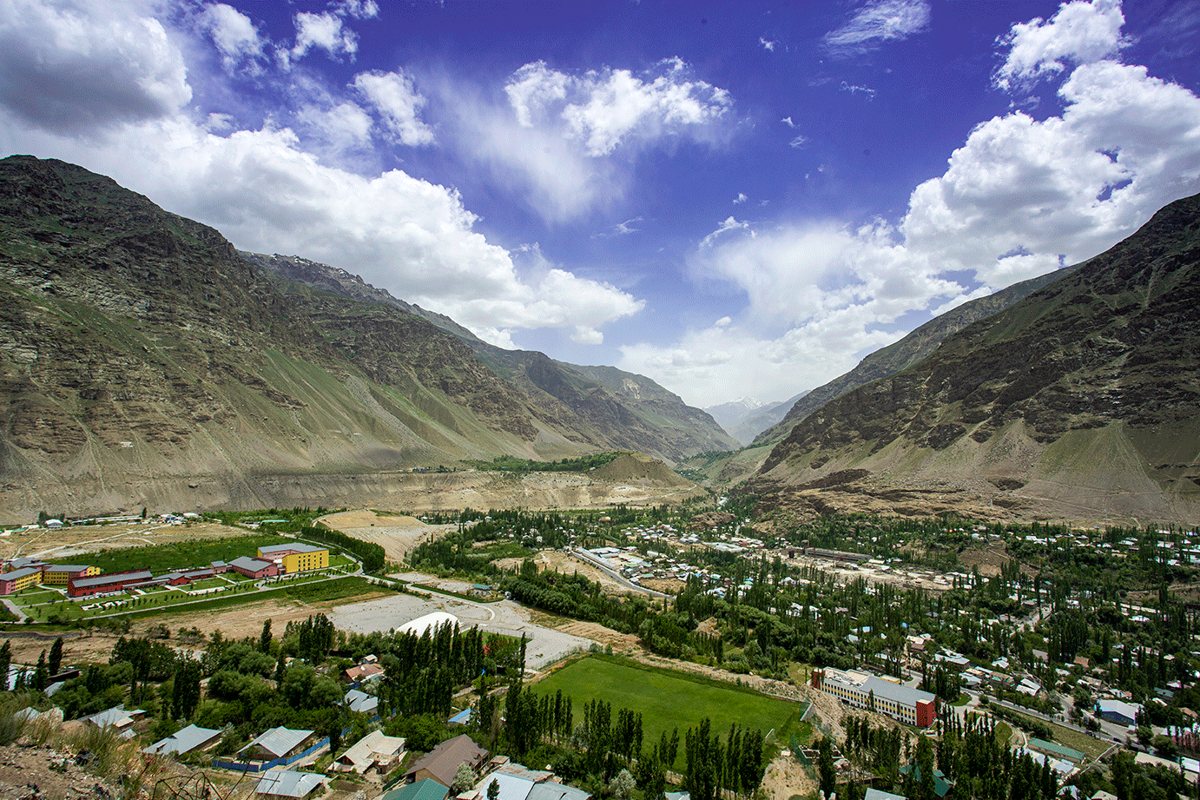
Khorog is more than a supply stop on the Pamir Highway. Gardens, a busy bazaar, regional collections and conversations over tea introduce the western Pamirs at a human scale. Give the city time before continuing to the colder, higher landscapes farther east.
At a glance
History behind the city
Khorog grew from a mountain settlement into an important administrative and educational center through twentieth-century development. Roads and public institutions connected valleys whose communities already had their own histories. The city's setting beside the Gunt River explains both its narrow urban shape and the importance of links through the mountains. Older neighborhood life, Soviet-era development and newer institutions coexist; this is neither an ancient Silk Road museum nor simply an expedition staging post.
People and living culture
Shughni and other Pamiri languages belong to a different branch of the Iranian language family from Tajik. Tajik and Russian also have practical roles, while English availability varies. Music, poetry and family traditions are living practices rather than performances automatically available to visitors. An arranged home visit can introduce Pamiri architecture, woodwork and hospitality, but a private house or religious space is never open simply because it looks interesting. Ask permission for visits and portraits, and agree payment for hosted activities.
Everyday life
Students, traders, teachers and families shape Khorog as much as through-travelers do. Browse the bazaar without obstructing ordinary shopping, take a quiet park break and buy useful local goods rather than expecting every stall to sell souvenirs. Confirm cash, connectivity, opening arrangements and transport before departure. A rest day is worthwhile in its own right, but it does not guarantee readiness for much higher sleeping altitudes.
Places to visit
What to eat
Bread, soups, rice dishes, dumplings and seasonal produce offer an introduction to local tables. Guesthouse cooking may be more revealing than a long restaurant checklist. Ask which dishes are regional and which are everyday family favorites. Recipes vary; explain allergies and ask about meat stock, dairy and animal fat. Shared tea or a meal should be arranged with the host rather than assumed.
When to visit
Late spring through early autumn often suits city walks, with hotter summer afternoons and colder conditions outside town. Winter requires more flexible road planning. The city's season is not the same as the season for high passes, remote lakes or trekking camps. Check the conditions for each onward destination, not just the weather forecast for Khorog.
Permits and access
Foreign visitors need the relevant GBAO permission in addition to passport-specific entry requirements; registration rules depend on the entry arrangement. Regional security restrictions and road closures can change quickly. Confirm official advice and local access before travel, carry document copies, respect checkpoints and do not photograph security installations. Proximity to Afghanistan does not create a right to approach or cross the border.
Planning a worthwhile stay
Pair the park, bazaar and museum across an easy day, then reserve a separate block for the botanical garden or a valley outing. Reconfirm journeys rather than depending on a guaranteed flight or fixed driving time. For higher-altitude travel, plan gradual acclimatization, suitable insurance and evacuation arrangements. Do not go higher with altitude-illness symptoms; worsening symptoms need descent and medical help. A short city stay cannot replace an individual altitude plan.
Seven days from Osh to Dushanbe over the roof of the world: Karakul crater lake, the 4,655 m Ak-Baital Pass and the Wakhan Valley. Shared 4×4, departures…
The same seven days from Osh to Dushanbe — Karakul, the Ak-Baital Pass and the Wakhan Valley — in a 4×4 with driver for your group only, on the date you…
The whole Pamir Highway one way, in a 4×4 for your group only, on the date you choose: the Afghan border along the Panj, the Wakhan Valley, the high…