Tashkent City Tour: Old Town, Metro & Modern Capital
Explore old and new Tashkent in one day with a professional guide: the bustling Chorsu Bazaar, the sacred Hazrati Imam Complex, the palace-like metro…

Destinations · Uzbekistan
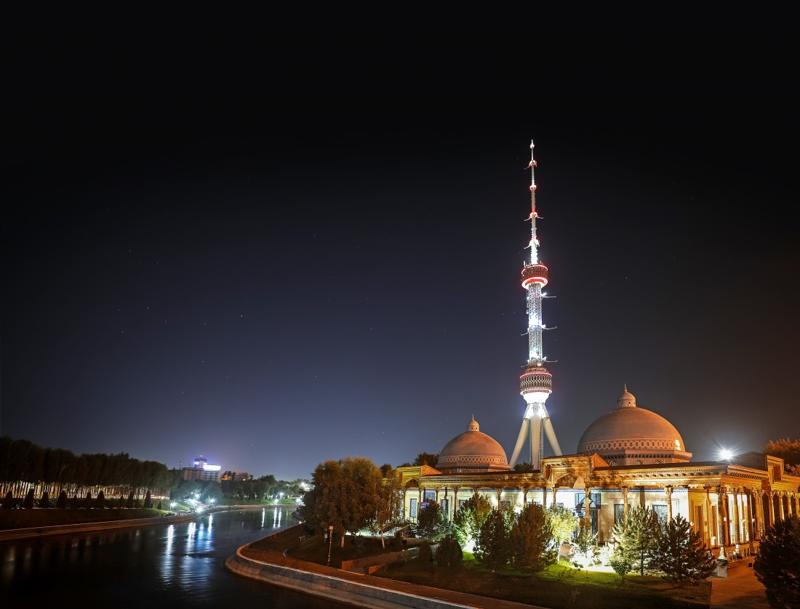
Tashkent is not simply the airport stop before the Silk Road cities. Uzbekistan's capital offers markets, religious heritage, museums, monumental modernism and a metro that makes ordinary journeys memorable. Its contrasts help explain the country today, from neighborhood bakeries to contemporary cultural spaces.
At a glance
History that explains the city
The Tashkent oasis has ancient roots and was historically associated with the names Chach and Shash. Trade, religion and successive rulers shaped the settlement long before its role as a modern capital. Russian imperial expansion and the Soviet period introduced new urban forms, institutions and infrastructure.
The earthquake of 26 April 1966 damaged much of the city and prompted extensive rebuilding, with help from across the Soviet Union. Broad avenues, apartment districts and modernist public buildings are part of that history, but it is misleading to say that no older Tashkent survived. Older religious sites and residential patterns coexist with Soviet-era development and newer construction.
People and living culture
Tashkent's population includes many communities, with Uzbek and Russian widely heard and other languages present too. It is a city of students, commuters, artists, entrepreneurs and families, not a uniform portrait of national identity. Traditional craft and contemporary design can be explored side by side, while museums help explain regional differences across Uzbekistan.
The State Museum of Applied Arts is a strong introduction to embroidery, ceramics, jewelry, textiles and carved decoration. Theater and music add another dimension; choose a performance from the current program instead of relying on an old travel timetable.
Everyday life
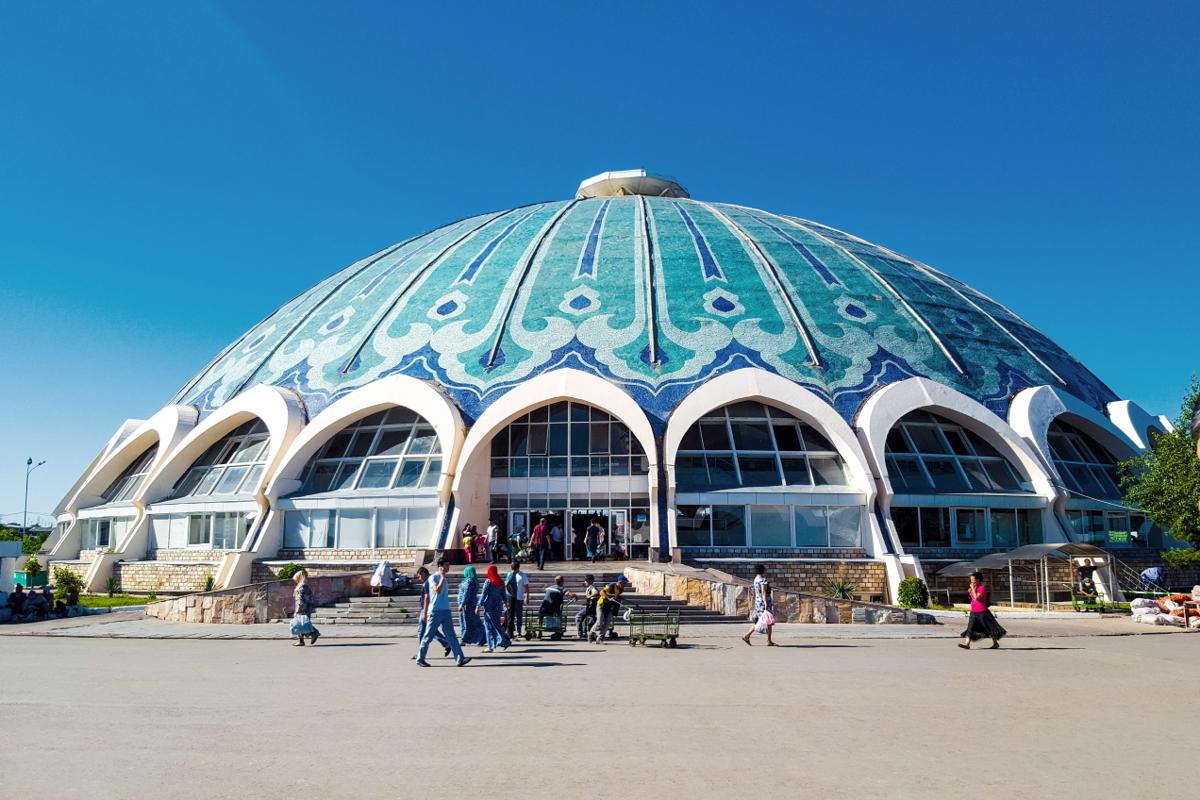
At Chorsu Bazaar, shoppers buy bread, vegetables, spices, dried fruit and household goods. The market's food areas offer a look at everyday eating, but ask what is being cooked and agree prices before ordering. Elsewhere, parks, cafes and metro journeys show a city living beyond its monuments. Mahalla lanes are residential: respect courtyards, privacy and the normal flow of daily business.
Places to visit
What to eat
Plov, samsa, lagman, shashlik and bread are good starting points, but the capital's eating scene is broader than one national menu. A busy lunch venue and a contemporary cafe show different aspects of city life. Vegetarian travelers should ask about stock and animal fat; check dairy and allergens separately. Choose freshly prepared food and drinking water from a reliable source.
Beyond the famous sights
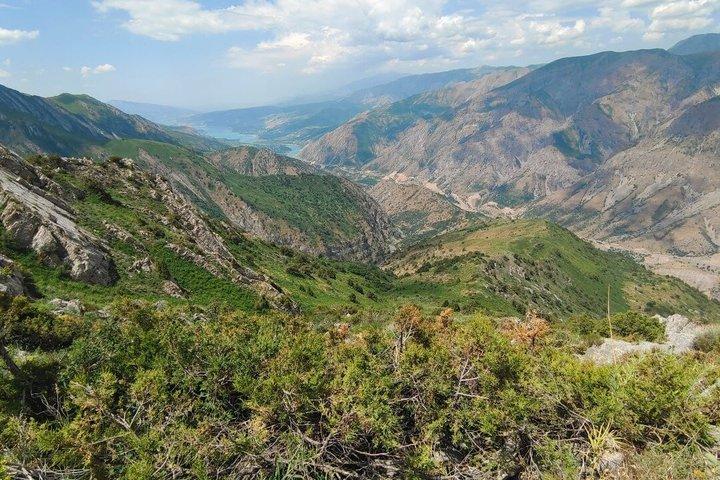
Look for modernist facades, mosaics and neighborhood parks, using a knowledgeable guide when historical context matters. Charvak, Chimgan and Amirsoy belong to the surrounding Tashkent Region: they are separate excursions, not city-center landmarks.
Planning a worthwhile visit
Group sights by neighborhood and use the metro or taxis between clusters; central distances can be larger than a map suggests. Spring and autumn are often comfortable, summer is hot and winter can be cold. Check current museum access, theater schedules and religious-site requirements. At mosques, follow guidance on clothing, head coverings and prayer times. Ask about step-free access individually, especially in older stations and historic buildings. Tashkent rewards a day without a checklist as much as a day of major sights.
Explore old and new Tashkent in one day with a professional guide: the bustling Chorsu Bazaar, the sacred Hazrati Imam Complex, the palace-like metro…
The four great Silk Road cities in one week, in the order the road runs: licensed guides, 3–4★ hotels with breakfast, every transfer and the monument…
In July 2026 Tashkent's modernist architecture joined the UNESCO World Heritage List. See it with your own guide: the Palace of Arts, the Peoples'…
Eight to ten hours in the mountains above Tashkent in a private vehicle: the Amirsoy gondola, the Chimgan massif, Sijjak village and Charvak lake.
A day out of Tashkent in the Western Tian Shan: the Amirsoy resort and its cable car, the Chatkal Mountains, Sijjak village and the blue water of Charvak…
A day on the slopes of Amirsoy, about 1.5 hours from Tashkent: a private car from your hotel, a driver who waits for you all day, and help with lift…