Uzbekistan in 8 Days: Tashkent, Samarkand, Bukhara and Khiva
The four great Silk Road cities in one week, in the order the road runs: licensed guides, 3–4★ hotels with breakfast, every transfer and the monument…

Destinations · Uzbekistan
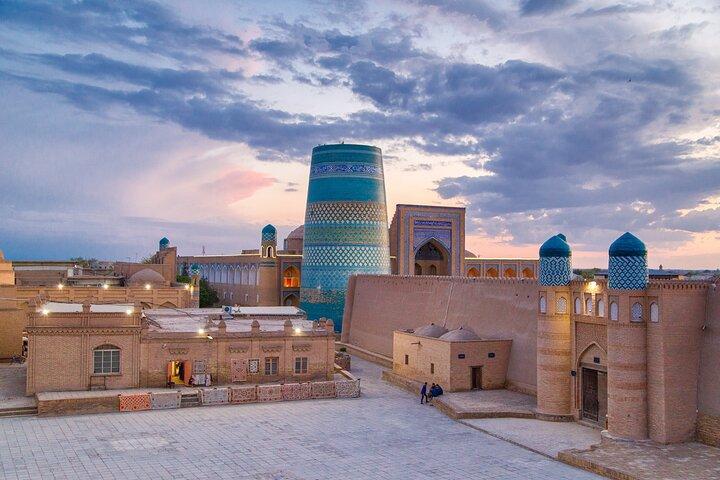
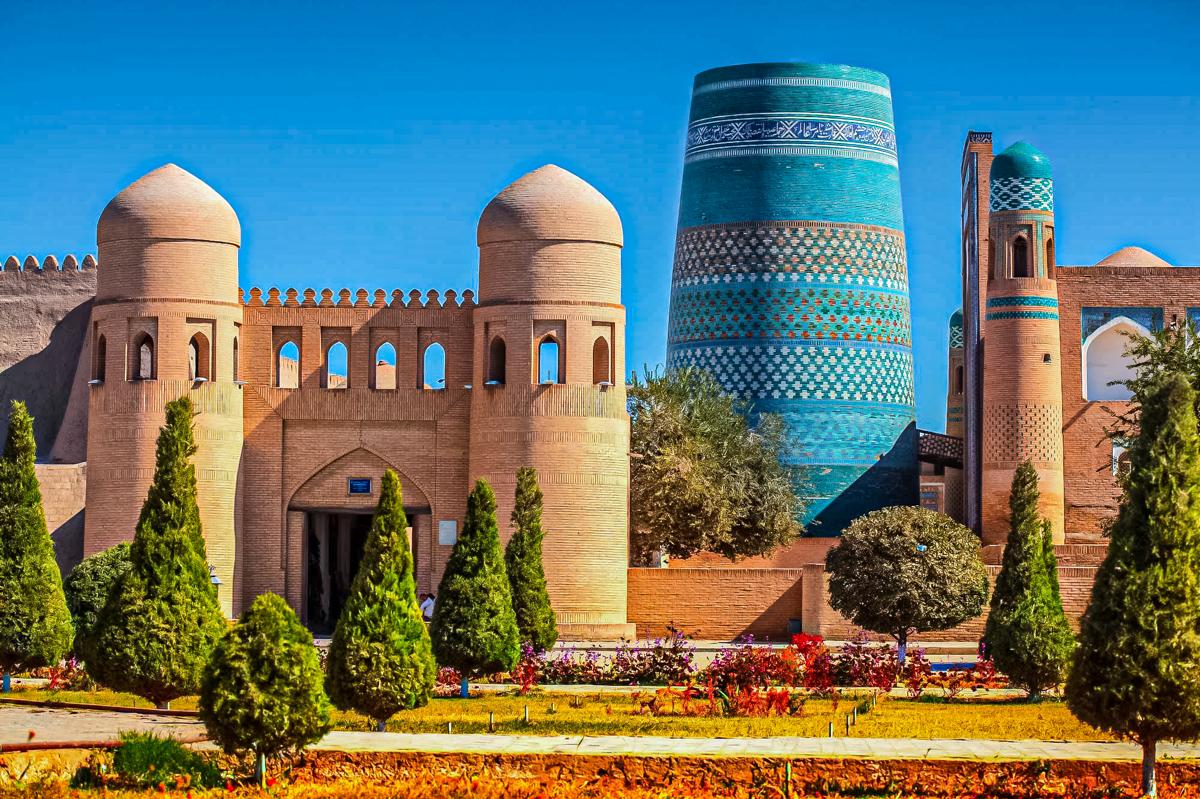
Khiva offers one of Uzbekistan's most coherent historic townscapes: walls, tiled towers, shaded passages and carved wooden columns within a walkable area. Yet it is more than a beautiful backdrop. Its story belongs to Khorezm, a wider oasis culture with its own food, music, craftsmanship and difficult historical chapters.
At a glance
History that explains the city
Khiva grew within the long history of Khorezm and became the capital of the Khiva Khanate. Its UNESCO-listed inner town, Itchan Kala, preserves a distinctive urban ensemble, with many major buildings dating to the eighteenth and nineteenth centuries. This is not a city built in a single medieval moment. Rulers, merchants and skilled builders contributed successive layers, and restoration continues to shape what visitors see.
Caravan commerce brought wealth, but the khanate's history also included slavery and coercion. A thoughtful guide should acknowledge that past without reducing the city to it. Stories connecting Khiva's founding to legendary figures belong to folklore, not a securely documented founding date.
People and living culture
Khorezm has a strong regional identity expressed through language, cooking, music and movement. Lazgi, the energetic Khorezm dance recognized by UNESCO in 2019, is a living tradition performed and renewed by communities, not just a stage routine for tourists. If you attend a performance, learn something about its musicians and dancers.
Woodcarving is another rewarding thread. Doors and columns reveal how decoration can serve both structure and expression. Visit a working craft space where possible, ask about materials and techniques, and distinguish contemporary handmade work from factory-produced souvenirs.
Everyday life
Itchan Kala is a heritage area with residents, accommodation, shops and tourism businesses; life also extends into the outer town, Dishan Kala, and modern neighborhoods. An early walk and a later return show changing light and activity. Stay on public streets, respect private doorways and ask before photographing people at work or at home.
Places to visit
What to eat
Try shivit oshi, green noodles colored with dill and commonly served with a meat-and-vegetable sauce and cultured dairy. Tukhum barak are delicate dumplings with an egg filling. These dishes give Khorezm a culinary identity distinct from the assumption that every Uzbek meal means plov. Ask about seasonal availability, dairy, meat and allergens; recipes differ.
Beyond the famous sights
Ancient Khorezm fortresses such as Ayaz Kala and Toprak Kala are rewarding excursions, but lie in neighboring Karakalpakstan rather than inside Khiva. Plan them as a separate journey with transport, water and protection from sun and wind. They do not fit naturally into a rushed half-day city walk.
Planning a worthwhile visit
Spend at least one night if you can: the town feels different outside peak group-tour hours. Spring and autumn are generally easier for walking, summer can be intensely hot, and winter cold. Urgench and Khiva are separate cities, so check the actual arrival station or airport and transfer. Confirm what a combined ticket includes; towers, special interiors and viewpoints may have separate conditions. Religious sites need modest clothing, and uneven ground and steep stairs call for individual accessibility checks. Photograph the city patiently without blocking doorways or climbing fragile historic fabric.
The four great Silk Road cities in one week, in the order the road runs: licensed guides, 3–4★ hotels with breakfast, every transfer and the monument…
The walled city on foot with a licensed guide: Kalta Minor, Kunya-Ark, the Juma Mosque and Pakhlavan Mahmud, in four to six unhurried hours. From $59 per…
The two best-known fortresses of ancient Khorezm in half a day from Khiva: Toprak Kala's palace city and the hilltop walls of Ayaz Kala, by private car…
A full day among the mud-brick fortresses of ancient Khorezm: Kyzyl Kala, Toprak Kala and Ayaz Kala with your own guide, and lunch at the yurt camp below…
The four great Silk Road cities in one week: Tashkent, two nights in Samarkand, two in Bukhara and two in Khiva, with the fast trains between them and…
The four Silk Road cities of Uzbekistan by high-speed train, plus a day across the border at Tajikistan's Seven Lakes. Private guides, 3–4★ hotels with…